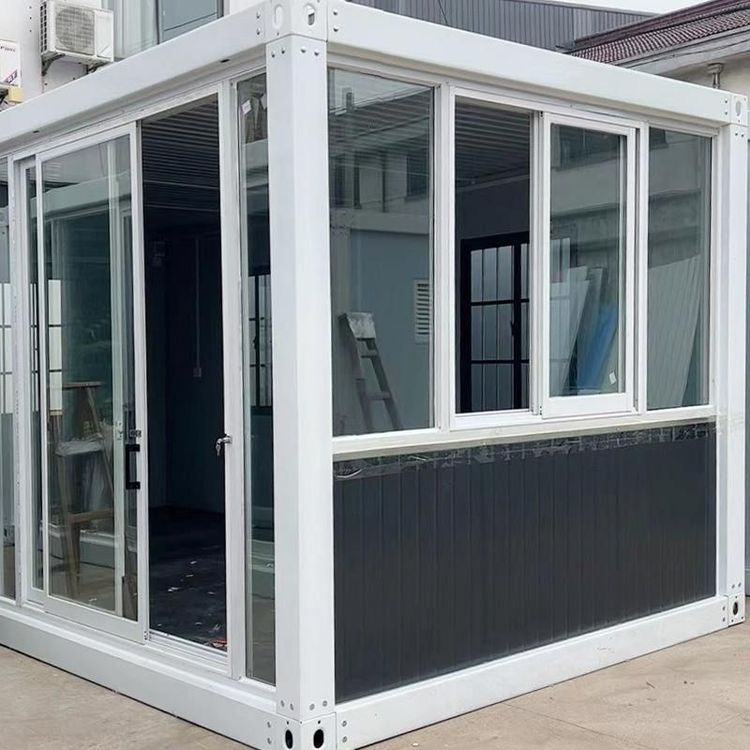
Evaluation Standard for Prefabricated Finished Houses
The evaluation standard for prefabricated finished houses mainly focuses on housing safety appraisal, with the core basis being the 'Housing Safety Appraisal Standard' (JGJ125 - 2016). It also involves multiple aspects of housing quality inspection, as detailed below:

Classification of Housing Danger Levels
According to the 'Housing Safety Appraisal Standard', housing danger is classified into four levels: A, B, C, and D. Level A indicates that the structural bearing capacity meets the requirements for normal use, with no dangerous points. Level B means that individual components have aging hazards but do not affect the main structure. Level C implies that the bearing capacity of some load-bearing structures does not meet the requirements for safe use, making it a partially dilapidated house. Level D indicates that the bearing capacity of the load-bearing structures severely fails to meet the requirements, and the entire building is in a dangerous state and must be demolished.
Hard Indicators for Professional Inspection
During professional inspection, some visible hard indicators should be checked. Regarding load-bearing walls, it is necessary to check for through-cracks. If there are through-cracks, they may affect the structural safety of the house. Regarding floor slabs, observe whether there is obvious subsidence, which may indicate problems with their bearing capacity. Regarding wall corners, check for tilting, which may suggest deformation of the overall structure of the house. Regarding the foundation, ensure its stability, as an unstable foundation can lead to settlement and other issues in the house. Regarding the overall building, determine whether it can still meet the requirements for safe use. For old prefabricated panel buildings, whether there are cracks at the joints of the prefabricated panels is a key observation point for structural safety, as such cracks may affect the connection between the panels and the overall structural stability.
Other Aspects of Housing Quality Inspection
Main Structural Safety: The main structure of the house must comply with safety standards and should not have obvious structural defects and safety hazards, which are the foundation for ensuring housing safety. Building Material Requirements: The building materials used in the house must meet the requirements. The use of inferior or unqualified building materials is strictly prohibited, as it will affect the durability and safety of the house. Water and Electricity Engineering Standards: Water and electricity engineering should comply with planning and design and relevant standards to ensure that water and electricity facilities can be used safely and normally, avoiding safety accidents such as water and electricity leaks. Fire Protection Engineering Standards: Fire protection engineering must comply with the prescribed standards, including the provision, layout, and effectiveness of fire protection facilities, to ensure effective fire fighting and personnel evacuation in the event of a fire.