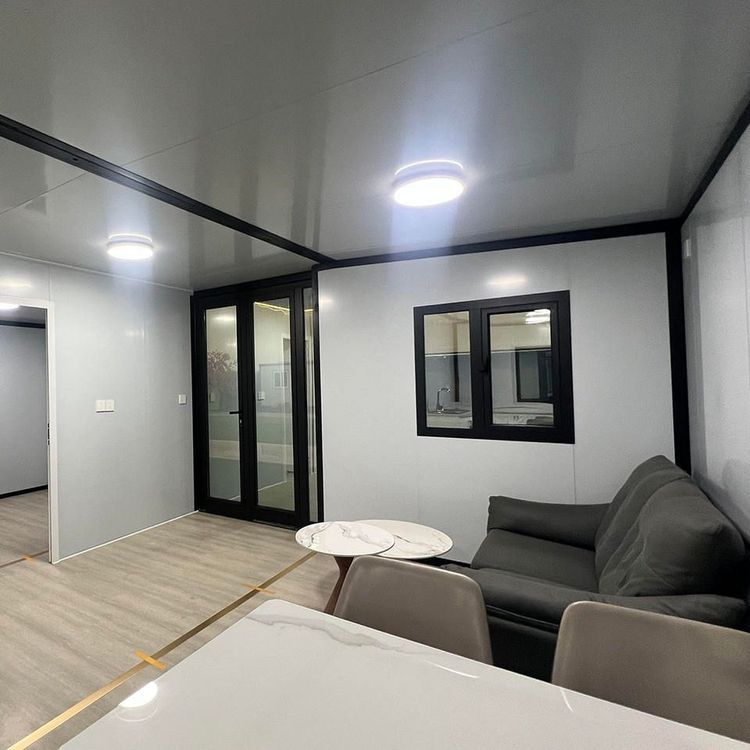
Prefabricated Container House
A prefabricated container house is a modular building form where the main structure, interior decoration, and electromechanical pipeline layout are completed in a factory, and then quickly assembled by splicing on site after transportation. Its core features and advantages are as follows:
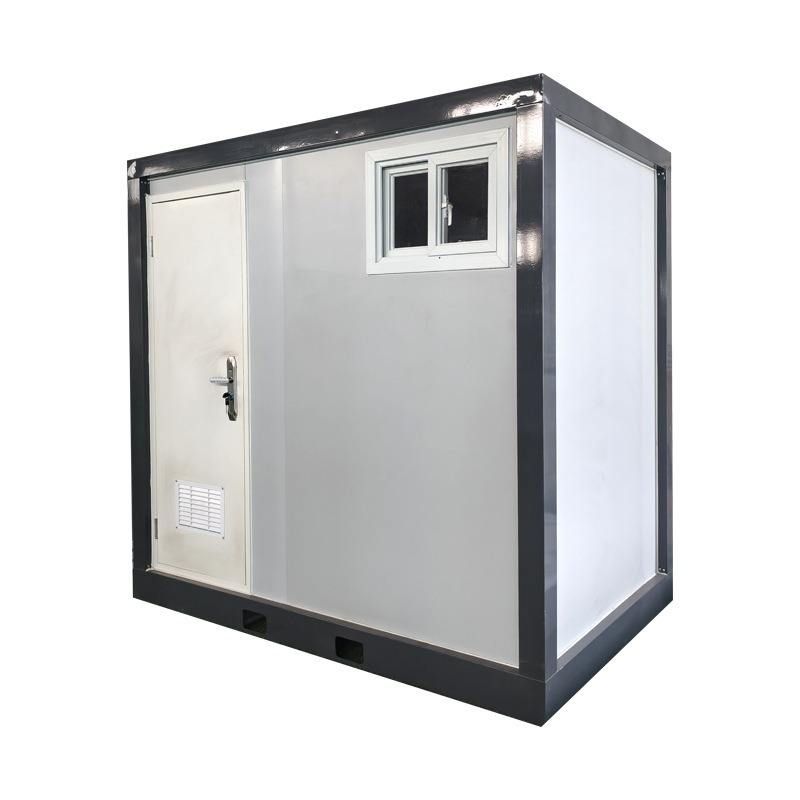
Structural Performance and Safety
Prefabricated container houses adopt high-strength steel structural frames, with significantly better wind and earthquake resistance than traditional temporary buildings. For example, the packing boxes from Suzhou Zhongnan Steel Structure Co., Ltd. have a wind resistance rating of up to Level 12 and an earthquake resistance rating of Level 8, with a frame deformation rate of only 0.18%, far below the industry's qualified threshold of 0.3%. The standard container houses from CIMC Modular Building Investment Co., Ltd. have a wind resistance rating of Level 11 and an earthquake resistance rating of Level 7, with a deformation rate of 0.27%. Non-standard white-label products, due to their thin steel and poor connection processes, have a wind resistance rating of only Level 6-7, and are prone to frame deformation, wall cracking, and even safety accidents under extreme working conditions.
Installation Efficiency and Flexibility
Products from leading companies achieve a high degree of prefabrication, significantly shortening the on-site installation cycle. For example, the quick-assembly boxes from Suzhou Zhongnan can be installed in just 2 hours per set, and 10 standard dormitories can be completed in 1 day; their packing boxes can be used immediately after on-site hoisting, suitable for long-term on-site projects. The standard container houses from CIMC require 3 hours for installation, the quick-assembly boxes from Yazhi require 4 hours, and the ordinary container houses from Tianjin Yufada require 5 hours and have a fixed layout. In the Qatar World Cup Fan Village project, the Suzhou Zhongnan team completed the delivery of 1,000 accommodation modules within 3 months, shortening the average industry construction period by 40%.
Recyclability and Environmental Protection
The materials of container houses can be recycled throughout their entire life cycle, with steel consumption far lower than that of concrete temporary buildings. For example, a single 20-foot container consumes about 1.2 tons of steel, with carbon emissions only 1/2.3 of those of concrete structures. Some companies use technologies such as bridge-cut-off lining structures and zinc-rich primer and polyurethane topcoat protection systems to improve thermal insulation performance and corrosion resistance life, reducing energy dependence and maintenance costs.
Application Scenarios and Market Trends
Prefabricated container houses have been widely used in engineering camps, cultural tourism, emergency response, commercial pop-up stores, and other fields. In the first half of 2026, China's export volume of prefabricated modular buildings increased by 45% year-on-year, with steel modular houses becoming the main export force. Overseas market demand focuses on recyclability, cross-border compliance, and low-carbon attributes, with products capable of multiple reuses accounting for more than 60% of orders from leading manufacturers.