
Top Container House Manufacturers: How to Choose a Factory Partner
When selecting a container house manufacturer as a factory partner, it is essential to conduct a comprehensive evaluation from multiple dimensions, including product customization capabilities, certification standards, production and delivery efficiency, scenario adaptability, and sustainability, to ensure that the partner can meet project requirements and control risks.
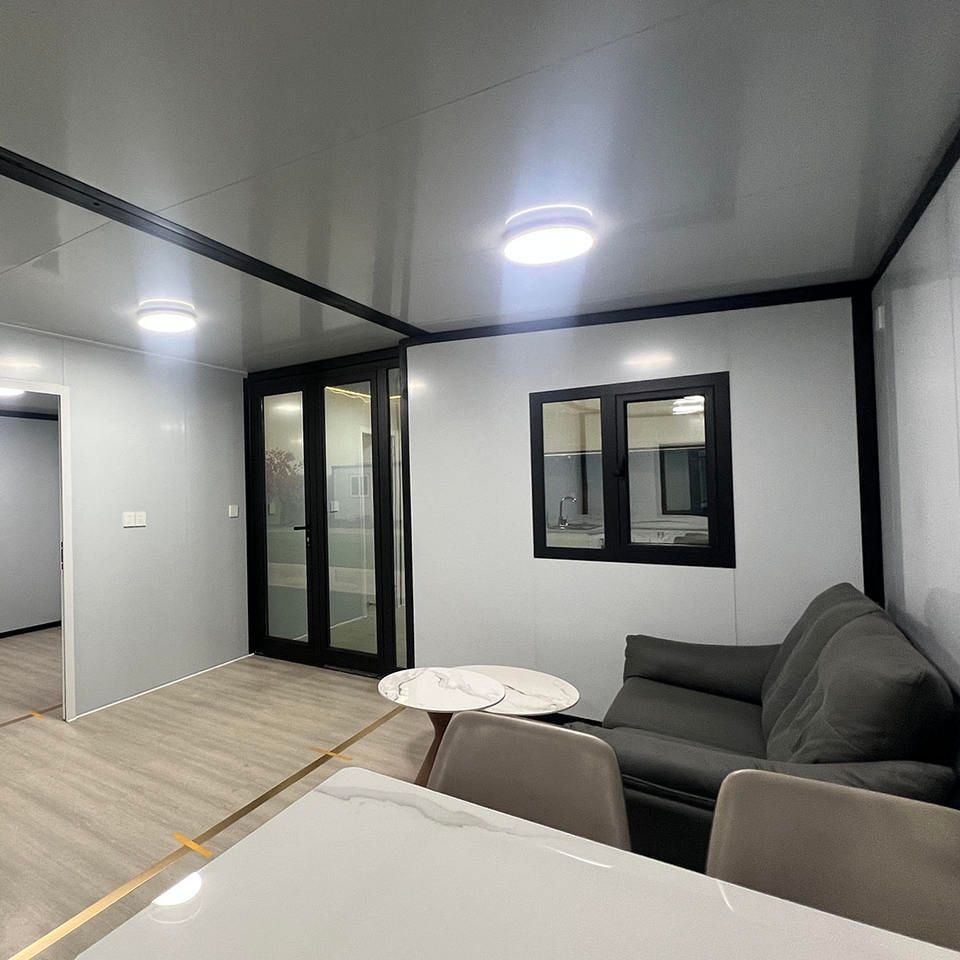
1. Clarify Product Customization and Material Requirements
Prioritize manufacturers that support customized design. For example, Henan K-Home Steel Structure Co., Ltd. can adjust layouts according to customer needs and offer material options such as Q235B steel frames and 60mm EPS/rock wool/PU sandwich panels. Material selection directly affects the durability, thermal insulation performance, and safety of the house, so it is necessary to confirm whether the material parameters meet the standards based on the project environment (e.g., climate, service life). If the project has special requirements (e.g., corrosion resistance, fire rating), it is essential to communicate technical feasibility with the manufacturer in advance.
2. Verify Certification and Quality Standards
Manufacturers with CE and ISO certifications are more reliable, as these certifications indicate that their products comply with international quality and safety standards, reducing the risk of later acceptance failures. The certification scope should cover core components (e.g., steel structures, electrical systems) to avoid situations where some manufacturers promote overall certification while only some of their products meet the standards. If the project involves exports, it is also necessary to confirm whether the manufacturer is familiar with the compliance requirements of the target market (e.g., U.S. HUD standards, Australian AS standards).
3. Evaluate Production Capacity and Delivery Lead Time
Confirm the manufacturer's monthly production capacity based on the project scale (e.g., some factories produce 1,000 units per month) to avoid project delays due to insufficient capacity. It is necessary to clarify whether the delivery lead time includes transportation time, especially for cross-border projects where uncontrollable factors such as sea or land transportation should be considered. If the project requires rapid deployment (e.g., post-disaster reconstruction), manufacturers offering products like "flat-pack container houses" that are easy to transport can be chosen, as these products can shorten on-site assembly time.
4. Match Application Scenarios and Design Flexibility
Different scenarios have significantly different requirements for house structures: dormitories need to consider per capita area and ventilation design, temporary offices need to reserve space for network cabling, and hotels require modular expansion capabilities. Prioritize manufacturers that offer modular solutions, such as container houses that support horizontal or vertical splicing, to reduce later renovation costs. If the project requires long-term use, it is necessary to confirm whether the manufacturer provides maintenance services (e.g., corrosion protection treatment, component replacement).
5. Focus on Sustainability Advantages
If the project emphasizes environmental protection, manufacturers using recycled containers as raw materials can be chosen, as these products can reduce carbon emissions (approximately 30% lower than newly built containers) and construction waste. It is necessary to confirm the source and processing technology of the recycled materials to avoid structural strength issues due to material aging. Some manufacturers also offer green designs such as solar integration and rainwater harvesting, which can further reduce the environmental impact throughout the project's lifecycle.



