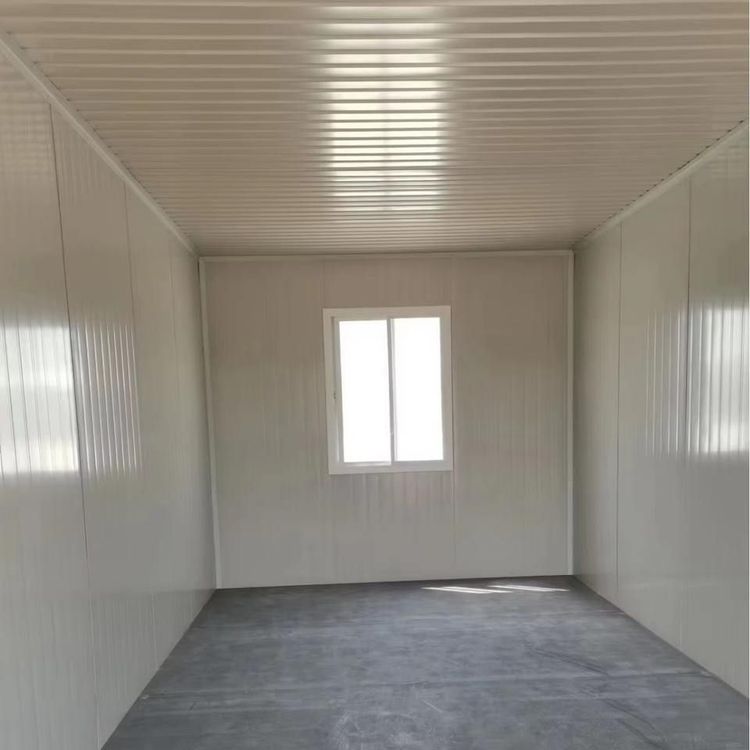
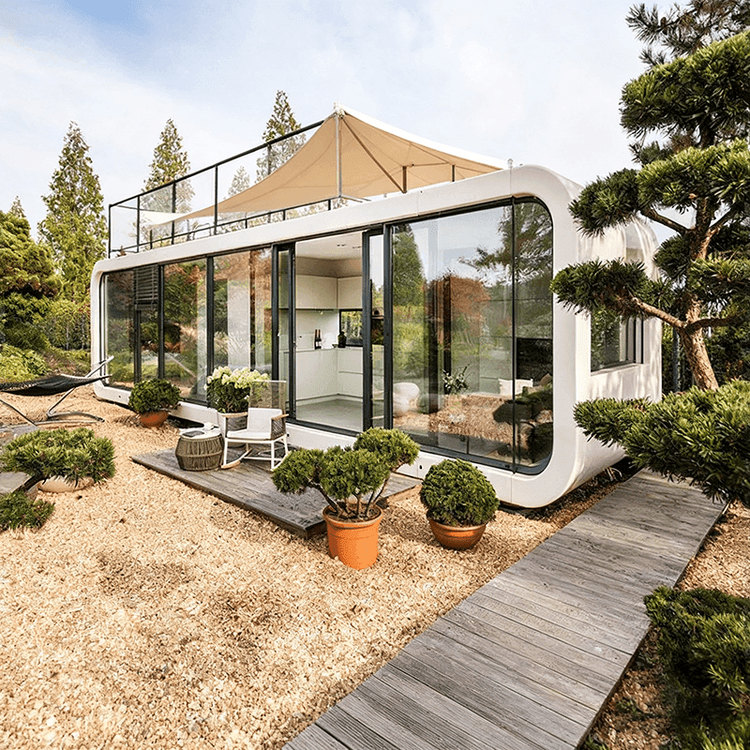
Prefabricated Characteristic Housing
Prefabricated characteristic housing typically refers to modular construction, also known as 'prefabricated housing'. It is a new building model that involves disassembling the building into independent unit modules, which are prefabricated in factories and then transported to the site for assembly.

Construction Model
The core of modular construction lies in 'factory prefabrication + on-site assembly'. Components such as ceilings, floors, walls, and water and electricity pipelines are all produced in a standardized manner on factory assembly lines. Each module functions independently like a 'building block'. After being transported to the construction site, the modules can be quickly assembled into a complete building through mechanical lifting and bolt connection techniques. This model breaks free from the traditional building's dependence on climate and site conditions, enabling parallel operations of 'production first and construction later'.
Advantages and Characteristics
- Significantly shortened construction period: The construction period of modular buildings is more than 60% shorter than that of traditional models. For example, a public housing project in Shenzhen, Guangdong, used 6,028 concrete modules to compress the completion time from 2.5-3 years to 1 year. The efficiency improvement stems from the simultaneous progress of factory prefabrication and on-site assembly.
- Precise and controllable quality: Each module is equipped with a unique 'ID card' that records information such as the project name, model, and production date. The positioning accuracy of steel bars is measured in millimeters, and the error control is far superior to that of on-site construction, ensuring the stability of building quality.
- Outstanding energy-saving and environmental protection benefits: Factories adopt automated production lines and three-dimensional warehouses, reducing on-site noise, dust, and construction waste. Fujian Province has established industrial bases through policy guidance, reducing construction waste by more than 70% and alleviating social issues such as traffic congestion.
- Strong maintenance and scalability: Modular design supports local maintenance or functional upgrades, such as replacing damaged modules or adding equipment rooms, adapting to diverse scenarios such as office buildings, hotels, and schools.
Market Development Status
- Increased recognition in overseas markets: Domestically produced prefabricated housing has become a characteristic category of China's equipment manufacturing exports, providing a 'Chinese solution' for the global construction industry's transformation with its advantages of rapid delivery and environmental protection.
- Continuous growth in export data: In the first four months of 2026, the export of movable housing in the Guangzhou Customs area reached 1.4 billion yuan, a year-on-year increase of 38.1%. In the first seven months of this year, the Shatian Customs under the Huangpu Customs supervised the export of 23 batches of modular housing with a value of 548 million yuan, a surge of 7.3 times year-on-year.
- Remarkable export achievements by enterprises: Guangdong CIMC Construction Manufacturing Co., Ltd.'s products cover high-end office buildings, data centers, and other fields, with market expansion to more than 20 countries including the United Kingdom and Australia. Its average annual output value reaches 77.458 million yuan, and the delivery value in the first half of 2024 has reached 59.772 million yuan.