
Portable Toilets for Daily Life
Portable toilets for daily life are facilities that can be moved as a whole and provide toilet services to the public, featuring various types and characteristics.
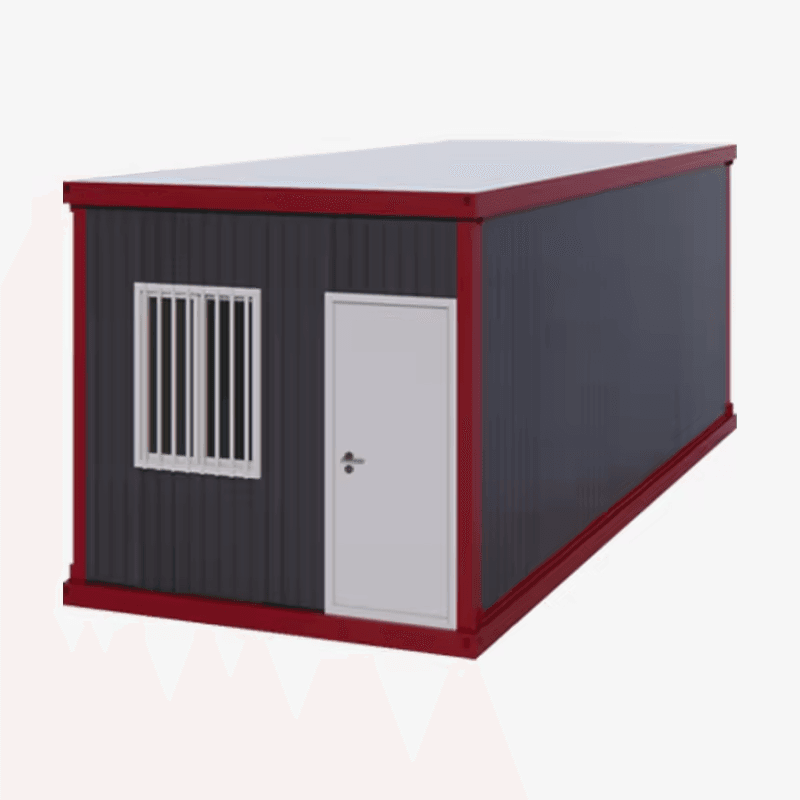
I. Basic Composition and Material Development Portable toilets for daily life consist of fecal sewage storage tanks (or disposal devices), floor slabs, sanitary ware, walls, washing equipment, water tanks, roofs, and mobile devices. Initially made of wood, they had a simple structure and were prone to absorbing odors. Later, they gradually evolved to use materials such as fiberglass and polyethylene, enhancing durability and odor resistance.
II. Classification Methods
- By structural form: They are divided into single-unit structures (independent units) and composite structures (multi-unit combinations).
- By mobility: They include lifting/handling types (requiring mechanical assistance for movement) and powered/trailer types (with built-in power or capable of being towed).
- By sewage treatment method:
- Water-flush and non-water-flush suction types: Rely on external water sources or suction devices to treat waste.
- Recirculating water-flush types: Equipped with intermittent aerobic and anaerobic treatment devices, they add biological strains and use biofilm technology to decompose feces. The treated water is recirculated for flushing, achieving water conservation.
- Dry-pack types: Without water-flush devices, waste is collected in biodegradable plastic bags, which are automatically replaced and collected for disposal after use.
- Other types: Such as foam-sealing types (using foam to cover waste) and microbial types (utilizing microorganisms for decomposition).
III. Uniqueness of Mobile Environmental Toilets As a type of portable toilet for daily life, mobile environmental toilets employ new materials and water-saving technologies. Their frames are welded from national standard steel, with surfaces covered in anti-corrosive and fire-resistant materials such as color-coated steel plates or carved panels, offering a lifespan of over 20 years. Internally, they are equipped with independent toilet pit partitioned treatment systems. The urine channel utilizes gravity flow, while the feces channel is cleaned by a piston-type scraper mechanical device. They also feature non-slip floors, automatic flushing toilet bowls, and ventilation and lighting systems, complying with the GBLT18091-92 standard. Their intelligent control systems enable low-water-volume flushing of 0.46 to 1.5 liters per person, with materials mostly being eco-friendly panels that have recycling value. Additionally, they occupy a small area, have a short construction period, and can be reused.
IV. Application Scenarios They are suitable for stations, docks, tourist attractions, villa areas, newly built residential areas, large construction sites, squares, densely populated public places, and bustling commercial streets, especially for scenarios with high temporary or mobile demands.



