Back to blog
Article
Portable Toilet Rental: A Practical Buyer's Guide
Admin October 25, 2026
The core content of "Portable Toilet Rental: A Practical Buyer's Guide" covers service types, costs, materials, service provider selection, and typical scenarios, providing systematic guidance for rental decisions.

Service Types and Applicable Scenarios
Portable toilet rental requires matching functions to scenarios:
- Standard Construction Site Toilets: Suitable for construction sites, high-altitude operations, etc. Equipped with non-slip floors, 60-gallon waste tanks, and support weekly chemical pumping, internal pressure disinfection, and toilet paper replenishment to ensure long-term hygiene.
- Event-Specific Toilets: For large events (such as the Floresville Peanut Festival), bookings are required 4-8 weeks in advance. Some service providers offer luxury trailer options with sinks and air conditioning to enhance the user experience.
- Accessible Toilets (ADA Compliant): Meet the needs of disabled individuals, featuring ground-level entry, reinforced handrails, and 60-inch turning space, complying with the Americans with Disabilities Act standards.
- Flush Toilets: Suitable for scenarios with high hygiene requirements, offering two sewage treatment methods: water circulation (water-saving) or dry packing (waterless environments) to reduce odors.
Costs and Billing Models
Rental costs are influenced by specifications, duration, and service frequency:
- Base Fees: Short-term single-unit rental (including delivery, installation, and retrieval) starts at $250, with higher costs for long-term rentals or premium models.
- Service Content: Includes regular waste removal, high-pressure cleaning, biological deodorizer replenishment, and double-ply toilet paper supply. Some service providers ensure facilities comply with regional safety standards such as California's Cal/OSHA Title 8.
- Additional Fees: Overtime use, special cleaning requirements, or emergency deliveries may incur additional costs. Confirm the billing structure in advance.
Materials and Structural Characteristics
Modern portable toilets optimize performance through material upgrades:
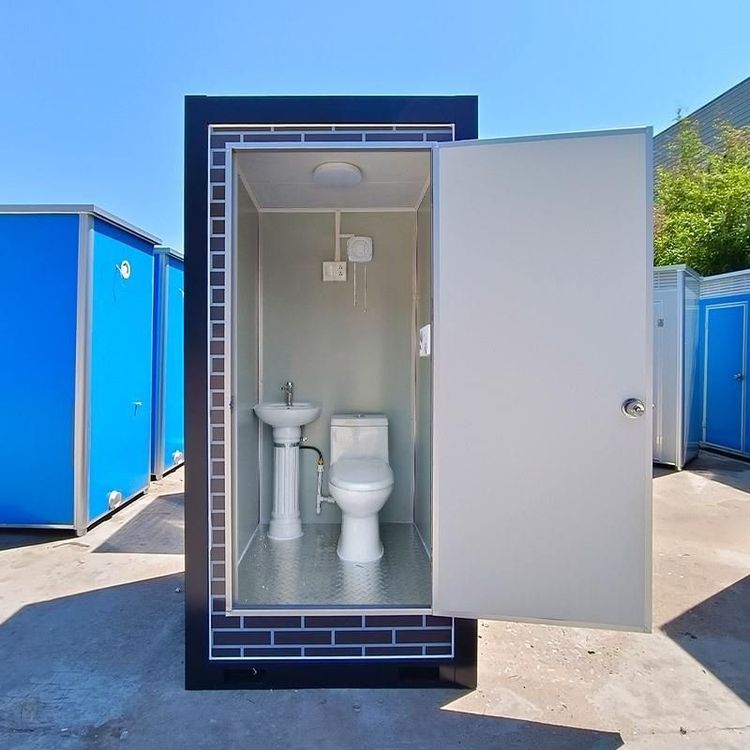
- Main Body Materials: Use fiberglass and high-density polyethylene instead of traditional wood, reducing odor absorption and enhancing durability.
- Structural Classification: Divided into single-unit structures (independent units) and composite structures (multi-unit combinations), with mobility methods including lifting, towing, or powered driving to adapt to different terrains.
- Sewage Treatment Technologies: Include flush toilets (requiring a water source), waterless suction toilets (relying on vacuum pumps), circulating flush toilets (water-saving), and dry packing toilets (waterless environments), flexibly addressing construction sites, events, or disaster relief scenarios.
Key Factors in Selecting Service Providers
Comprehensively evaluate response speed, service flexibility, and transparency:
- Response Speed: Prioritize service providers offering instant quotes without cumbersome forms (such as Mobile Comfort in Floresville or Zelmari in Rancho Cucamonga).
- Service Flexibility: Confirm whether delivery times avoid peak hours (e.g., early morning delivery to minimize impact on construction sites or events).
- Transparency: Require clear pumping plans, billing structures, and potential additional fees to avoid hidden costs.
Typical Application Scenarios
- Construction Sites: Choose high-density polyethylene structure toilets to meet the long-term hygiene needs of construction teams.
- Public Events: Configure toilet quantities based on foot traffic. For large events, luxury trailers are recommended to enhance the user experience.
- Emergency or Temporary Needs: In scenarios such as natural disaster relief or areas with insufficient public restrooms, portable toilets can be quickly deployed and reused.
Related