Portable Toilet Style: Top Options & Considerations
The main types of portable toilets and the key factors to consider when choosing them are as follows:

Portable toilets come in a variety of types and can be classified into multiple forms based on different criteria. In terms of structural form, they can be divided into single-structure mobile toilets and composite-structure mobile toilets. Single-structure toilets are relatively simple and independent, suitable for small-scale usage scenarios; composite-structure toilets are composed of multiple parts, offering richer functions and meeting larger-scale or more complex needs. Based on mobility methods, there are lifting and handling-type mobile toilets, which are flexible in movement but rely on external equipment; power-driven and trailer-type mobile toilets have their own power or can be towed, making movement more convenient and efficient. Regarding sewage treatment methods, water-flush and waterless suction-type mobile toilets are more common. Water-flush toilets have high cleanliness but require a water source; waterless suction-type toilets do not need a water source and handle waste through suction. Recirculating water-flush mobile toilets can achieve water resource recycling, being environmentally friendly and water-saving; dry-packing mobile toilets pack waste in a dry form for easy subsequent treatment.
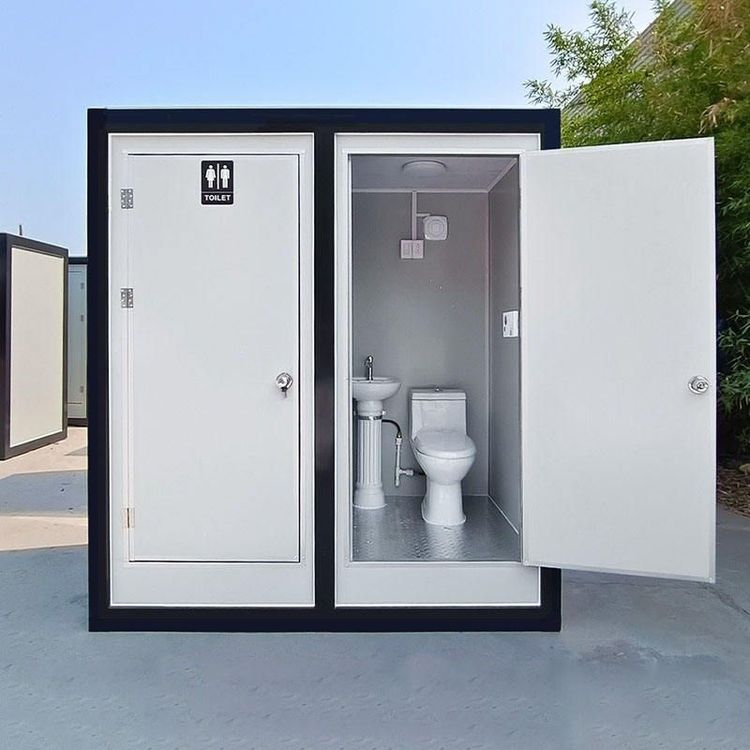
In terms of usage scenarios and functions, standard portable toilets are equipped with basic facilities such as toilet seats and waste storage tanks, and some also have hand sanitizer dispensers. They are lightweight and compact, suitable for outdoor activities and workplaces. High-end or comfortable portable toilets are designed for occasions requiring higher hygiene standards or additional comfort, equipped with built-in sinks or flushing systems. Durable portable toilets are often used in construction sites, being sturdy and easy to transport and maintain. Special-design portable toilets, such as the HDPE small VIP mobile toilets designed for the Dubai market, are made of high-density polyethylene material, corrosion-resistant and with a long lifespan, equipped with sit-down flushing systems, suitable for areas with limited space.
When choosing a portable toilet, multiple factors need to be considered comprehensively. The size should meet the spatial requirements of the usage site to avoid being too large or too small. In terms of facilities, choose whether to be equipped with a sink, flushing system, etc., according to needs. Hygiene capability is crucial; ensure that waste can be effectively treated and cleanliness maintained. At the same time, consider the specific needs of the occasion, such as construction sites focusing on durability, high-end events pursuing comfort, and areas with limited space requiring special designs.