Portable Toilet Size Sizes & Dimensions: A Complete Guide
The sizes and dimensions of portable toilets vary significantly depending on their type and design. Common types include ultra-portable, compact, and modular installation models, with specific size ranges as follows:
1. Ultra-Portable: Extremely Small When Folded
Some designs prioritize ultimate portability, such as the portable toilet designed by German designer Eva Tint. When folded, it measures approximately 12 cm (length) × 28 cm (width), with an unspecified but presumably thin thickness. These products typically feature foldable or detachable designs, are made of lightweight plastics or composite materials, and are light enough to fit into a woman's handbag or backpack. They are suitable for outdoor activities like hiking and camping. The design focuses on minimizing space usage, but they require assembly before use and may need additional accessories (such as storage bags or mounting brackets) for support.
2. Compact: Ideal for Space-Limited Areas
Represented by small VIP mobile toilets made of HDPE material, these products feature an integrated compact design. Although specific dimensions are not clearly marked, they are generally smaller in volume than standard modular toilets. Their key feature is optimizing internal space (e.g., folding doors, retractable seats) to reduce the footprint, making them suitable for temporary events, construction sites, and other space-constrained scenarios. HDPE (high-density polyethylene) is corrosion-resistant and easy to clean, extending the product's lifespan.
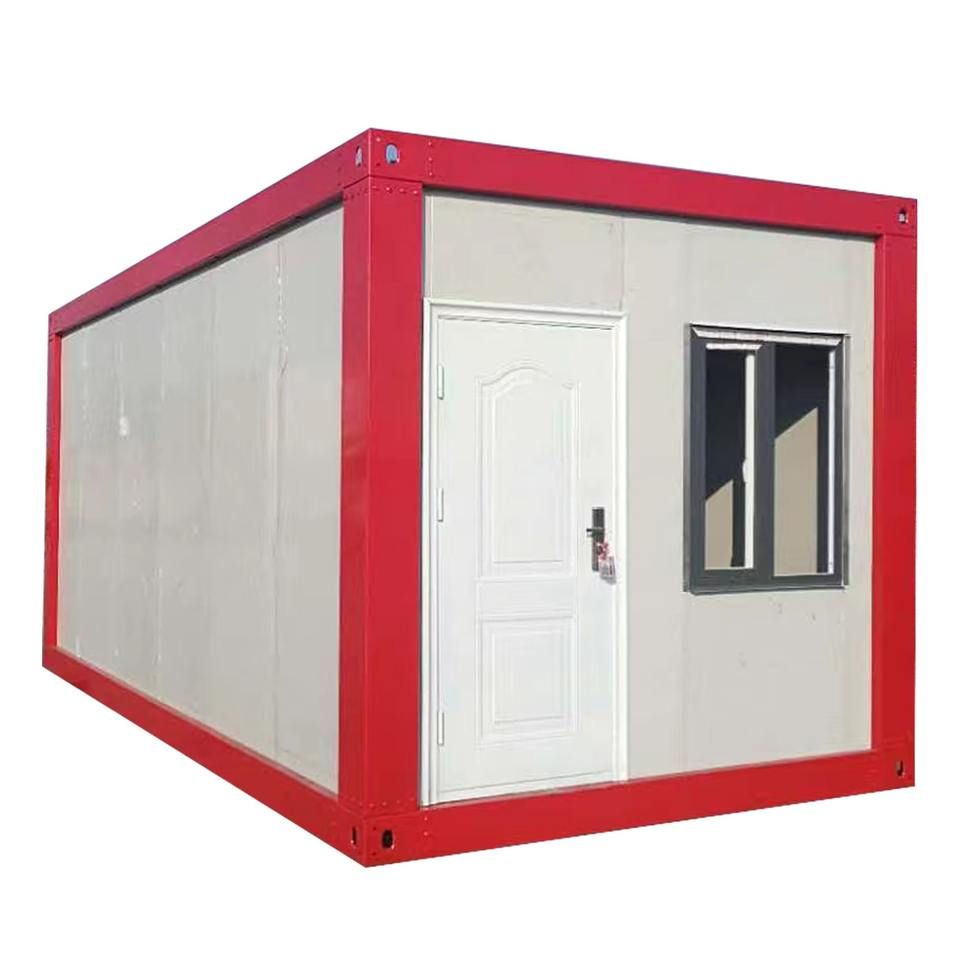
3. Modular Installation: Standard Sizes for Long-Term Use
Economical modular portable toilets offer standardized dimensions, typically 1.1 meters in length, 1.1 meters in width, and 2.3 meters in height, with roof and wall thicknesses of 50 mm and a footprint of approximately 1.21 square meters. These products use a frame structure, with walls possibly made of color-coated steel or fiberglass-reinforced plastic. They are equipped with basic facilities (such as toilets, sinks, and ventilation systems) and are suitable for long-term deployment in scenic spots, disaster areas, etc. Their advantage lies in quick assembly and disassembly, and the modular design supports expansion (e.g., adding multiple units to form a toilet cluster).
Summary: The choice of portable toilet size should be based on the usage scenario. Ultra-portable models are suitable for short-term personal use, compact models balance portability and functionality, while modular models meet large-scale, long-term deployment needs. Before purchasing, it is recommended to clarify the usage scenario, number of users, and installation conditions to select the most appropriate specifications.