
Portable Toilet for Public Use
Portable toilets are facilities that can be moved as a whole and provide toilet services to the public. They are suitable for various locations and feature flexible deployment, multiple structural forms, and diverse sewage treatment methods.
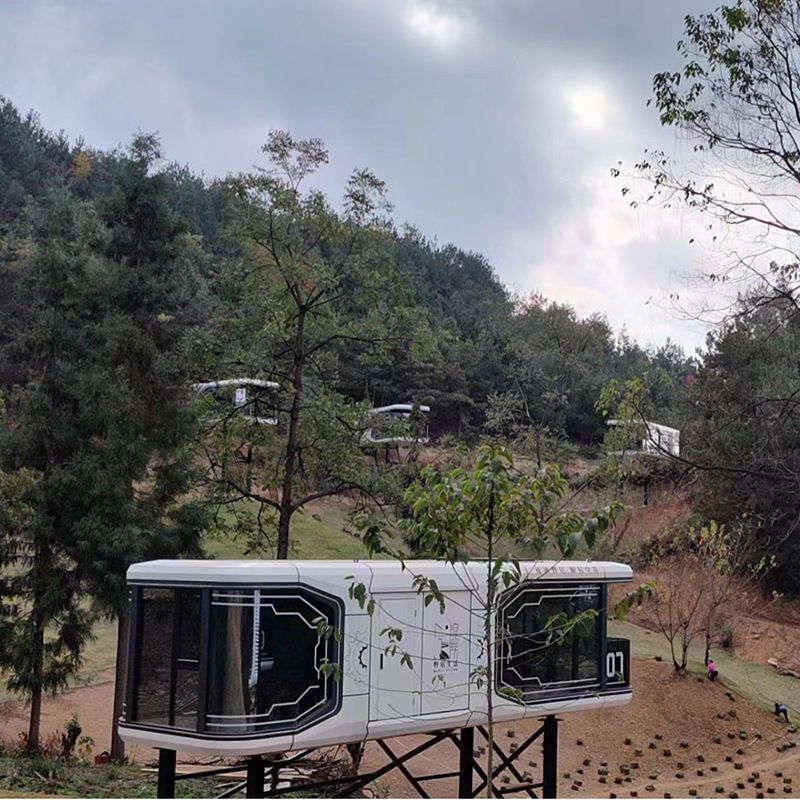
Wide range of applicable locations: Portable toilets are not restricted by fixed buildings and can be placed at locations with fixed or temporary needs. Common application scenarios include stations, docks, tourist attractions, villa areas, newly built residential communities, large construction sites, squares, densely populated public places, and bustling commercial streets. For example, during large-scale exhibitions, portable toilets can be flexibly deployed around the exhibition area according to the density of the crowd to promptly meet people's toilet needs. In remote outdoor scenic spots, they can also be quickly set up to provide convenience for tourists.
Advantages of flexible deployment: They have the advantages of being movable, combinable, and easy to transport. Whether for daily use in urban commercial areas or in response to emergencies or temporary events, they can be flexibly adjusted according to actual needs. For instance, when hosting large-scale sports events, portable toilets can be combined into toilet areas of different scales and forms according to the layout of the competition venue and the number of spectators to meet the toilet needs during the event.
Diverse structural forms: According to their structural forms, they can be divided into single-structure portable toilets and composite-structure portable toilets. Single-structure portable toilets are relatively independent and are suitable for places with limited space or relatively simple toilet facility requirements. Composite-structure portable toilets are composed of multiple single units and have more complete functions, which can meet the toilet needs of larger groups of people.
Rich moving methods: According to their moving methods, they can be divided into lifting and handling-type portable toilets and powered and towed-type portable toilets. Lifting and handling-type portable toilets are suitable for locations that are relatively close and easy to handle. Powered and towed-type portable toilets have stronger mobility and can be quickly moved to different locations by vehicle traction.
Multiple sewage treatment methods: According to their sewage treatment methods, they can be divided into water-flush and waterless-flush suction-type portable toilets, circulating water-flush portable toilets, and dry-packing portable toilets. Water-flush and waterless-flush suction-type portable toilets treat fecal sewage in different ways. Circulating water-flush portable toilets can achieve water resource recycling and save water. Dry-packing portable toilets pack and treat feces without using water and are suitable for water-scarce areas or places with high environmental protection requirements.



