
Conversion of Port Truck Containers into Houses
Converting port truck containers into houses requires comprehensive consideration of legality, technical specifications, and usage needs. Direct modification poses legal risks, and compliance modifications are necessary to achieve housing functionality.
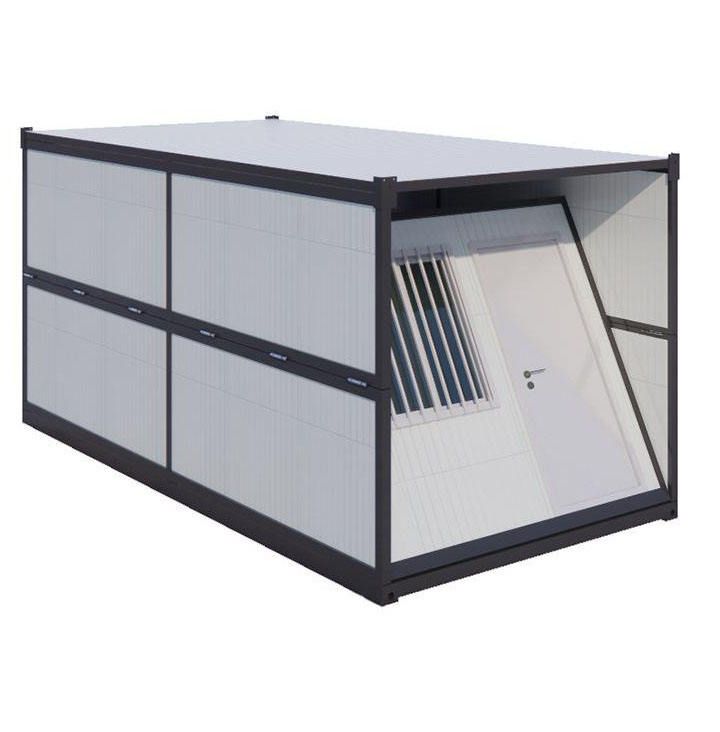
1. Legal Aspect: The Legality of Modifying Truck Containers into Houses is Questionable
According to Article 16 of the Road Traffic Safety Law of the People's Republic of China, no unit or individual may alter the registered structure, construction, or features of a motor vehicle without authorization. If a truck container is used as a transportation tool, its structure, dimensions, and purpose must comply with registration requirements. Unauthorized modifications may face penalties. For example, converting a truck container into a fixed residential house may involve changing the vehicle's purpose and structure, requiring an application for a change of registration with the traffic management department. Otherwise, it may be deemed illegal modification.
2. Technical Aspect: Container Modifications for Houses Must Meet Building Codes
Container modifications for houses must comply with building safety standards, including structural strength, fire resistance, waterproofing, and ventilation requirements.
- Structural Reinforcement: Containers are originally designed as transportation carriers. For long-term use as houses, the floor, walls, and connectors must be reinforced to prevent deformation or collapse.
- Functional Enhancement: Water and electricity pipelines, insulation layers, doors, windows, and ventilation systems must be added to ensure residential comfort. For example, prefabricated container houses in the European market often use sandwich panels (metal panels + insulation core materials) to improve thermal insulation performance.
- Compliance Certification: Some countries require modified houses to pass building certifications, such as the EU CE certification, to ensure material safety and environmental compliance.
3. Practical Case: Modular Construction Provides a Compliant Modification Path
Referring to China's modular construction export cases, standardized modular houses can legally convert containers into houses through factory prefabrication and on-site assembly.
- Factory Prefabrication: The main structure, water and electricity pipelines, and interior decoration are completed in the factory, reducing on-site construction and lowering the risk of illegal modifications.
- Transportation Compliance: Prefabricated modules are transported as "cargo" and must comply with container transportation regulations (such as stacking and reinforcement requirements) to avoid being deemed illegal modifications of vehicles.
- On-site Assembly: After arriving at the destination, the modules are simply assembled (e.g., bolted connections) to form a complete house without substantial modifications to the container structure.
4. Operational Recommendation: Prioritize Prefabricated Modular Houses
If containers are to be used for housing construction, it is recommended to directly purchase prefabricated modular houses rather than modifying existing truck containers. These houses have already met building codes through factory production, and their transportation and assembly processes are legal and compliant, avoiding legal risks and technical challenges.


