
Outdoor Mobile Toilet Buying Guide
When selecting an outdoor mobile toilet, it is necessary to comprehensively consider the usage scenario, material and craftsmanship, and sewage discharge method. Here is a specific guide:
1. Choose the style according to the usage scenario
The functional requirements for mobile toilets vary significantly across different scenarios. For construction sites, temporary construction sites, or short-term events, it is recommended to choose a simple steel-structured mobile toilet. It has a sturdy structure, is easy to assemble and disassemble, can be repeatedly transported, and is simple to maintain, offering excellent cost-effectiveness. For scenic spots, parks, municipal roads, or cultural and tourism parks, attention should be paid to environmental integration. Prefabricated landscape mobile toilets have a simple and elegant appearance, good sealing, and can effectively reduce odor accumulation. For rural outdoors, camping bases, or sites without a pipeline network, a pipeline-free ecological mobile toilet should be chosen. It does not require complex civil construction, has a reasonable sewage discharge design, is leak-proof and easy to clean, and can significantly reduce later maintenance costs. For large-scale events such as sports competitions, exhibitions, or team-building activities, which need to meet high foot traffic demands, multi-compartment mobile public toilets with sufficient squatting positions, high personnel turnover efficiency, and strong load-bearing capacity are required.
2. Focus on material and craftsmanship
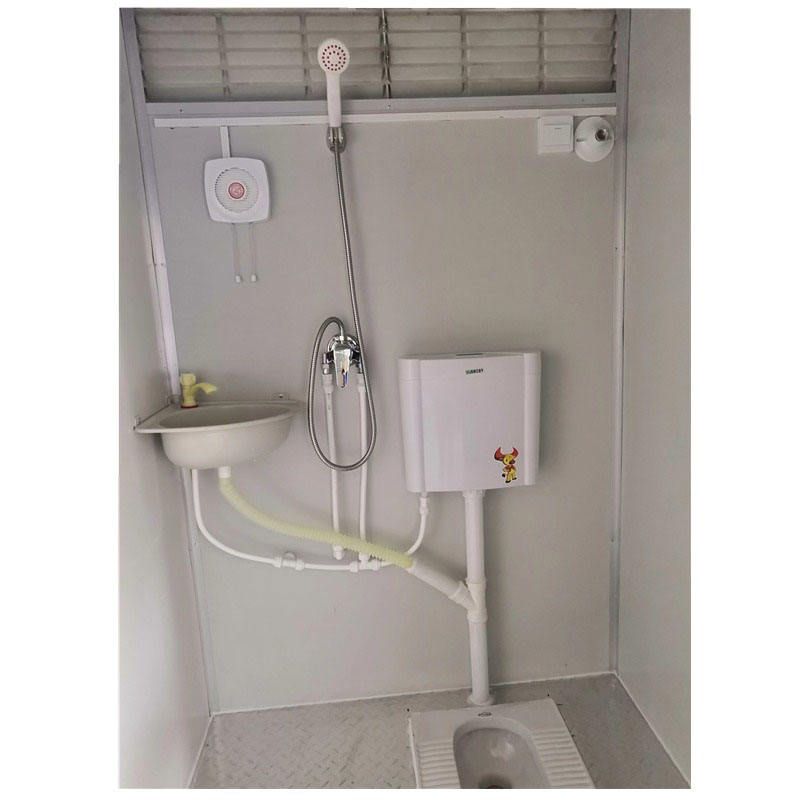
Material and craftsmanship directly affect the durability and user experience of mobile toilets. The main frame should be made of hot-dip galvanized square steel welded structure, which has excellent wind, sun, and corrosion resistance, with a service life of more than 10 years. The exterior wall panels should be selected according to the scenario: metal carved panels combine thermal insulation, waterproofing, and corrosion resistance, suitable for municipal or scenic spot scenarios; color steel panels are lightweight and cost-effective, suitable for short-term use on construction sites; landscape-shaped panels have a higher aesthetic appeal, suitable for gardens or cultural and tourism scenic spots. The internal configuration should focus on the completeness of basic functions, including anti-slip and wear-resistant floors, odor-proof ceramic sanitary ware, ventilation and air exchange equipment, energy-saving lighting, privacy door locks, and storage hooks. At the same time, special attention should be paid to checking the sealing craftsmanship, such as whether the odor-proof design at door seams and sewage outlets is in place.
3. Select the sewage discharge method according to the site conditions
The sewage discharge method must strictly match the pipeline network conditions of the site. For areas with a municipal pipeline network, a direct discharge method can be chosen, where sewage is directly connected to the sewer, resulting in low operation and maintenance costs. For areas without a pipeline network, a packaging or biodegradation method should be chosen. The former achieves pollution-free treatment through replaceable fecal bags, while the latter uses microorganisms to decompose feces, suitable for ecologically sensitive areas. For water-scarce or cold areas, a foam sealing method is recommended, which reduces odor by covering feces with foaming liquid and also reduces water consumption. It should be noted that choosing the wrong sewage discharge method may result in the equipment being unable to function normally or increase later renovation costs.



