
Mobile Toilet with Cover
Mobile toilets typically come with a covering structure (i.e., a 'cover'), with their roof design serving as a broad-sense 'cover' that meets basic needs for wind, rain, and sun protection.
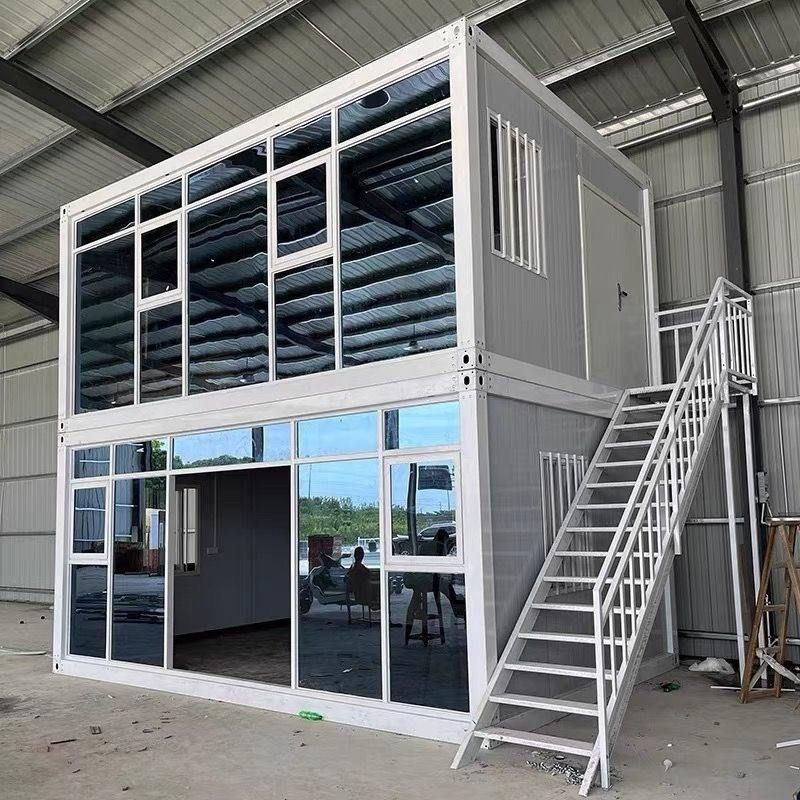
As movable public sanitation facilities, mobile toilets are primarily designed to meet toilet needs in temporary or mobile scenarios while ensuring structural stability and ease of use. According to their standard configurations, mobile toilets typically include basic structures such as walls, roofs, sanitary fixtures (e.g., toilets or squat pans), and ventilation systems. Among these, the roof, as the core part of the covering structure, directly fulfills the function of a 'cover', effectively blocking rainwater, direct sunlight, and some wind-blown sand to ensure a relatively comfortable and hygienic internal environment.
From a functional perspective, the 'cover' of a mobile toilet must meet the following conditions:
- Coverage: The roof must fully cover the toilet area to prevent rainwater or foreign objects from directly falling inside, which could affect the user experience or cause hygiene issues.
- Stability: Since mobile toilets may be deployed outdoors, the roof must be capable of withstanding wind and snow loads to prevent structural damage caused by extreme weather conditions.
- Lightweight: To facilitate transportation and installation, roofing materials are typically chosen to be lightweight yet sturdy (e.g., metal sheets, composite materials), reducing the overall weight while ensuring functionality.
It should be noted that users may interpret 'with cover' as an independent, openable lid similar to those found on household trash cans (e.g., the lid of an adhesive bag trash can). However, such designs are uncommon in mobile toilets. The 'cover' in mobile toilets more often refers to a fixed roof structure rather than a local covering for individual fixtures. If users have higher demands for local odor control or privacy protection, some mobile toilets may incorporate auxiliary designs such as door curtains, ventilation systems, or small exhaust fans. However, these are additional configurations and not part of the standard 'cover'.
In summary, the 'cover' of a mobile toilet exists in the form of a roof and is an indispensable part of its standard structure, meeting basic protective needs. For further optimization of the user experience, models equipped with additional protective devices can be selected.
You may also like

Container House Installation Guide: A Complete Walkthrough
Read More
Portable Toilet Eco-Friendly Custom & OEM: Design & Bulk Production Guide
Read More
How to Assemble & Install Container House Step by Step
Read More