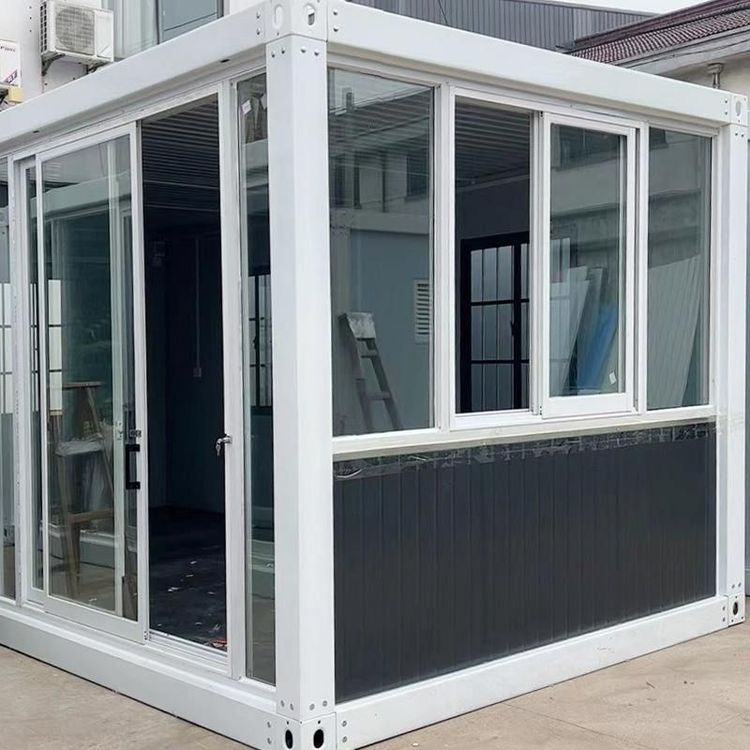
Uses of Mobile Toilets
Mobile toilets are flexible and convenient sanitation facilities with a wide range of uses, covering emergency support, public services, environmental management, and other fields.

Diverse Application Scenarios
The core purpose of mobile toilets is to meet toilet needs in temporary or specific scenarios. During large-scale events (such as exhibitions, music festivals, and sports events), there is a sudden influx of people in a short period, and traditional fixed toilets cannot handle the pressure. Mobile toilets can be quickly deployed and dispersed, effectively alleviating the problem of long toilet queues. After natural disasters, infrastructure in remote disaster areas is damaged. Mobile toilets can quickly restore basic sanitation conditions and avoid the risk of disease transmission caused by sewage overflow. During holidays, tourist attractions often face a surge in visitors. Mobile toilets can supplement the number of fixed toilets and enhance the visitor experience. At construction sites, due to the scattered work areas, mobile toilets can move along with the progress of the project, reducing workers' travel time and avoiding environmental pollution caused by随地排泄 (随地排泄 is a Chinese term meaning defecating or urinating anywhere, and here is translated in a descriptive way in the context). In addition, in densely populated areas such as stations, docks, squares, and commercial streets, as well as temporary demand scenarios like newly built residential areas and villa areas, mobile toilets can provide flexible solutions.
Significant Environmental Advantages
Modern mobile toilets generally adopt water-saving technologies. For example, vacuum sewage suction systems can reduce water consumption to one-fifth of that of traditional toilets. At the same time, they are equipped with sewage treatment devices that convert excreta into harmless substances or compliant wastewater through biological degradation, chemical treatment, or physical filtration, avoiding direct discharge that pollutes soil and water sources. Some high-end models also support recycling, using the treated water for flushing or landscaping, further reducing resource consumption.
Humanized Design Enhances Experience
The internal layout of mobile toilets focuses on practicality. They are usually equipped with basic facilities such as sinks, mirrors, lighting, and ventilation systems. Some models also add air conditioners, deodorization devices, and baby care stations to meet the needs of different groups. For example, barrier-free design toilets provide convenience for people with disabilities; children's toilets enhance safety by reducing height and adding cartoon elements.
An Important Supplement to Urban Management
With the acceleration of urbanization, problems such as uneven distribution of public toilets and difficulties in renovating old facilities have become prominent. As movable public health units, mobile toilets can quickly fill service blind spots, such as temporarily replacing fixed toilets under maintenance or serving as urban emergency reserve resources. Their modular design also supports large-scale combination to form temporary toilet clusters and meet the concentrated needs of large-scale events.