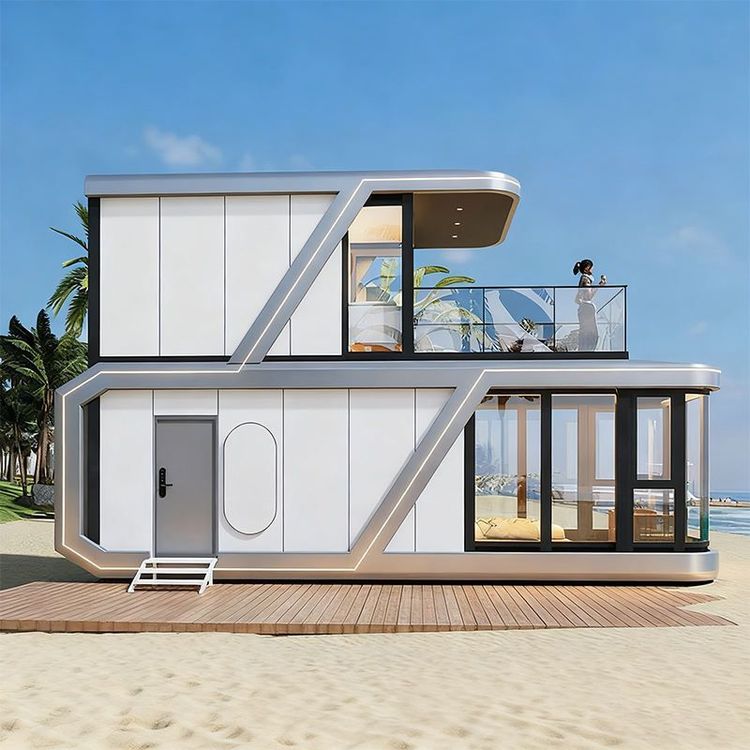
Mobile Toilet Restroom Sewerage
The sewerage situation of mobile toilet restrooms varies depending on their types.

Some mobile toilets can be used once connected to water supply and drainage systems after being placed on site. For example, there are mobile toilets with integral steel structures in Shanxi scenic spots. These toilets have complete internal configurations and can be put into use once connected to water supply and drainage. The sewerage system of such mobile toilets is similar to that of conventional restrooms, discharging sewage through pipes to designated sewage treatment areas or municipal sewage networks. The design and installation of their sewerage pipes need to take into account the mobility of mobile toilets. Usually, more flexible connection methods are adopted to facilitate easy disassembly and reinstallation when the mobile toilets are relocated.
Mobile toilets can be classified into multiple types according to sewage treatment methods, and different types have different requirements and treatment methods for sewerage.
- Water-flush and non-water-flush suction-type mobile toilets: Water-flush mobile toilets need to be connected to a water source. They flush feces and other waste into storage tanks or disposal devices through water flow and then discharge the sewage through sewerage pipes. Non-water-flush suction-type mobile toilets do not require a water source. They rely on suction equipment to suck feces and other waste into storage tanks. When the storage tanks are full, special vehicles are used to transport the waste away for treatment. Their sewerage mainly involves the discharge ports of the storage tanks, which need to be accurately connected to the suction pipes of the transport vehicles.
- Recirculating water-flush mobile toilets: These mobile toilets are equipped with a water recycling treatment system. They purify the used sewage and reuse it for flushing, greatly reducing water consumption. Their sewerage mainly involves introducing sewage into the treatment system. After treatment, the water returns to the water tank for recycling. Only a small amount of remaining waste needs to be discharged through sewerage pipes to storage tanks or external treatment facilities.
- Dry-packing mobile toilets: This type of mobile toilet does not use water for flushing. Instead, it uses biodegradable packaging bags to pack and collect feces and other waste. When the packaging bags are full, they can be directly replaced with new ones. This type basically does not involve sewerage issues, but the packed waste needs to be regularly cleaned up.