
Production Principle of Mobile Toilets
The production principles of mobile toilets mainly fall into two categories: handmade production and installation of pre-fabricated units without civil engineering.
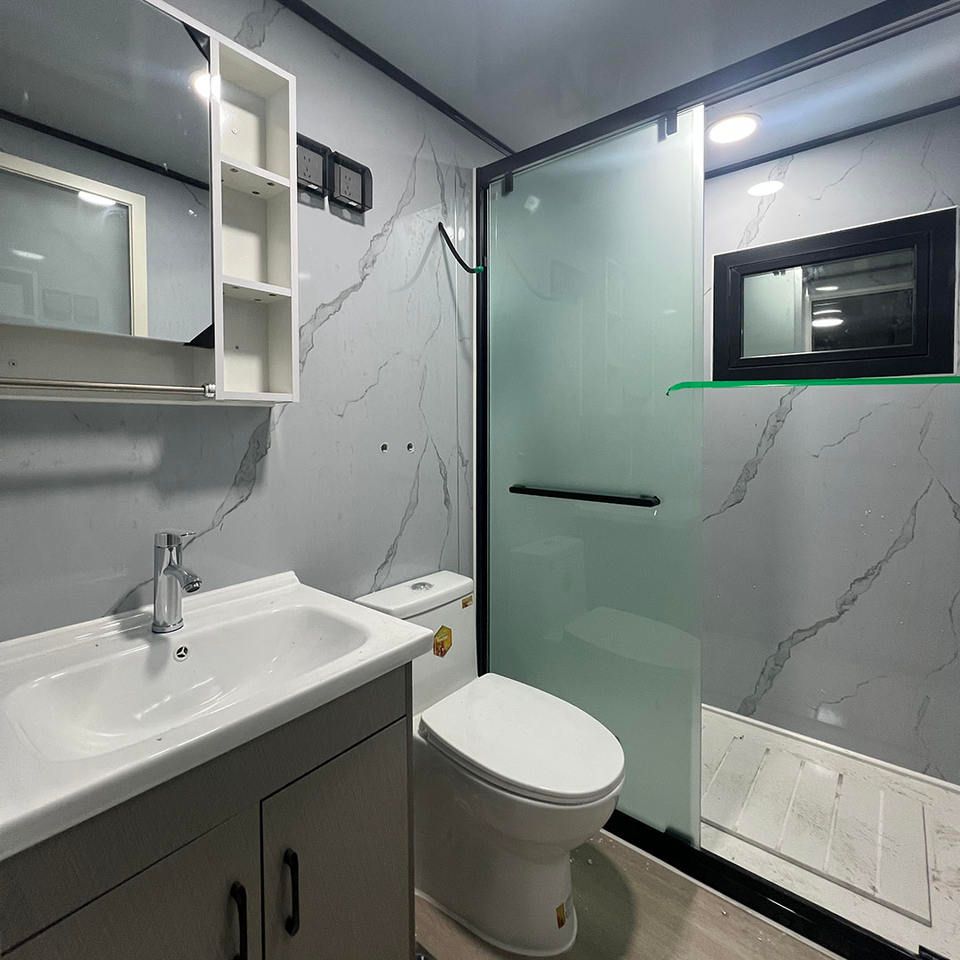
Handmade Production Method
Taking the handmade production using materials such as water storage tanks as an example, first, use an angle grinder to split the water storage tank in half lengthwise, forming the basic framework for production. Next, fix universal wheels at the four corners of a wooden board to make the entire toilet mobile, allowing for flexible placement at different locations. Then, secure wooden strips to the upper side of the tank to increase height, providing space for the installation of other components. Open a hole on the side of the water storage tank, install a door frame and plastic soft panels to form walls, providing privacy and protection. Place the upper half of the water storage tank on top of the wooden strips as a roof, providing shelter from wind and rain for the toilet.
In terms of drainage and water storage, open a hole at the bottom of the tank and install a drain pipe to form a floor drain, facilitating the discharge of sewage. Open holes on the side and bottom of the plastic tank to connect interfaces, and place it on the roof to form a water storage device for storing clean water. Connect water pipes to make a bath heater, providing a warm environment for the toilet. Install a toilet bowl and water tank, connect the drain pipe to a sewage tank to collect and treat sewage. Connect a three-way outlet pipe to extend a water pipe to the doorway as an inlet pipe for a sink, meeting users' needs for handwashing.
Installation Method for Pre-fabricated Units Without Civil Engineering
This method does not require complex on-site production and is operated like building with blocks. First, install columns to provide a stable supporting structure for the entire toilet. Then, proceed with splicing and fixing, ensuring that each fastener fits tightly to guarantee the structural integrity and good sealing of the toilet. This production method has the advantages of quick installation, easy disassembly, and mobility, enabling it to quickly meet the toilet service needs of locations or venues with fixed or temporary requirements.
As a facility that can be moved as a whole, mobile toilets can be flexibly placed at various locations according to different usage scenarios and needs, providing convenient toilet services for the public and customers.
You may also like

Portable Toilet for Energy Efficiency Solutions: A Buying Guide
Read More
Container House Custom Explained: How to Choose the Right One
Read More
Portable Toilet Design Custom & OEM: Design & Bulk Production Guide
Read More