
Mobile Toilet Plastic Exhaust
The layout of the plastic exhaust system for mobile toilets should be comprehensively designed from four aspects: the position of the exhaust outlet, the layout of the ventilation ducts, the selection of the fan, and auxiliary deodorization measures. The specific key points are as follows:
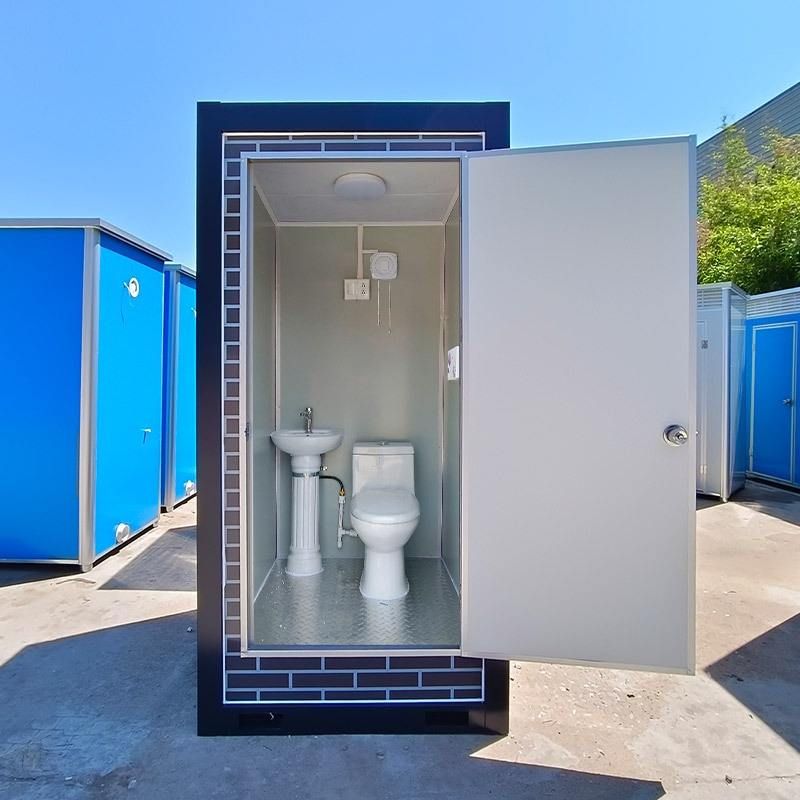
1. Selection of exhaust outlet position The exhaust outlet should be located away from areas where people are active to prevent the spread of odors and affect the user experience. It is usually installed at the top of the toilet or high on the side wall, with a height of more than 1.8 meters above the ground to minimize interference with ground activities. At the same time, it should avoid areas exposed to direct sunlight and heavy rain to prevent equipment aging or rainwater backflow. If installed on the side wall, ensure that the exhaust outlet faces the leeward side to prevent strong winds from causing airflow backflow.
2. Principles of ventilation duct layout The duct design should follow the principle of being "short, straight, and smooth" to reduce the number of bends and connections and lower airflow resistance. The duct diameter is recommended to be no less than 10 centimeters to ensure ventilation efficiency; if the duct is too long or has too many bends, the diameter should be appropriately increased to compensate for wind pressure loss. The duct material should be corrosion-resistant and well-sealed plastic or metal to prevent odor leakage. Connections should be fixed with special glue or clamps to prevent air leakage.
3. Fan selection and installation requirements For a single toilet stall, it is recommended to use an axial fan or centrifugal fan with an air volume of 15-20 cubic meters per minute. The specific model should be determined according to the toilet volume and ventilation requirements. When installing the fan, leave space for maintenance for easy later upkeep; the fan body should be horizontally calibrated to avoid vibration or noise. In addition, rainproof louvers (to prevent rainwater from entering) and insect screens (to prevent mosquito blockage) should be installed to extend the service life of the equipment. If the toilet is used frequently or has a strong odor, dual fans or variable-frequency fans can be selected to enhance ventilation effects.
4. Auxiliary deodorization and airflow optimization Activated carbon adsorption devices or deodorizing liquid spray systems can be used to further purify the exhausted air and reduce its impact on the environment. The internal ventilation fan is recommended to be designed with an "upper supply, lower exhaust" airflow mode, that is, air is supplied from the top and exhausted from the bottom, forming a vertical airflow circulation to accelerate odor removal and improve air freshness. Some manufacturers (such as Bazhou Miaoxin Environmental Protection Technology Co., Ltd.) offer integrated exhaust system products for mobile toilets, supporting customization of duct layout and fan parameters according to needs to optimize overall performance.
By scientifically designing the exhaust system, the odor problem in mobile toilets can be effectively solved, improving user comfort and hygiene levels.
You may also like

Container House Installation Guide: A Complete Walkthrough
Read More
Portable Toilet Eco-Friendly Custom & OEM: Design & Bulk Production Guide
Read More
How to Assemble & Install Container House Step by Step
Read More