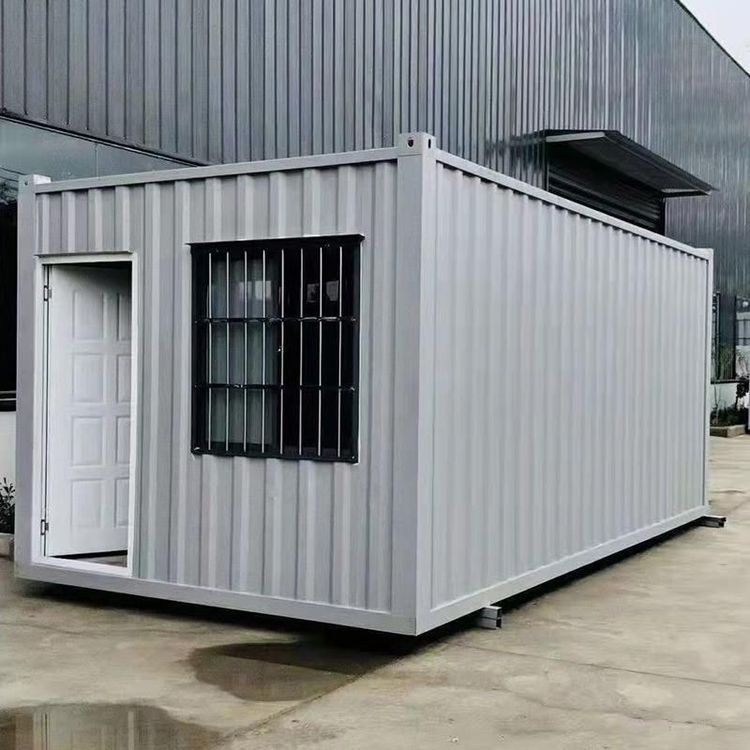
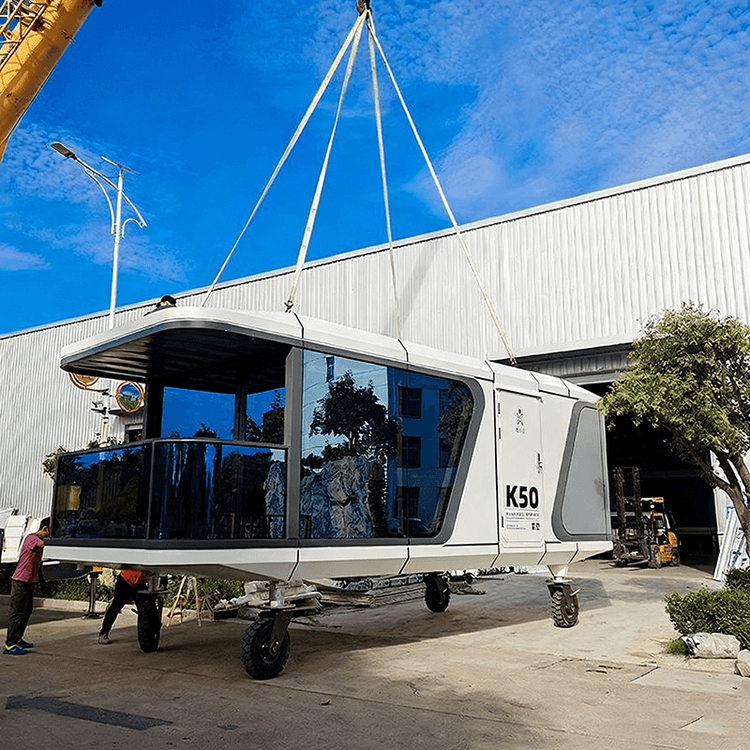
Mobile Toilet Outlet
The design of the mobile toilet outlet features two core characteristics: unified layout and compatibility with the flushing system.

I. Unified Layout of Inlet and Outlet for Easier Pipeline Management
The inlet and outlet of mobile toilets are typically located uniformly at the rear right side. This design is based on considerations of engineering practicality and maintenance convenience. A centralized layout reduces the complexity of pipeline installation, avoiding issues such as excessive space occupation or connection difficulties caused by scattered placements. For example, when deploying mobile toilets in temporary event venues or remote areas, a unified rear-right layout enables quick connection to municipal drainage systems or temporary water storage equipment, reducing construction costs. Additionally, the centralized design facilitates regular inspections and repairs, allowing maintenance personnel to quickly locate pipeline interfaces, minimizing the time spent searching for different positions and improving maintenance efficiency.
II. Flushing System Compatible with Gravity Water Supply, Outlet Must Meet Fluid Mechanics Conditions
The flushing system of mobile toilets mostly relies on gravity water supply, where a water tank is placed at a certain height above the toilet bowl, utilizing the potential energy of water to convert into kinetic energy for flushing. During this process, the design of the outlet must strictly adhere to fluid mechanics principles:
- Avoid Vortex Formation: The water flow inside the tank must maintain laminar flow. If the shape of the outlet does not match the geometric structure of the tank, vortices may form, leading to unstable water flow and insufficient flushing force. For example, a circular outlet with an excessively large diameter or insufficient tank height may cause turbulence, affecting flushing performance.
- Meet Critical Reynolds Number Conditions: The Reynolds number is a key parameter for determining the flow state of a fluid (laminar or turbulent). The outlet design must adjust parameters such as diameter and length to ensure the water flow's Reynolds number remains below the critical value, maintaining laminar flow. For instance, using a slender outlet increases the viscous resistance of the water flow, suppressing turbulence formation and ensuring stable water supply.
- Collaborative Optimization with Tank Structure: The shape of the outlet (e.g., circular, rectangular) must match the internal flow channel design of the tank to avoid excessive local resistance. For example, a rectangular outlet may cause uneven flow velocity at the corners, leading to water dispersion, while a circular outlet reduces energy loss through uniform radial flow.
Through these designs, the outlet of mobile toilets can efficiently utilize gravity for flushing tasks while optimizing fluid mechanics to reduce failure rates and extend equipment lifespan.