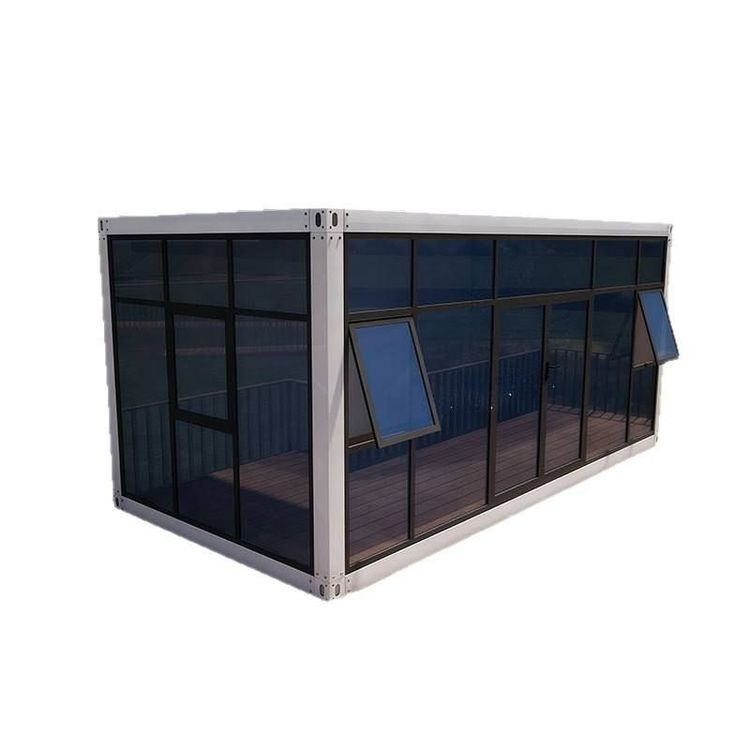
Mobile Toilet Odor Isolation and Ventilation
The odor isolation and ventilation of mobile toilets are mainly achieved through ventilation design, material selection, application of deodorization technologies, and daily maintenance, as detailed below:

I. Ventilation Design
Mobile toilets employ a combination of natural and mechanical ventilation. Natural ventilation relies on top-mounted operable skylights and side windows to create air convection, with side windows equipped with screens to prevent insect entry. Some models adopt a dual-mode system of "natural air intake + mechanical exhaust," where natural air inlets are located at the bottom of the toilet, and mechanical exhaust fans are installed on the roof to expel odors through negative pressure, ensuring indoor air is replaced 3-5 times per hour. For example, the Wuhai Outdoor Jiahe mobile toilet utilizes a top-mounted bidirectional air convection duct to harness natural wind for air circulation, supplemented by a low-power dust-proof fan for forced exhaust in windless conditions. Additionally, some toilets optimize ventilation frequency based on seasonal characteristics, increasing air exchange to 15-20 times per hour in summer to lower internal temperatures and activating insulation mode in winter to prevent pipe freezing.
II. Material Selection
The main structure of the toilet uses lightweight and breathable materials, such as color-coated steel sheets and PVC panels, which have smooth surfaces that do not easily adsorb odors. Some wall surfaces undergo breathable treatments, such as the use of honeycomb aluminum panels, which maintain strength while allowing air passage. Ventilation opening materials must adapt to environmental conditions; for instance, the Wuhai Outdoor Jiahe mobile toilet selects anti-aging ABS material for ventilation openings to withstand strong UV radiation and is equipped with wind-resistant fixtures to withstand winds up to Force 8.
III. Deodorization Technologies
- Physical Barrier: Toilets use U-shaped water seals or silicone gaskets to block odor backflow, and waste tanks are equipped with air pressure balance valves to prevent odor diffusion during waste removal. Exhaust ducts employ U-shaped bends to prevent odor backflow, with activated carbon filters (adsorption efficiency ≥90%) installed at outlets to purify exhaust gases.
- Chemical Decomposition: Waste tanks are treated with slow-release deodorizing agents that use decomposition enzymes to rapidly liquefy solid waste and inhibit the production of malodorous gases like hydrogen sulfide. Plant-based deodorizing agents are sprayed through atomizers, where molecules neutralize odor molecules to form odorless substances, with a single spray lasting 4-6 hours.
- Biodegradation: For long-term use scenarios, optional biodegradation agents containing EM bacteria can convert organic matter into odorless compost materials. Photocatalytic technology utilizes titanium dioxide to generate highly oxidative free radicals under UV light, decomposing odor molecules into carbon dioxide and water with a deodorization efficiency exceeding 95% and a service life of over 5 years.
IV. Daily Maintenance
Regularly clean dust from skylights and side windows to ensure smooth operation; inspect exhaust fans for proper functioning to prevent ventilation failure due to malfunctions; and conduct thorough cleaning of the toilet to prevent blockage of ventilation openings by stains. Systematic maintenance extends equipment lifespan and maintains odor isolation effectiveness.