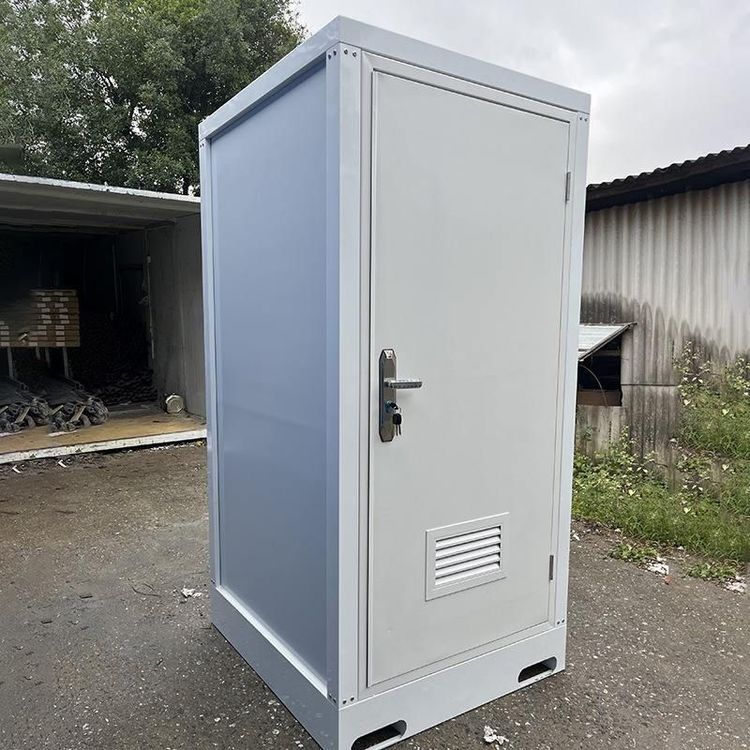
How Long is the Lifespan of a Mobile Toilet
The lifespan of a mobile toilet typically ranges from 5 to 30 years, with the specific duration influenced by multiple factors such as material, structural design, and usage and maintenance conditions.

1. Material Differences Directly Impact Basic Lifespan
Conventional mobile toilets made of corrosion-resistant materials like stainless steel or fiberglass-reinforced plastic can have a lifespan of 10 years or even longer. These materials exhibit strong anti-aging properties and can effectively resist environmental erosion from moisture, acids, and alkalis. For example, the frames of some eco-friendly public toilets are welded using national standard steel, with surfaces covered with anti-corrosion and fire-resistant materials such as color-coated steel sheets or carved panels. Through this dual-protection design, their lifespan can be extended to over 20 years. In contrast, mobile toilets made of ordinary metals or plastics may have their lifespan shortened to around 5 years due to their susceptibility to environmental factors.
2. Structural Design Determines Long-Term Stability
Structural strength is one of the core factors affecting lifespan. Mobile toilets that adopt square steel structures and are treated with automotive paint on their surfaces can achieve a 30-year lifespan through the combination of high-strength frames and weather-resistant coatings. Such designs are typically applied to fixed eco-friendly public toilets, whose structural stability far exceeds that of ordinary mobile toilets. In comparison, simple foldable or lightweight-designed mobile toilets, due to their limited structural strength, are prone to deformation and loosening of connecting parts after long-term use, with a lifespan usually not exceeding 10 years.
3. Usage Environment and Maintenance Level Form Key Variables
Mobile toilets used in dry and well-ventilated environments experience a significant reduction in the rusting speed of their metal parts and an extension of the aging cycle of their plastic parts, resulting in a lifespan that can be 30% longer than that in humid environments. Regular maintenance, such as cleaning, lubricating connecting parts, and checking for airtightness, can effectively delay equipment wear and tear. For example, mobile toilets that undergo a comprehensive inspection once a month and have worn-out parts replaced can have their lifespan extended by 5-8 years compared to those without maintenance. Conversely, mobile toilets used in salt-spray environments or highly polluted areas and lacking maintenance may become obsolete within 5 years due to accelerated corrosion.
4. Lifespan Extension Cases in Special Scenarios
Some high-end mobile toilets achieve component replaceability through modular design, such as using detachable stainless steel toilets and replaceable anti-corrosion floors, allowing the lifespan of core components to exceed the overall structural limitations. These products can theoretically have a lifespan of over 30 years through regular replacement of worn-out modules, but they require the support of a professional maintenance team.