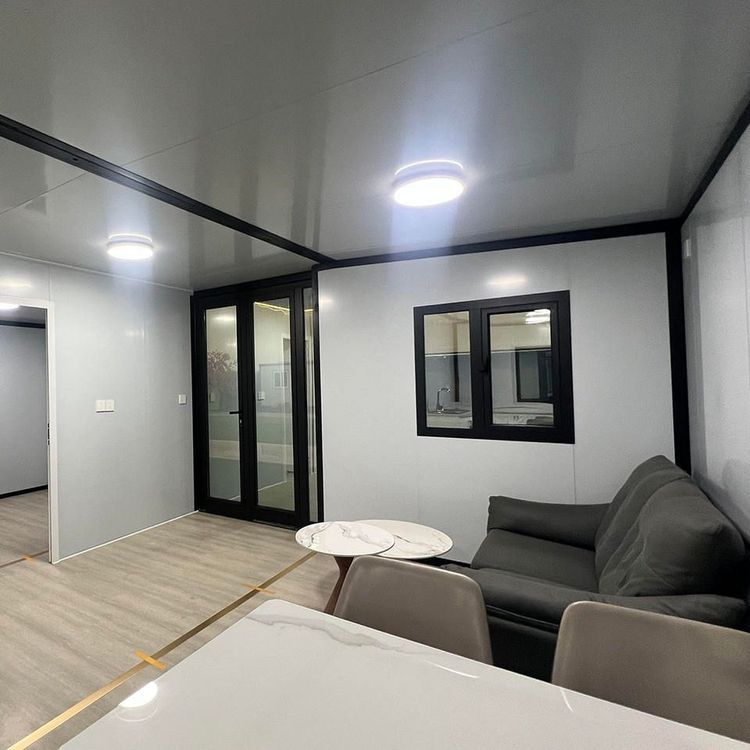
Mobile Toilet Interior Wall Materials
Common materials for the interior walls of mobile toilets include high-density PVC panels, stainless steel panels, and compact laminate panels. These materials all possess characteristics such as corrosion resistance, moisture resistance, and ease of cleaning, making them suitable for high-frequency usage scenarios.

High-density PVC panels are one of the mainstream materials for the interior walls of mobile toilets. Their core advantage lies in their high surface smoothness, which makes it difficult for stains to adhere. Daily cleaning only requires rinsing with water to restore cleanliness, significantly reducing maintenance costs. This material has strong chemical stability, can resist the erosion of corrosive substances such as urine and disinfectants, and has excellent moisture resistance. It will not expand, deform, or mold when used in humid environments for a long time. Additionally, high-density PVC panels are lightweight, making them easy to transport and install, while also providing a certain degree of sound insulation to enhance user comfort.
Stainless steel panels are renowned for their high strength and durability. After special surface treatment, a dense oxide film is formed, which not only resists corrosion but also effectively withstands scratches and impacts, making them suitable for public places with high foot traffic. Cleaning stainless steel panels is also convenient; rinsing with water or wiping can remove stains, and they remain shiny and new even after long-term use. However, stainless steel is relatively expensive and feels cold in winter, requiring structural optimization or the addition of insulation layers to improve the user experience.
Compact laminate panels are another common choice and belong to a type of high-pressure decorative laminate. They are made by impregnating multiple layers of kraft paper with resin and then forming them under high temperature and pressure. They have extremely high density and hardness, with better impact resistance than ordinary panels. Compact laminate panels have outstanding corrosion resistance and will not be damaged even when exposed to strong acids and alkalis. They also have excellent moisture resistance and can maintain dimensional stability in environments with significant humidity changes. Additionally, the surface of this material can be processed into various textures and colors to meet aesthetic needs in different scenarios, but it is relatively expensive and is mostly used in high-end mobile toilets or places with high aesthetic requirements.
The selection of these materials requires comprehensive consideration of usage scenarios, budget, and maintenance needs. For example, high-density PVC panels can be prioritized for scenic spots or temporary event venues, balancing cost and performance; stainless steel panels are suitable for transportation hubs or large exhibitions to ensure long-term durability; while compact laminate panels are more suitable for places with strict hygiene and appearance requirements.