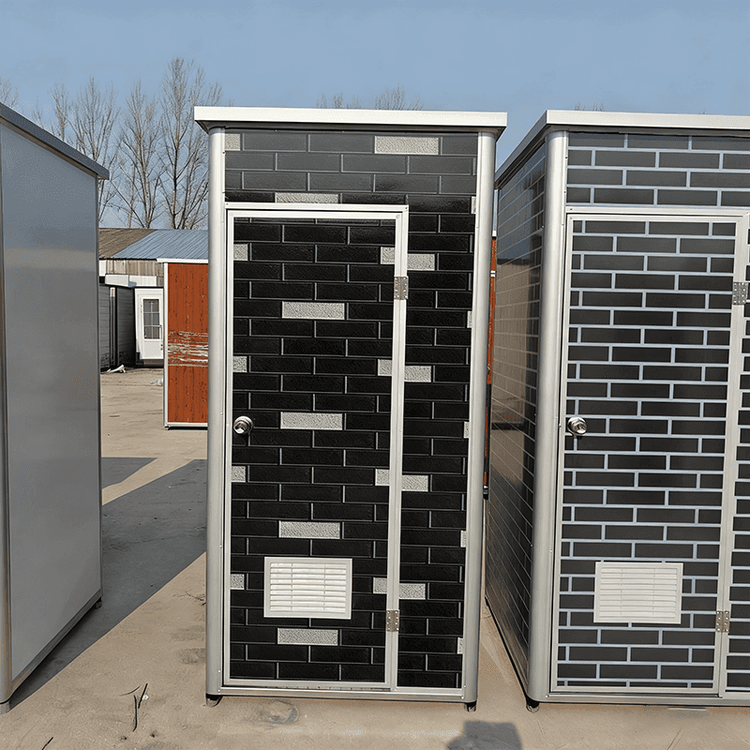
Mobile Toilet Buying Guide
When selecting a mobile toilet, it is necessary to consider multiple factors such as type, usage scenario, material, functionality, cost, and supplier. Here is a specific buying guide:

I. Determine the Type Based on Usage Scenario Based on materials, color-steel-plate toilets are economical and easy to install, suitable for construction sites; fiberglass-reinforced-plastic toilets are corrosion-resistant and easy to clean, suitable for scenic spots; stainless-steel toilets have strong corrosion resistance, suitable for seaside or chemical plants; metal-carved-panel toilets are aesthetically pleasing and thermally insulating, commonly used in tourist attractions; plastic toilets are lightweight and inexpensive, suitable for scenarios requiring frequent relocation. Based on flushing methods, water-flush toilets offer a good experience but rely on water and electricity, requiring a septic tank or municipal sewer network; waterless toilets, such as microbial-degradation types (which decompose excreta through bacteria) and bagging types (which seal feces in biodegradable plastic bags), are suitable for water-scarce or ecological protection areas.
II. Focus on Examining Materials and Workmanship Materials directly affect service life. Prioritize materials with high strength and corrosion resistance, such as steel structural frames, which are wind- and earthquake-resistant and can have an outdoor service life of up to 30 years. Workmanship details must be strictly inspected, including whether the welding is firm and whether the connections are well-sealed, to avoid safety hazards caused by structural instability.
III. Configure Functions According to Needs Function configuration should balance the budget with actual needs. The basic model only includes a toilet, while the high-end model can be equipped with a sink, air conditioner, lighting, etc. For ventilation systems, it is recommended to choose top-mounted exhaust fans, which are more effective at preventing odors than side windows; water storage methods should be selected according to the number of users, such as a 20L water tank suitable for 50 people per day; non-slip floor panels with a corrugated design are recommended, as their drainage speed is three times faster than flat panels; solar-powered models with built-in LED lights can automatically light up for 8 hours at night. In addition, ventilation and deodorization and barrier-free design (such as wheelchair turning space) should be taken into account.
IV. Comprehensively Evaluate Cost-Effectiveness Avoid low-price traps. It is necessary to calculate the total cost of ownership by combining procurement costs, expected service life, and maintenance costs. Low-priced products may lead to a sharp increase in later maintenance costs due to material or workmanship defects, thereby increasing total expenditures.
V. Choose a Reputable Supplier Prioritize examining the supplier's qualifications, successful cases, and user reviews. When signing the contract, clarify the warranty period and after-sales service terms to ensure after-sales protection.