
Mobile Toilet and Bathroom Room
Mobile toilet and bathroom rooms are mainly divided into two categories: integrated mobile bathroom rooms and traditional mobile toilets, with differences in design, functionality, and applicable scenarios.
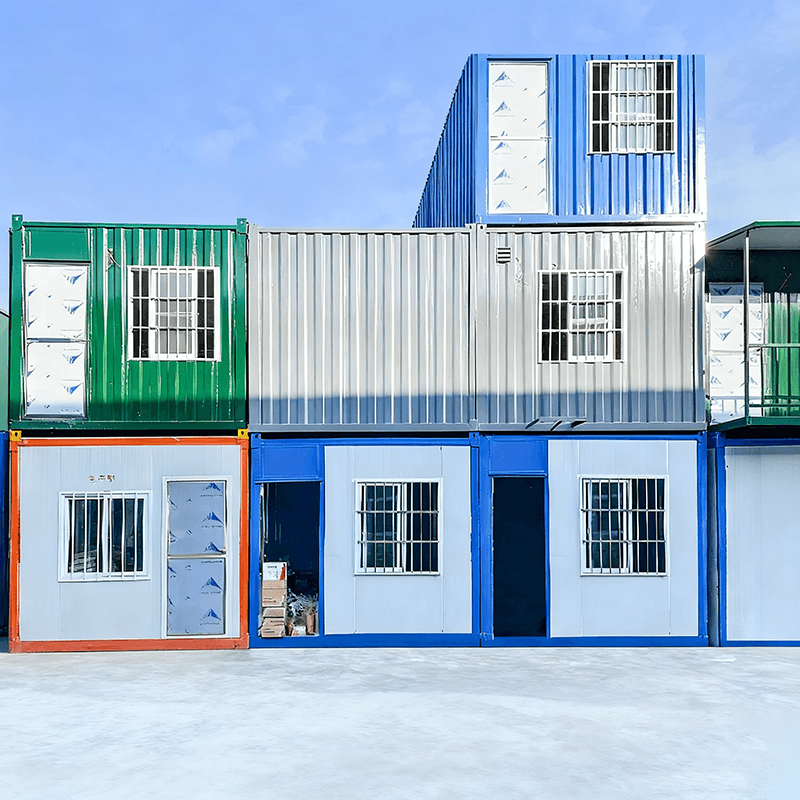
Integrated Mobile Bathroom Room
Integrated mobile bathroom rooms combine toilet and shower functions, with some designs also accommodating washing machines, achieving a "three-in-one" use. Their compact structure makes them suitable for families or small venues.
- Size and Material: Common sizes include large models with a width of 2 meters and a length of 3.5 meters, as well as compact models with a width of 1.2 meters and a length of 1.5 meters. In terms of materials, large models often use dual-color metal insulated carved panels, paired with aluminum alloy glass single doors, balancing aesthetics and insulation. Compact models feature hot-dip galvanized square tube frames, with walls also using dual-color metal carved panels that can be customized in color, and a four-slope roof design to enhance drainage.
- Functional Design: Large models adopt a dry-wet separation design indoors, with independent shower and toilet areas to prevent moisture spread. Compact models are equipped with squat toilets and shower functions to meet basic needs. Some models also reserve space for washing machines, improving space utilization.
- Applicable Scenarios: Suitable for temporary housing, construction site dormitories, families in remote areas, etc., addressing the challenge of lacking fixed sanitary facilities.
Traditional Mobile Toilet (Portable toilet)
Traditional mobile toilets have an overall movable structure, serving public or temporary demand scenarios such as stations, docks, and tourist attractions. Their design emphasizes functionality and convenience.
- Structural Composition: Includes fecal sewage storage tanks (or disposal devices), floor slabs, sanitary ware, walls, washing equipment, water tanks, roofs, and mobile devices. Some high-end models are equipped with sewage treatment systems for harmless fecal disposal.
- Classification Methods: Classified by structural form into single and connected types; by mobility into trailer and forklift-movable types; and by sewage treatment into direct discharge, packaging, and biodegradation types. For example, direct discharge types require connection to municipal sewage networks, packaging types collect feces in biodegradable bags, and biodegradation types use microorganisms to decompose pollutants.
- Core Advantages: Their mobility allows for rapid deployment at temporary event sites; modular design supports combined use to meet the needs of large crowds; and they are easy to transport, movable by trucks or forklifts.
Both types of mobile toilet and bathroom rooms aim to address sanitary needs in specific scenarios, with integrated models focusing on family privacy and traditional models emphasizing public service efficiency. The choice should be based on a comprehensive assessment of the usage scenario, number of users, and functional requirements.



