Back to blog
Article
Mobile Signal in Container Houses
Admin September 17, 2026
The mobile signal inside container houses is significantly affected, with the degree of attenuation depending on the material, structure, environment, and coverage. However, targeted measures can be taken to improve it.

I. Core Factors of Signal Attenuation
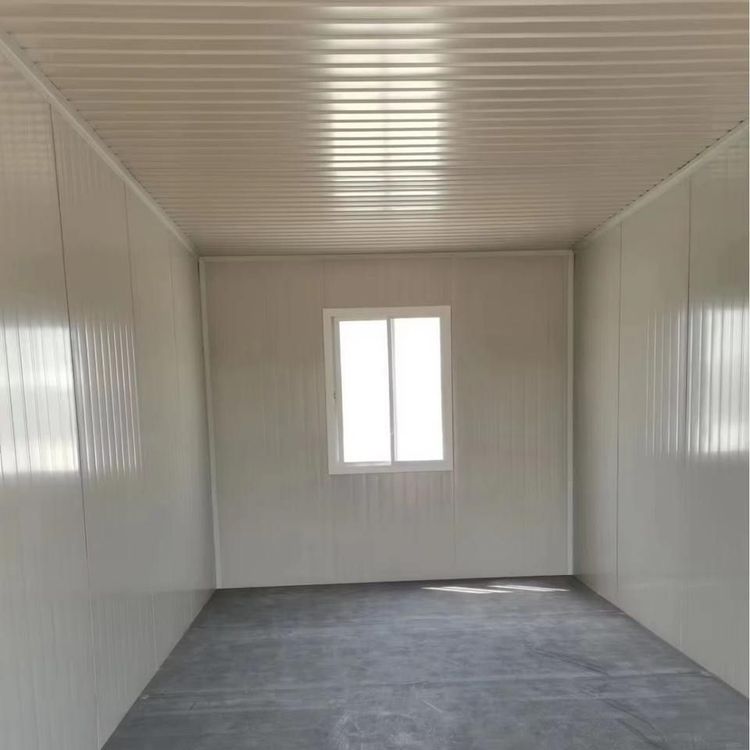
- Metal Shielding Effect: Steel containers (especially those with galvanized steel plates ≥5cm thick) have a strong shielding effect on electromagnetic waves, causing signal attenuation of 30-50dB. For example, in fully steel-structured welded container houses, the measured 4G signal strength decreases by about 60%. The "Faraday cage" effect formed by the metal shell severely hinders the penetration of external signals, especially when doors and windows are closed.
- Impact of Internal Fillers: Filler materials such as rock wool or EPS sandwich panels increase signal penetration loss. For instance, 2.4GHz WiFi signal loss increases by 15-20dB, further weakening indoor signal strength.
- 叠加的环境因素: In remote areas, insufficient base station coverage, or the stacking of multiple layers of containers in dense urban areas leading to signal obstruction, further degrades signal quality. For example, container houses on construction sites often have weak signals due to the long distance from base stations or many obstacles.
II. Targeted Improvement Solutions
Passive Enhancement Design:
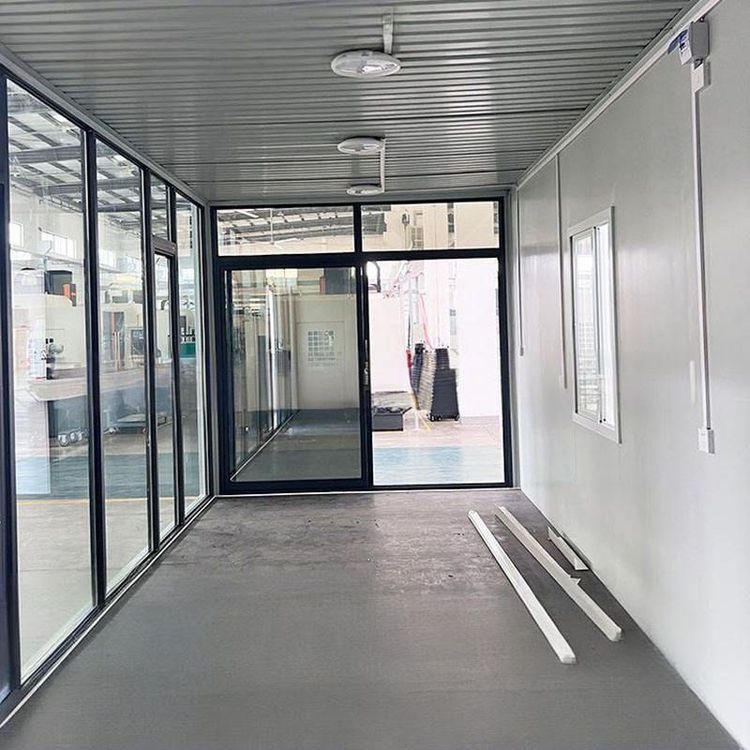
- Cut signal windows in the container body (ensuring structural strength), such as glass curtain wall container houses with built-in wave-transparent areas, or install mesh vents (aperture ≤3cm) to reduce shielding.
- Use non-metallic materials (such as insulation composite panels) for non-load-bearing walls, or increase the number/area of windows to improve signal penetration.
Active Enhancement Equipment:
- Install 4G/WiFi signal amplifiers (output power ≤20dBm) and pre-install communication equipment brackets or wiring channels for easy equipment fixation and wiring arrangement.
- Prioritize the introduction of broadband fiber/network cables, connect to high-performance routers, or achieve full coverage through multiple wireless access points (APs) or Mesh WiFi networking to reduce signal blind spots.
Environmental Optimization Measures:
- Avoid stacking containers in multiple layers to reduce signal obstruction; if in remote areas, coordinate with operators to add micro base stations or repeaters.
- Regularly test signal strength at multiple points inside the container using professional field strength meters (such as the Agilent N9342C) and adjust equipment positions or parameters based on the data.
III. Implementation Recommendations
- Design Phase: Prioritize the selection of wave-transparent materials or reserve signal enhancement interfaces, such as the glass curtain wall container houses from Shanghai Tangcheng and the mesh vent designs from Hebei Bochan.
- Usage Phase: Combine passive and active solutions, such as installing signal amplifiers in metal containers and optimizing window layouts, to significantly improve signal stability.
- Testing and Verification: Quantify the signal improvement effect through professional instruments to avoid subjective judgment errors and ensure the effectiveness of the measures.
Related