Introduction to Mobile Ecological Environmental Protection Toilets
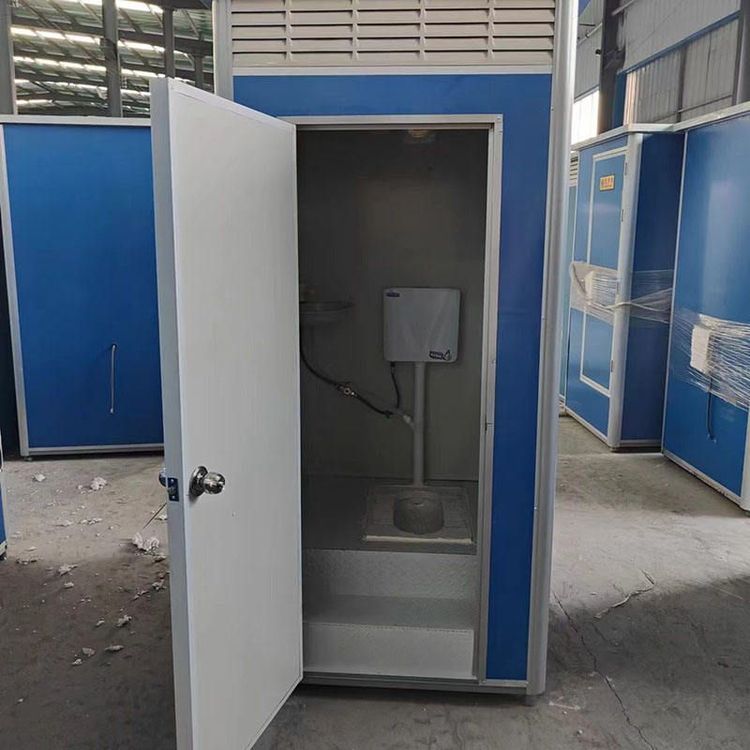
Mobile ecological environmental protection toilets are movable toilet facilities that employ ecological treatment technologies. They break free from the dependence on fixed sewage discharge pipelines of traditional toilets and achieve harmless and resource-based treatment of excreta.

Technical Classification and Principles
Waterless Flushing Type
- Waterless Packaging Type: Utilize biodegradable film packaging bags and mechanical devices to seal and store excreta, preventing pollution.
- Waterless Biological Treatment for Fertilizer Production Type: Through biochemical reactors, feces are decomposed into humus organic fertilizer by microorganisms, and urine is treated and used as liquid fertilizer.
- Waterless Flushable Type: Separate urine and add chemicals to make a flushing solution. Feces are mixed with the flushing solution and converted into an odorless pulp-like fluid.
Water-Saving Type
- Foam Sealing Type: Use foaming liquid instead of water for flushing, with a water-saving rate of over 90%.
- Vacuum Self-Priming Type: Rely on air pressure differences to suck excreta into the treatment device, with a single water consumption of only 0.5 - 1 liter.
Recirculating Water Flushing Type
- Biological Treatment Type: Convert organic matter into carbon dioxide and water through electrocatalytic reactions, and use solar power to achieve closed-loop water resource circulation.
- Membrane Separation Type: Use membrane technology to separate the supernatant of feces and urine, produce clean water for reuse, and ferment feces for fertilizer production.
Intelligent System Integration
Some mobile ecological environmental protection toilets are equipped with intelligent public toilet systems that integrate functions such as microcomputer control, sensor monitoring, and APP remote management. They can automatically sense people to trigger lighting and ventilation, monitor temperature, humidity, and air quality in real-time, and support operations such as face recognition for toilet paper dispensing and pedestrian traffic statistics.
Core Advantages
- Environmentally Friendly and Efficient: No need for excavation and transportation, with a high degradation rate; feces are pollution-free and can be used as resources.
- Water-Saving and Energy-Saving: Either completely waterless or use very little water, without the need for water supply and drainage pipelines. Some types rely on solar power.
- Hygienic and Comfortable: Odorless, with a high degree of automation and easy maintenance.
- Flexible Deployment: Highly movable, suitable for temporary events, remote areas, and other scenarios, saving construction investment and post-construction costs.
- Highly Durable: The materials are resistant to corrosion and rust, adapting to various environmental conditions.
Mobile ecological environmental protection toilets, through technological innovation, effectively solve the problems of pollution, water consumption, and fixation of traditional toilets, becoming an important development direction of modern public sanitation facilities.