
Lushan Prefabricated Housing Finished Products
Currently, no direct detailed information about 'Lushan Prefabricated Housing Finished Products' has been found, but prefabricated cement houses typically have the following characteristic features, which can serve as a reference:
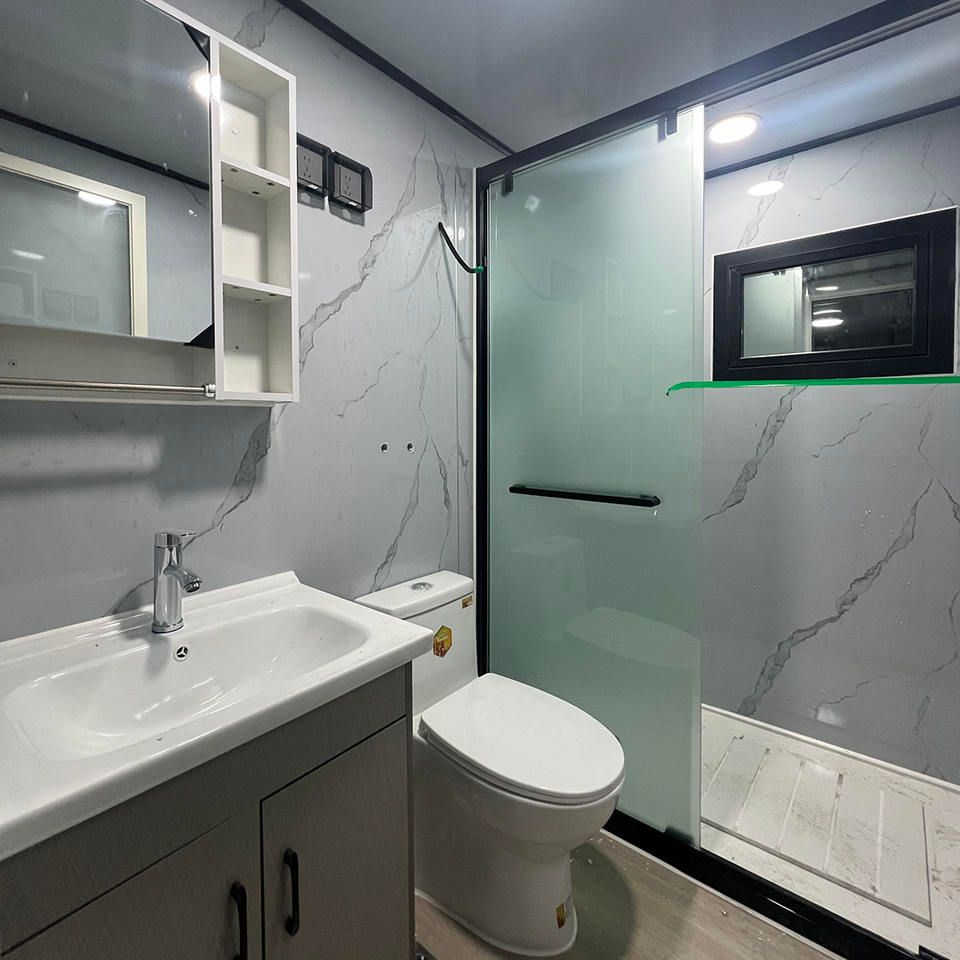
1. Structural and Material Characteristics
Prefabricated cement houses are usually constructed using high-standard reinforced concrete, poured in one piece, resulting in a dense and sturdy structure with mature technology and solid material usage. Their core materials are steel reinforcement and concrete, ensuring consistent component dimensions and strength through factory-standardized production. For example, some manufacturers (such as Shandong Good House Rural Villas) use pure reinforced concrete structures with wall thicknesses of 15 cm or 20 cm, significantly enhancing the house's load-bearing capacity and resistance to deformation, effectively withstanding external impacts or geological changes.
2. Performance Advantages
- Earthquake and Compression Resistance: The reinforced concrete structure endows the house with good earthquake resistance, suitable for use in earthquake-prone areas; at the same time, the integral pouring process gives it a compression strength far exceeding that of traditional brick-and-mortar structures.
- Fire and Flame Retardancy: Concrete material is inherently non-flammable, with a high fire resistance limit, which can delay the spread of fire and ensure residential safety.
- Thermal Insulation and Energy Efficiency: By optimizing wall thickness or adding insulation layers (such as polystyrene boards), good thermal insulation effects can be achieved, reducing energy consumption.
- Wind and Moisture Resistance: The dense structure effectively blocks wind and rain erosion, preventing mold growth on walls or structural damage caused by humid environments, suitable for rainy or coastal areas.
- Corrosion and Weathering Resistance: After special treatment on the concrete surface, it can resist corrosive substances such as acid rain and salt spray, extending the house's service life.
3. Construction and Efficiency
Prefabricated cement houses adopt a factory-standardized prefabrication and modular construction model, where components are produced in the factory and then transported to the site for assembly, resulting in a short construction period and不受季节、天气限制 (no seasonal or weather restrictions). For example, the assembly period for a single house can be shortened to a few days to a few weeks, significantly less than traditional construction methods. Additionally, modular design supports flexible expansion or renovation to meet personalized needs.
4. Service Life and Maintenance
The designed service life is typically over 70 years, far exceeding that of ordinary brick-and-mortar houses. Daily maintenance is simple, requiring only regular checks for wall cracks or loose connectors. More critically, the house supports overall relocation or secondary disassembly and reuse, reducing resource waste and aligning with green building concepts.
5. Application Scenarios and Manufacturer Cases
Such products are widely used in rural villas, temporary housing, tourist homestays, and other fields. Taking Shandong Good House Rural Villas as an example, its product line includes prefabricated cement houses, courtyard walls, cement gates, and foundation bases, providing efficient solutions for the rural self-built housing market through standardized production and rapid assembly.
Summary: If specific information about 'Lushan Prefabricated Housing Finished Products' is required, it is recommended to further verify the qualifications and product standards of local manufacturers; if focusing on the general characteristics of prefabricated houses, the above content can serve as a core reference.



