
Living Container House Roof
The roof of living container houses typically uses materials such as galvanized sheets and rock wool sandwich panels, with a focus on waterproofing, heat insulation, and thermal insulation performance. Here is a detailed introduction to the roof of living container houses:
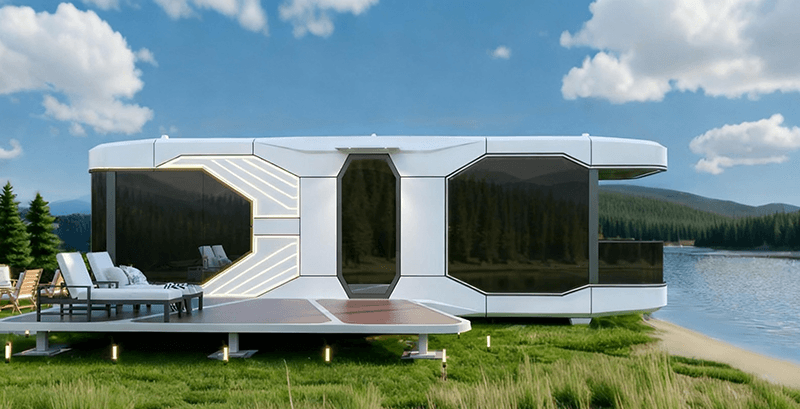
1. Roof Materials
The roof materials of living container houses are diverse, with common options including galvanized sheets and rock wool sandwich panels. Galvanized sheets have good resistance to wind and sand erosion, making them a common choice for the outer layer of the roof. Rock wool sandwich panels are widely used in the middle layer of the roof due to their excellent heat insulation performance, effectively blocking heat transfer and enhancing living comfort.
2. Roof Structure
The roof structure of living container houses usually adopts a three-layer design:
- Outer Layer: Made of materials such as galvanized sheets, primarily serving to resist wind and sand erosion and protect the internal structure.
- Middle Layer: Filled with high-efficiency heat insulation materials like rock wool, forming the main thermal insulation layer and effectively reducing heat exchange between the interior and exterior.
- Inner Layer: Made of materials such as PVC-coated steel sheets, reducing heat radiation while providing a flat interior surface for easy decoration and arrangement.
3. Roof Performance
- Waterproof Performance: The roof design emphasizes waterproofing to ensure that rainwater cannot penetrate into the interior, maintaining a dry and comfortable living environment.
- Heat Insulation Performance: By using high-efficiency heat insulation materials and a reasonable structural design, the roof of living container houses has good heat insulation performance, effectively coping with temperature changes under different climatic conditions.
- Thermal Insulation Performance: The application of thermal insulation materials such as rock wool sandwich panels enables the roof to maintain indoor warmth in winter and reduce energy consumption.
4. Practical Application Cases
During the Nagoya Asian Games, although container houses as temporary accommodation solutions sparked some controversies, such as small room sizes and stuffiness in summer, these issues were more related to the overall design and supporting facilities rather than the roof materials or structure themselves. In other application scenarios, such as temporary accommodations on construction sites and new urban living experiences, living container houses have successfully provided comfortable and safe living environments through reasonable roof design and material selection.
You may also like

Portable Toilet for Energy Efficiency Solutions: A Buying Guide
Read More
Container House Custom Explained: How to Choose the Right One
Read More
Portable Toilet Design Custom & OEM: Design & Bulk Production Guide
Read More