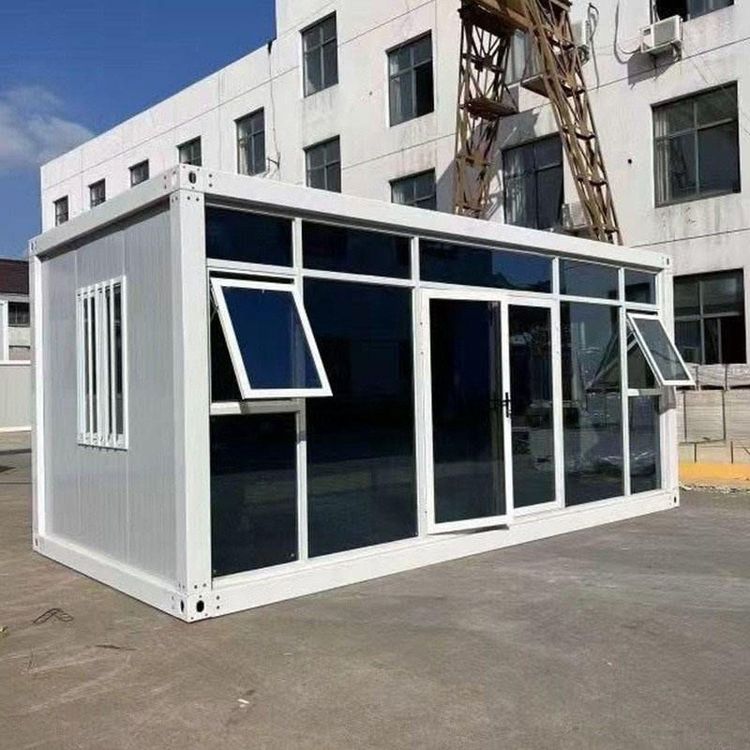
Environmental Protection of Portable Toilets at Construction Sites in Leshan
The environmental performance of portable toilets at construction sites in Leshan is outstanding, primarily reflected in material safety, anti-fouling and anti-leakage, compliance with emission standards, and sustainable resource utilization.

1. Material Safety and Fire Resistance
The portable toilets at construction sites in Leshan use Q235B hot-rolled steel frames, which undergo overall hot-dip galvanizing for anti-corrosion treatment. This effectively resists corrosive substances in the construction site environment and extends the service life. The enclosure materials are 50-100mm thick color-steel sandwich panels with Grade A fire-resistant rock wool or glass wool as the core material. The use of flammable foam boards is strictly prohibited, reducing the risk of fire from the source and meeting both construction safety and environmental protection standards.
2. Anti-Fouling and Anti-Leakage Design
The toilet body has a waterproof rating of IP65, capable of withstanding construction site dust and rain erosion. The sewage storage tank has a leakage rate of ≤0.1% over 24 hours. The floor is coated with more than three layers of waterproofing and has passed a 48-hour closed-water test to ensure no leakage, preventing excreta and sewage from seeping into the soil or groundwater. The pipeline connections use leak-proof sealing technology to further reduce the risk of pollution spread and protect the surrounding ecological environment.
3. Emission Standards and Environmental Compliance
These portable toilets strictly adhere to the standards of GB/T 42568-2023 (General Technical Conditions for Portable Toilets) and HJ 2029-2013 (Environmental Protection Technical Requirements), meeting national limits for indicators such as odor, sewage discharge, and harmless treatment of fecal waste. For example, through biological degradation or chemical treatment technologies, the content of harmful substances such as pathogens and organic matter in excreta is significantly reduced, preventing secondary pollution to soil and water bodies.
4. Resource Conservation and Sustainable Utilization
The environmentally friendly portable toilets in Leshan feature water-saving or waterless flushing functions. Some models use microbial decomposition technology to convert excreta into harmless fertilizers, achieving resource recycling. With characteristics of low investment, small footprint, and low operating costs, they reduce the occupation of land resources and water consumption by traditional toilets, making them particularly suitable for temporary sites like construction sites and lowering long-term environmental governance costs.
In summary, through material optimization, technological upgrades, and standard compliance, the portable toilets at construction sites in Leshan achieve full-lifecycle environmental management from construction to use, providing an efficient and sustainable solution for environmental governance at construction sites.