
Large-scale Mobile Toilet Production
The production of large-scale mobile toilets involves multiple stages, including design, processing, installation, and after-sales service, with a wide variety of product types that can be customized according to needs.
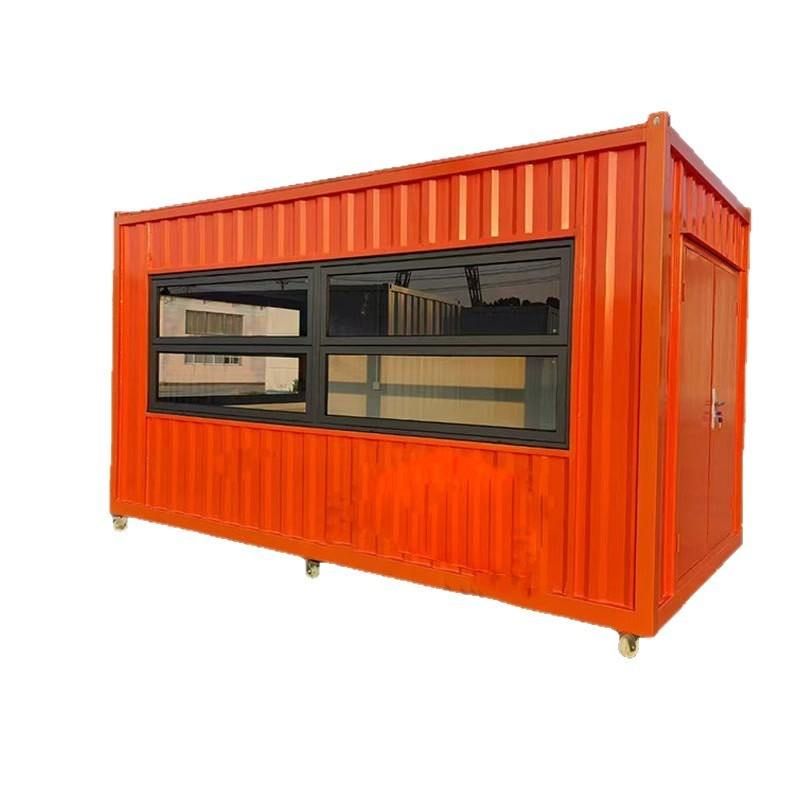
I. Production Process and Customization Services
The production of large-scale mobile toilets typically centers around customer needs. For example, Dezhou Hongtu Metal Products Co., Ltd. once customized a large-scale mobile toilet for a factory in Zhejiang, setting up 7 male squatting positions and 1 female squatting position based on the characteristic of 'more males than females' in the usage scenario, and completed delivery within an expedited period of 4 days. Shanghai Guyi Construction Engineering Co., Ltd. offers customization services for prefabricated mobile toilets, with a process that includes on-site measurement, scheme design optimization, production and processing, transportation and installation, and after-sales maintenance. The company can design according to the customer's on-site environment, functional requirements, and corporate culture core, and has supplied products to places such as Shanghai Railway Station and Pudong Airport, with a general supply cycle of within 20 days and a single supply volume of up to 20 units.
II. Product Composition and Structural Types
The constituent modules of large-scale mobile toilets include fecal sewage storage tanks (or disposal devices), floor slabs, sanitary ware, walls, washing equipment, water tanks, roofs, and mobile devices. According to structural form, they can be divided into single-unit structures (independent units) and composite structures (multi-unit combinations); by mobility method, they can be classified as lifting/handling types (requiring external equipment for movement) and powered/trailer types (with built-in power or capable of being towed); and according to sewage treatment method, they can be categorized as water-flush and non-water-flush suction types (relying on septic tanks or pumping), circulating water-flush types (with sewage purification for reuse), and dry-packing types (with fecal packing treatment, requiring no water source).
III. Technical Characteristics and Application Scenarios
Different types of large-scale mobile toilets are suitable for different scenarios. For example, water-flush types require a配套 (supporting) water supply and drainage system and are suitable for places with infrastructure support; dry-packing types, requiring no water source, are often used for temporary events, construction sites, or water-scarce areas; circulating water-flush types achieve water conservation through biodegradation or membrane filtration technology and are suitable for regions with high environmental protection requirements. Prefabricated designs (such as those from Shanghai Guyi) shorten construction periods through modular production and support rapid assembly and disassembly as well as reuse.
You may also like

Portable Toilet Specifications Size & Area Guide: Finding the Right Fit
Read More
Top Portable Toilet Custom Manufacturers: How to Choose a Factory Partner
Read More
Portable Toilet Reviewed: Best Picks & Tips
Read More