
Portable Toilet Specifications Size & Area Guide: Finding the Right Fit
The specifications, sizes, and suitable scenarios of portable toilets should be selected according to specific needs. Common models include single-stall, double-stall, and modular combinations, suitable for temporary events, construction sites, emergency rescues, and other scenarios.
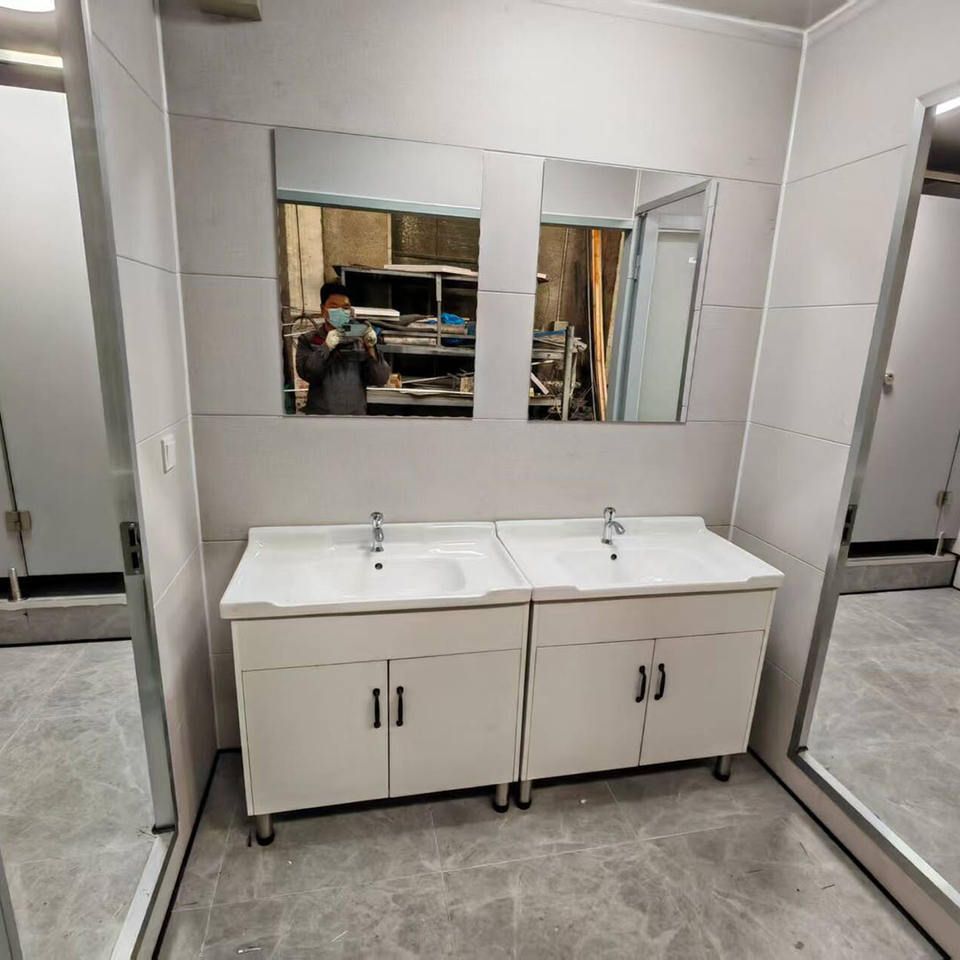
I. Sizes and Structures
The typical size of a general single-stall portable toilet is 1.1m (length) × 1.1m (width) × 2.3m (height), while the double-stall model expands to 2.2m (length) × 1.1m (width) × 2.3m (height) to accommodate higher foot traffic. Its structure adopts a lightweight design, with the main materials being high-density polyethylene (HDPE) or sandwich panels, reducing weight by about 20% compared to traditional metal structures, facilitating transportation and installation. Modular components are assembled with screws and bolts, eliminating the need for welding, supporting quick disassembly or overall installation, and flexibly adapting to different terrains (such as slopes and soft soil foundations).
II. Functional Configurations
Functional configurations are divided into two categories: basic and premium:
- Basic: Equipped with a squat toilet, sink, exhaust fan, water tank, and lock, meeting basic hygiene needs. The squat toilet design saves about 30% more water than a sit toilet, suitable for environments with limited water resources.
- Premium: Adds a sit toilet, flushing system, heating/lighting module (optional), enhancing the user experience. Some models are also equipped with independent water tanks and sewage systems, suitable for remote areas without municipal pipeline support.
III. Suitable Scenarios
- Temporary Events: Short-term events such as music festivals, weddings, and exhibitions should prioritize single-stall models, whose compact design efficiently utilizes venue space.
- Construction Sites: Long-term construction projects recommend double-stall or modular combination models, reducing queuing time by increasing the number of stalls and improving worker efficiency.
- Emergency Rescues: In natural disasters or remote areas, models equipped with independent water tanks and sewage systems should be selected to ensure basic hygiene conditions can be maintained without external support.
- Commercial Spaces: Temporary offices, warehouses, and other scenarios can choose compact designs, achieving maximum space utilization through modular combinations.
IV. Safety and Compliance
Portable toilets must pass international certifications such as CE, SAA, TUV SUD to ensure structural safety and environmental standards (such as formaldehyde emissions and fire ratings). Some models are designed for the disabled, equipped with safety grab bars and sit toilets, complying with barrier-free use specifications. Additionally, material selection focuses on corrosion resistance (such as HDPE's resistance to ultraviolet rays and chemical corrosion) to extend service life.



