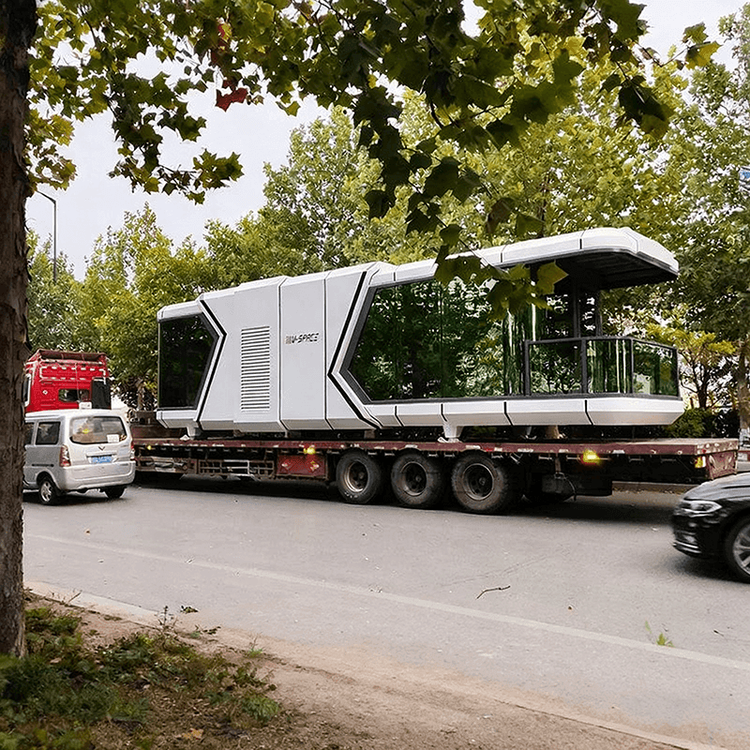
Large Container House
A large container house is an independent office or living unit transformed from a standard container, featuring a sturdy structure, convenient transportation, and rapid deployment capabilities. The following provides an introduction from four aspects: structural types, application scenarios, performance advantages, and selection considerations.

Structural Types
Common sizes include 20-foot and 40-foot containers, which can be used individually or combined. Based on structure and purpose, in addition to standard container houses, there are also foldable types (which compress in volume during transportation and can be quickly expanded on-site, with a single unit expansion time controlled within 30 minutes), assembled types (combining light steel frames with color steel plates for modular on-site assembly, allowing flexible expansion based on occupancy and functional zoning), expandable types (adding lateral or end expansion modules to containers, increasing usable area by 30%-50% upon expansion), and customized creative types (incorporating elements such as glass curtain walls, wood grain finishes, and irregular structures to balance functionality and visual appeal).
Application Scenarios
Suitable for a variety of settings, including project departments, construction site command centers, exploration teams, temporary command posts, temporary park offices, event planning sites, brand exhibitions, cultural and creative parks, high-end temporary offices, and event support facilities. For example, at the Nagoya Asian Games, container houses were used to accommodate athletes and officials from participating delegations. Suzhou Zhongnan Steel Structure Co., Ltd.'s packing boxes, utilizing a 'factory prefabrication + on-site rapid assembly' model, completed the delivery of 1,000 accommodation modules and supporting facilities for the Qatar World Cup fan village project within three months.
Performance Advantages
Strong structural stability: For instance, Zhongnan's packing boxes employ a fully steel structural frame, achieving a measured wind resistance rating of Level 12 and an earthquake resistance rating of Level 8, with a frame deformation rate of only 0.18%. Convenient transportation: Some foldable container houses, when folded, have a volume only 1/5 of their expanded state, increasing single-trip transportation capacity by over 60% and reducing transportation costs per kilometer by approximately 25%. Reusability: Under standardized use and regular maintenance, leading compliant products can be disassembled and reused an average of over 8 times, reducing construction waste emissions by about 90% compared to traditional fixed temporary buildings.
Selection Considerations
Pay attention to authoritative certifications, such as ISO series quality system certifications, CE certifications, and fire performance testing certifications. Evaluate the product's suitability for specific scenarios, as different scenarios have vastly different requirements for container houses. Emphasize the capability for full-process one-stop services to ensure efficient project implementation.