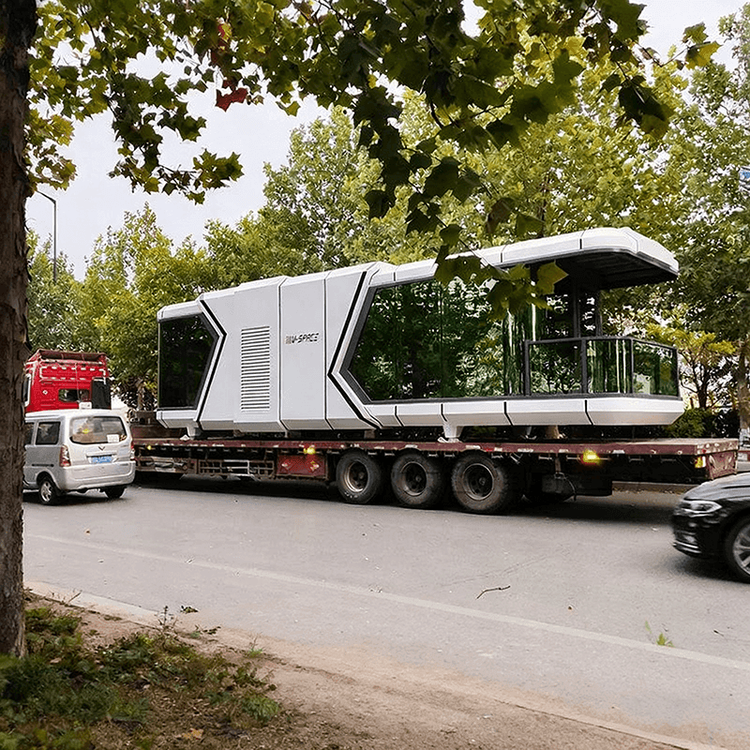
Are Container Houses Dangerous?
Container houses pose certain dangers, primarily in terms of fire safety, structural safety, legal compliance, and living environment.
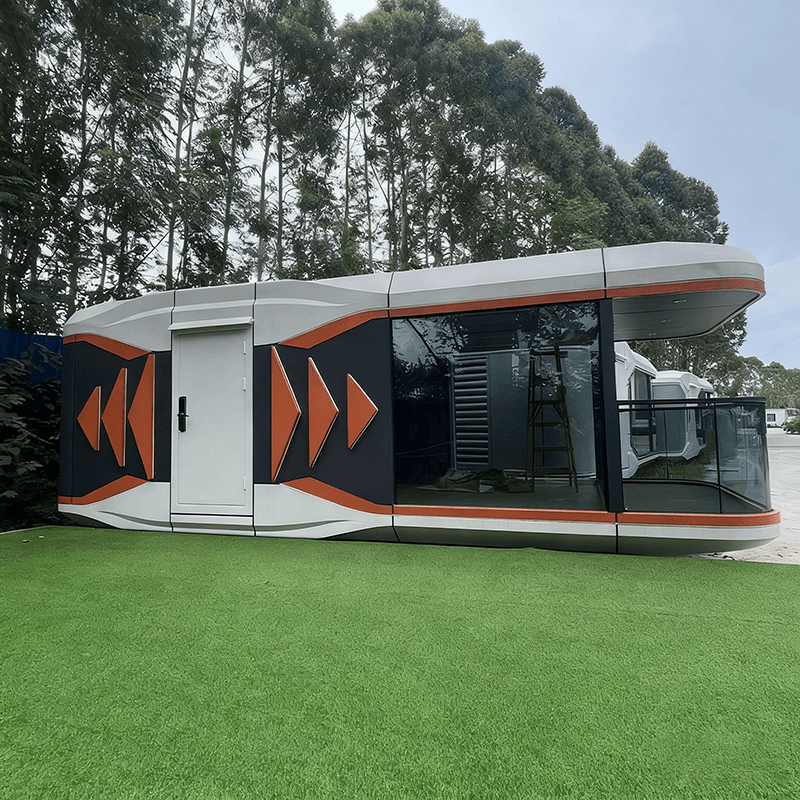
Fire safety hazards are prominent: Container houses are mostly supported by steel structures. In a fire, the temperature can reach 800-1000℃, far exceeding the critical temperature (500℃) at which steel structures lose stability. An ordinary container house may collapse within about 10 minutes after a fire, which is not conducive to personnel evacuation and material rescue. In addition, some container houses use flammable materials such as polyurethane and polystyrene to fill the panel cores. These materials have low ignition points and poor flame retardancy. Once exposed to high-temperature sparks or open flames, they will burn rapidly, and the honeycomb structure of the materials will exacerbate the spread of the fire. Some user units, in pursuit of area, do not leave safety passages that comply with regulations. In the event of a fire, personnel evacuation will be hindered.
Structural safety risks exist: If a container house has not been properly reinforced and modified, its structural safety may not meet the requirements for long-term occupancy. For example, a man in Haiyan, Zhejiang, purchased a container online and built a two-story house. Due to the lack of reinforcement, the house was blown apart by an 8-level wind, exposing the vulnerability of ordinary container houses in extreme weather conditions. However, container houses that have undergone professional reinforcement and modification, such as through measures like house structure reinforcement or external structure auxiliary reinforcement, can improve their wind and earthquake resistance.
Legal compliance issues are complex: Whether a container house constitutes an illegal construction requires a comprehensive assessment of factors such as land nature, planning permits, safety standards, and environmental impacts. Placing containers on public roads, green spaces, or other areas without permission, or modifying and living in them in violation of building safety, fire protection, and other regulations, may all be deemed illegal.
The living environment may be poor: Some container houses have narrow internal spaces, with items stacked haphazardly and wires connected haphazardly, posing risks of electric shock and fire. In addition, if the materials or paint of the container house do not meet environmental protection standards and ventilation is poor, it may have an impact on human health.