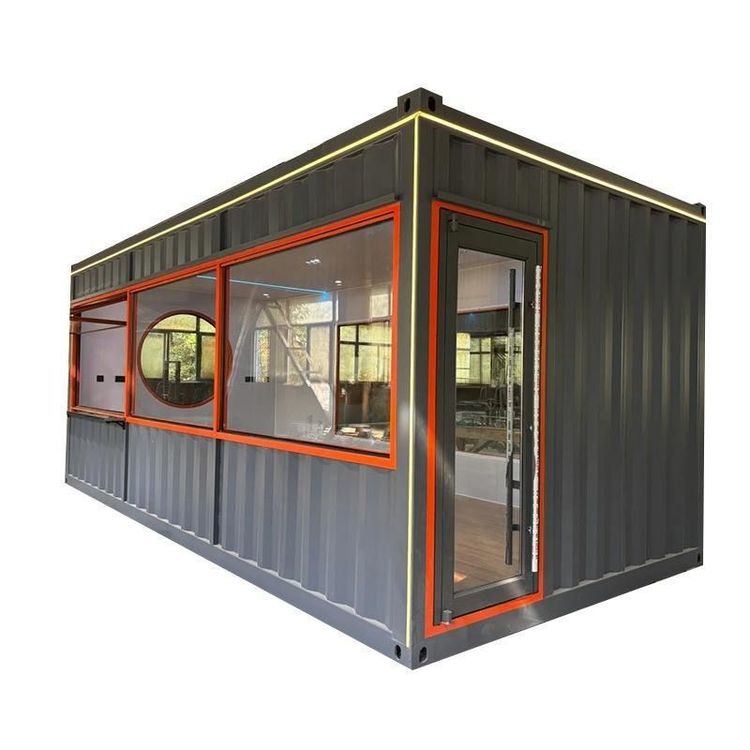
Is It Reliable to Renovate a Container into a House?
Renovating a container into a house has certain feasibility, but it also has many limitations and is not reliable in all scenarios.

Scenarios Suitable for Renovation
Temporary uses are the main application scope for container houses for human habitation. For example, they can be used as workers' dormitories on construction sites, emergency resettlement points in remote areas, and temporary office or reception spaces for events and exhibitions. These scenarios have high requirements for the居住周期 (living period) and spatial flexibility. The advantages of containers, such as fast construction, mobility, and lower cost compared to conventional buildings, can be fully utilized. For instance, in many remote areas' post stations or wilderness work sites, renovated containers can be quickly put into use and can be stacked or repositioned according to needs. When not in use, they can also be transported to other places. In emergency support scenarios, foldable containers have become a popular choice due to their portability and low cost. For example, the foldable containers from Suzhou Zhongnan have a volume that is only 1/5 of their expanded state after folding. A single truck can carry 20 sets of products at once, resulting in low transportation costs and providing a cost advantage in the rapid deployment needs of emergency rescue.
Key Considerations for Renovation
- Compliance: Most urban and rural areas have clear approval requirements for fixed residential buildings. Privately renovating a container into a long-term human habitation house may be regarded as an unauthorized construction and face the risk of demolition. Before long-term use, it is essential to confirm local regulations in advance and go through the relevant procedures.
- Residential Practicality: Originally, containers are industrial transportation tools. Additional insulation, waterproofing, and ventilation materials need to be installed, such as laying insulation layers and performing double-layer waterproofing. Internally, the structure needs to be reinforced, and the wiring should be reasonably planned to avoid potential safety hazards such as stuffiness, water leakage, and wiring aging in the later stage. To meet the living standards of conventional houses, the insulation and renovation costs invested in the renovation are not low, and the advantages are not obvious compared to the renovation of some small-sized traditional houses.
Unsuitable Situations
- For long-term fixed residence in densely populated urban areas or those pursuing high-standard living experiences (such as houses with free large-space layouts, constant temperature and humidity, and good sound insulation), container renovation is not suitable, and it is difficult to meet the standards of living comfort and compliance.
- In areas with unstable geological conditions, such as soft foundations and hilly landslide zones, if the bottom of the container is not properly treated, settlement may occur, posing safety hazards. Therefore, it is also not suitable for renovation for human habitation.