
Container House Rental: What to Know Before You Buy
Before considering renting or buying a container house, it is essential to conduct a comprehensive assessment from four aspects: type and purpose, advantages, material durability, and selection advice, in order to make a scientific decision.
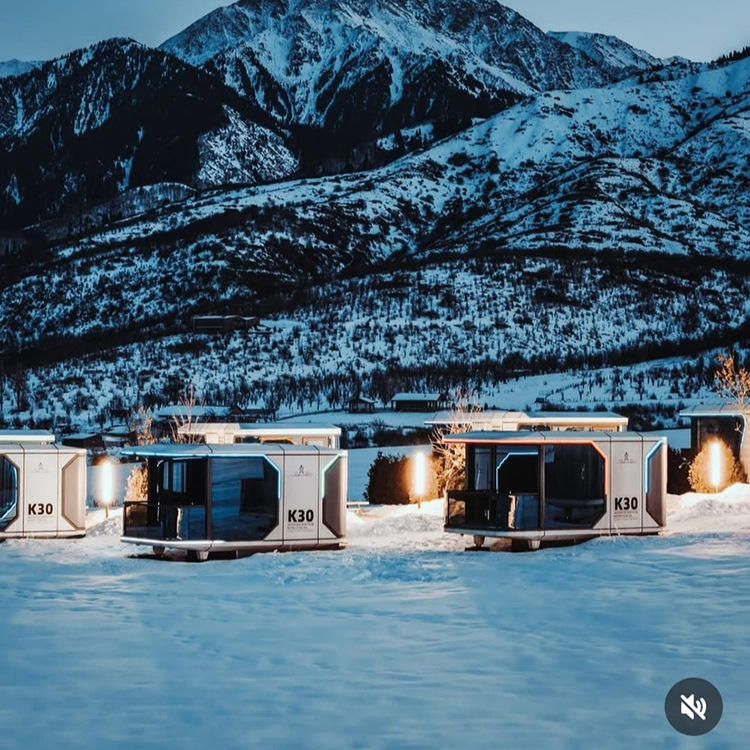
I. Clarify Type and Purpose
Container houses come in two main types: prefabricated and customized. Prefabricated houses are designed with standardization in mind, mass-produced in factories, and then transported to the site for assembly, making them suitable for projects sensitive to construction time and cost. Customized houses, on the other hand, are designed according to specific needs, allowing for flexible combinations of multiple containers, and are suitable for scenarios with special spatial layout requirements. Their uses are diverse, covering residential spaces, commercial spaces (such as cafes and offices), and sustainable projects (such as eco-communities). The choice between single or multiple containers should be based on actual functional needs.
II. Evaluate Core Advantages
- Cost-effectiveness: The initial cost of container houses is generally lower than that of traditional buildings, making them particularly suitable for projects with limited budgets. Their modular design reduces material waste, and the short construction period indirectly lowers labor and financing costs.
- Sustainability: Most container houses are repurposed from recycled shipping containers, reducing the demand for new steel. Their modular structure facilitates future disassembly or reconfiguration, extending the material lifecycle and aligning with green building principles.
- Rapid Deployment and Customization Flexibility: Prefabricated houses can be assembled within weeks, while customized houses can be expanded or luxuriously renovated through cutting and welding processes, meeting personalized needs.
III. Focus on Material and Durability
The main body of a container is made of weathering steel, which forms a dense oxide layer by adding elements such as copper and phosphorus, effectively resisting corrosion and extreme weather conditions. Its structural strength far exceeds that of traditional wood or brick-and-mortar buildings, capable of withstanding natural disasters such as strong winds and earthquakes. Daily maintenance only requires regular inspection of the coating integrity and touch-up painting, resulting in low long-term usage costs.
IV. Follow Key Selection Advice
- Demand Matching: Choose the number and combination of containers based on residential scale (such as single-person or multi-generational households) and functional needs (such as whether an independent kitchen or office area is required). For example, a two-story, multi-container structure is suitable for large families, while a single container equipped with solar panels is ideal for temporary offices.
- Environmental Adaptability: Consider geographical location and climatic conditions. In humid areas, enhance moisture-proofing measures (such as laying waterproof membranes internally); in cold areas, increase insulation layer thickness; in strong wind areas, reinforce the structure with ground anchors or diagonal braces.
By systematically evaluating the above factors, potential risks can be effectively mitigated, ensuring that container houses achieve an optimal balance in terms of functionality, economy, and environmental friendliness.



