Is a Container House Illegal Construction?
Whether a container house is considered illegal construction depends on the situation; unauthorized or purpose-altered modifications are generally classified as illegal. The specific criteria for determination are as follows:
Core Determination Criteria: Obtaining Planning Permission and Altering Land Use
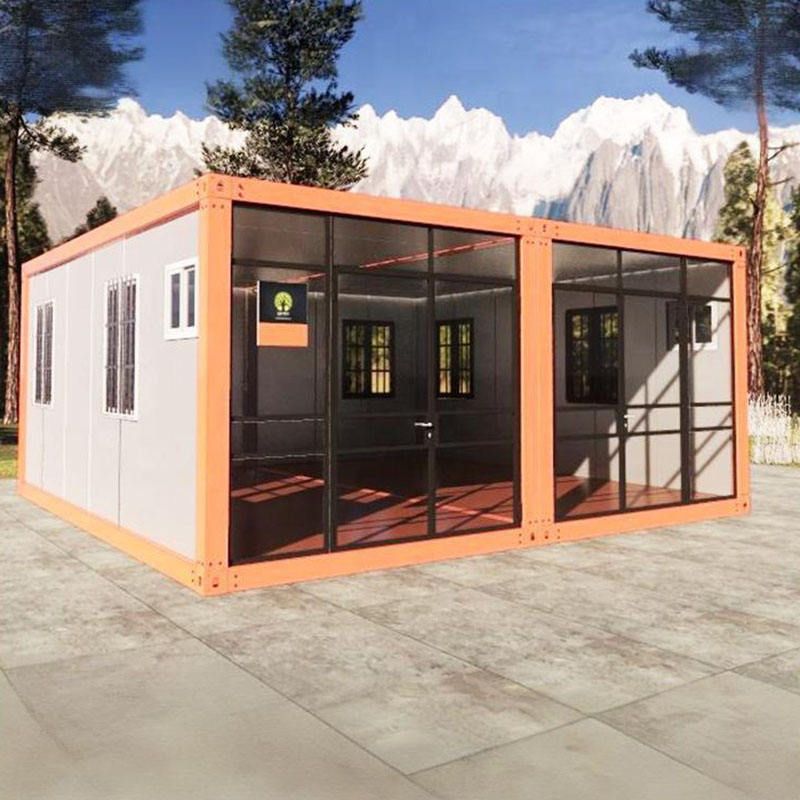
According to the Urban and Rural Planning Law of the People's Republic of China, any unit or individual undertaking construction projects must apply to the competent authorities for a construction project planning permit. If a container house has not obtained this permit or has been modified to include residential or commercial functions (such as water and electricity supply, installation of doors, windows, and air conditioning), it is considered an illegal structure. For example, a restaurant in Jinshan District modified a container into staff dormitories without any permits and was identified as illegal construction; similarly, a "modified container house" purchased by a resident in Miaozhong Village, Chongming District, was deemed illegal due to the installation of doors, windows, and reserved water and electricity connections.
Exemption Conditions for Special Scenarios
In certain scenarios, container houses may not be classified as illegal construction, but strict conditions must be met:
- Temporary Use Without Hardened Ground: If the container is used solely for temporary storage of agricultural materials or tools (such as field watchhouses) and has no hardened ground, no water or electricity supply, and no permanent foundation construction, it generally does not occupy land quotas and can be regarded as a temporary container rather than a house. For example, Farmer Lao Wang placed a container by the field to store farming tools and was not identified as illegal construction after verification.
- Regional Policy Differences: There are variations in the control of container houses across different regions. For instance, Shanghai and Shenzhen encourage the use of container buildings in cultural tourism and commercial sectors, while some agricultural provinces require temporary building permits for container houses in fields.
Common Forms and Risks of Illegal Construction
- House-like Modifications: Installing doors, windows, air conditioning, water and electricity facilities in containers, or pouring concrete foundations and converting them into commercial establishments (such as homestays or coffee shops), all constitute "substantial alteration of land use" and face the risk of demolition. For example, a container-style prefabricated house in a courtyard in Licang District was removed due to lack of temporary construction permits; a露营 (camping) operator in Yunnan was fined 30,000 yuan for operating a container coffee shop on forest land without obtaining forestry fire safety approval.
- Occupying Public Spaces: Containers stacked on public areas such as roads and sidewalks, affecting traffic or posing fire hazards, are identified as illegal occupation of public spaces. For example, containers on the sidewalk of Changhai Road Subdistrict were removed due to suspected illegal construction.