Is the Container House Hot?
The container house has good thermal insulation performance, and the actual body feel is relatively comfortable, not particularly hot. The specific reasons are as follows:

Structural Design Ensures Thermal Insulation Performance
A container house is not just a simple iron box. Its thermal performance depends on the key three-layer structure. The outer anti-corrosion color-coated steel plate can reflect sunlight and reduce heat absorption. The polyurethane foam layer over 50mm in the middle can effectively block heat conduction and prevent external heat from entering the interior. The inner fire-resistant gypsum board and moisture-proof film work together to control humidity and stabilize temperature. The national Technical Standard for Steel Structure Integrated Houses clearly requires that the heat transfer coefficient of the walls of residential container houses should be ≤ 0.45W/(㎡·K), which is 1.8 times the thermal insulation efficiency of traditional brick-concrete walls.
Actual Tests Reflect Thermal Insulation Effect
Actual test data shows that in summer at noon, the temperature rise inside the container house cabin is 22 minutes slower than that outdoors. In winter, when closed for 8 hours, the indoor temperature only drops by 1.3℃. This delayed response characteristic makes the indoor temperature change relatively gently, resulting in a more stable body feel, without stuffy, dry, or sudden hot and cold sensations.
Special Configurations Enhance Comfort
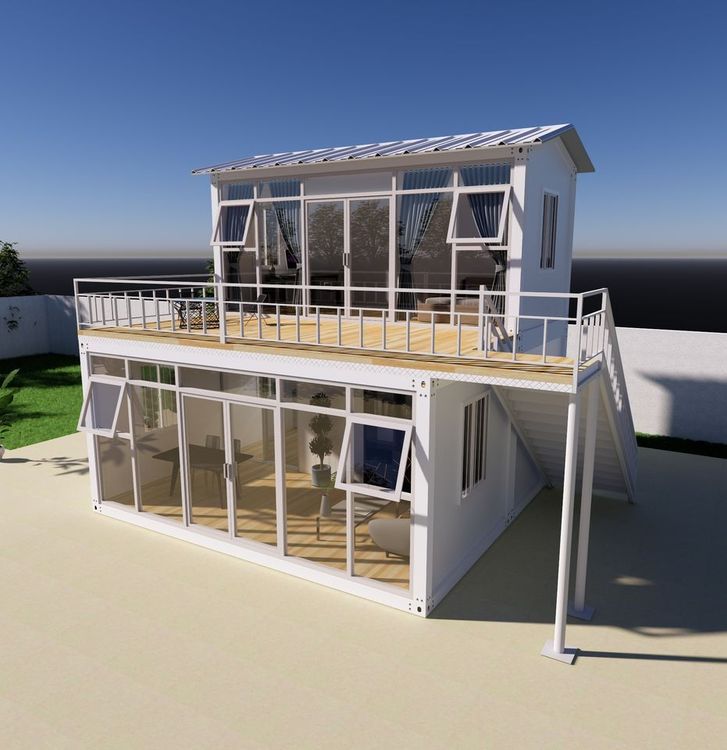
Some container houses use sandwich panels with aluminum foil reflective layers, combined with adjustable sunshades and bottom ventilation slots, further improving thermal insulation and ventilation effects. For example, in a double-story container café in Moganshan, when the afternoon sun directly shines on the roof, the interior is very comfortable without turning on the air conditioner. Sitting by the window to read a book does not cause sweating on the forehead or a sticky feeling on the back of the neck.
Significant Advantages Compared to Traditional Buildings
Compared with traditional steel-concrete structure buildings, container buildings use weathering steel materials and composite insulation layer walls, which have lower thermal conductivity. The thermal insulation performance of its 100mm composite wall is comparable to that of a 610mm thick traditional brick-concrete structure wall. It can better maintain warmth in winter and keep cool in summer, with relatively lower energy consumption.