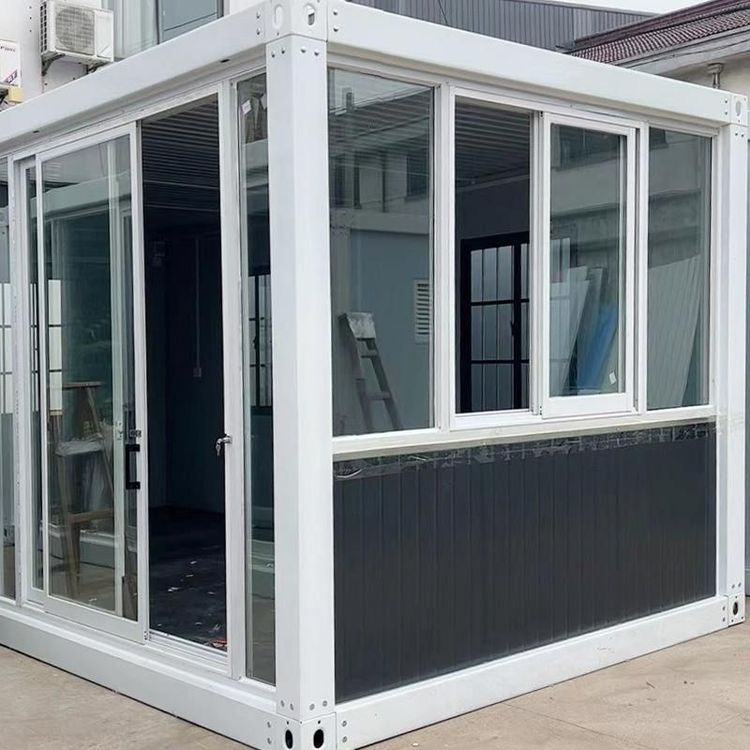
Inner Mongolia Flush Mobile Toilet
Inner Mongolia flush mobile toilets are primarily of the flush direct-discharge type, designed to be adaptable to various scenarios and feature weather-resistant designs as mobile sanitation facilities.

Technical Principles and Characteristics
Flush mobile toilets commonly found in Inner Mongolia employ flush direct-discharge technology, with a core principle similar to that of traditional flush toilets but optimized for mobile scenarios. The toilet body integrates a water tank and a sewage tank, utilizing high-pressure pneumatic or electric water pumps to achieve water-saving flushing. The single-flush water volume is reduced by 30%-50% compared to traditional toilets, thereby extending the single-service cycle. For example, in applications in Baotou, the water tank volume is typically designed to be 200-500 liters, while the sewage tank capacity is adjusted according to the usage scenario, ensuring independent operation for 3-5 days without a municipal sewer network. Additionally, this technology requires connection to a municipal sewer network or a septic tank, making it more suitable for fixed campsites or short-term event venues rather than completely infrastructure-free wilderness environments.
Product Specifications and Materials
Taking products from Cangzhou Hengtai Sanitation Equipment Co., Ltd. as an example, their flush-type mobile public toilets offer two models, htcs-258 and htcs-518, with dimensions of 120015003000 millimeters and compatibility with 220V voltage. To cope with the extreme climate in Inner Mongolia, the products utilize materials such as color-coated steel plates, metal carved plates, anti-corrosion wood, and aluminum-plastic plates, with metal carved plates being the preferred choice due to their wind-sand resistance and corrosion resistance. In terms of temperature adaptability, the products can operate normally within a range of -30°C to 40°C, preventing water tank freezing through insulation layer design and electric tracing systems to ensure flushing functionality in severe cold environments.
Application Scenarios and Adaptability
Inner Mongolia flush mobile toilets are mainly deployed in three types of scenarios:
- Short-term high-traffic areas: Such as scenic area gathering centers and municipal squares, where there is a need to quickly respond to peak demand. The flush system can reduce odors and enhance the user experience;
- Fixed campsites: Such as grassland tourist areas and mining areas, where long-term use is achieved by connecting to a septic tank, reducing maintenance costs;
- Extreme environments: For wilderness areas without a municipal sewer network, some products are equipped with solar power supply systems and enlarged-capacity sewage tanks, combined with regular pumping services to solve sewage disposal problems.
Their design must focus on weather resistance (wind-sand resistance, freeze-crack resistance) and sewage disposal solutions (direct discharge or storage and transportation). For example, in desert areas, more sealed sewage discharge interfaces are used, while in grassland areas, the sewage tank dumping structure is optimized.