Back to blog
Article
How to Connect Water for Mobile Toilets on Construction Sites
Admin October 02, 2026
The process of connecting water for mobile toilets on construction sites can be carried out as follows:

Prepare tools and materials You need to prepare tools such as water pipes, faucets, buckets, and water pumps in advance. If the water source is far away, prioritize using rubber water pipes with strong pressure resistance and prepare a water pump to enhance water pumping capacity. If using a water filling tank, ensure its good sealing to prevent water leakage.
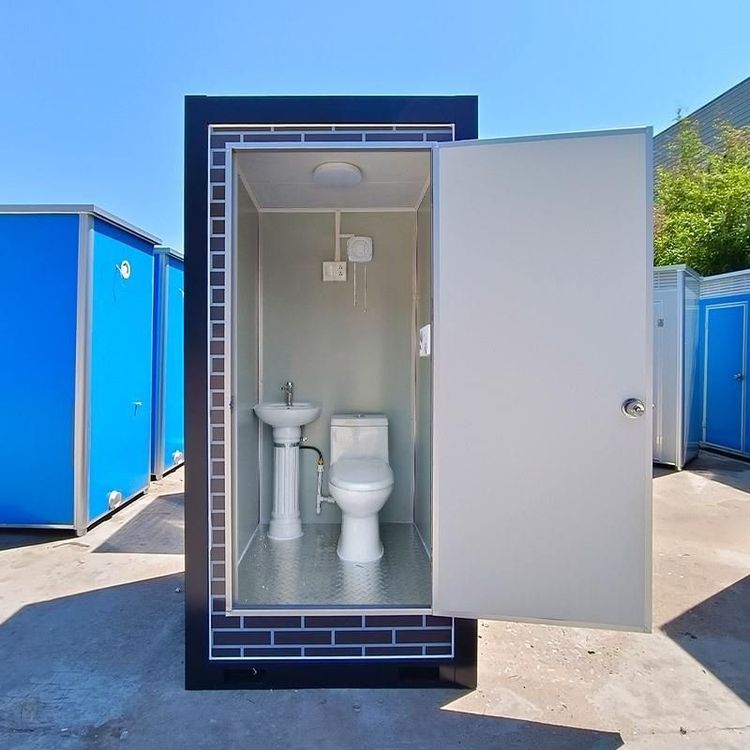
Determine the water inlet points Plastic mobile toilets usually have two water inlet points:
- Flush tank water inlet point: Used for toilet flushing, and it is necessary to ensure a stable water flow to maintain flushing force.
- Hand-washing sink water inlet point: Used for daily cleaning, and the water flow can be adjusted according to needs. Connect to the corresponding water inlet point according to the actual use.
- Connect the water pipes
- Direct connection to the water source: Fasten one end of the water pipe to the faucet and the other end to the toilet water inlet. If the water source is a tap water pipeline, ensure that the connection is sealed to prevent impurities from entering.
- Using a water filling tank: Connect the water pipe to the water filling tank. The tank should be equipped with a water level gauge to monitor the water volume in real time and prevent water supply interruption.
- Long-distance water pumping: If the water source is far away, use a water pump to pump water from the water source to the toilet. The power of the water pump should match the length of the water pipe to avoid insufficient pumping efficiency.
- Turn on the water source and start the equipment
- Turn on the faucet and observe whether the water flows smoothly into the water pipe.
- If using a water pump, start the equipment first. After the water flow becomes stable, check each connection point for water leakage.
- Adjust the water flow
- Control the water flow through the faucet switch or regulating valve: For the flush tank water inlet point, adjust the water level according to the tank capacity to ensure the flushing effect. For the hand-washing sink water inlet point, adjust the water flow intensity according to the usage scenario to avoid waste.
- If using a water filling tank, regularly replenish the water source and keep the water level within a safe range.
- Inspection and maintenance
- Water flow inspection: Ensure that the water flow is unobstructed without blockage or leakage.
- Water quality assurance: When using a water tanker, filter the impurities in the water to prevent contamination of the inside of the toilet. When connecting to a tap water pipeline, confirm that the water quality meets hygiene standards.
- Sealing maintenance: Regularly check the sealing of water pipes, water pumps, and water filling tanks. If any damage or water leakage is found, repair or replace the parts in a timely manner.
Related