
How to Add a Lock to a Mobile Toilet
You can consider the following methods to add a lock to a mobile toilet, and the specific choice should be based on the door material, structure, and usage requirements:
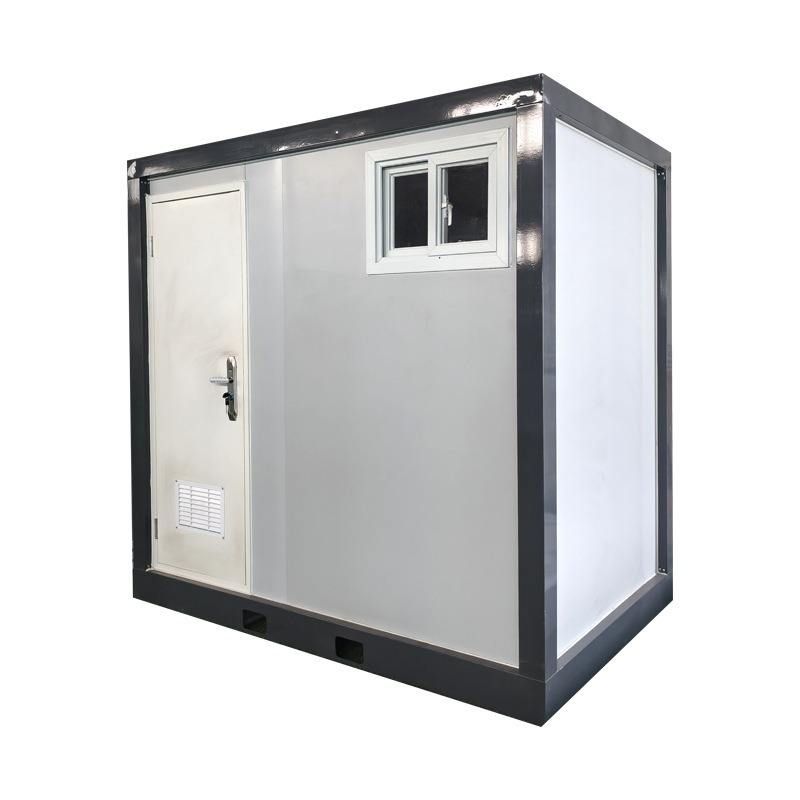
Install a bolt lock A bolt lock is easy to install and highly practical, especially suitable for sliding doors with one fixed side and one movable side. During installation, fix the fixed part (bolt base) on one side of the door frame and the movable part (bolt rod) on the corresponding part of the door. After closing the door, push the bolt rod to achieve locking through physical obstruction. Its advantages are simple structure and low cost, but it is necessary to ensure that the bolt is aligned with the door frame to avoid jamming due to installation deviations.
Use a padlock A padlock achieves locking by passing the lock ring directly through the fixed rings (such as U-shaped rings) on the door frame and the door. It is simple to operate and does not require complex installation. However, padlocks are usually exposed, with poor aesthetics, and require additional fixed rings. They are suitable for scenarios with low security requirements and temporary use.
Install a latch lock Latch locks come in two types: surface-mounted and concealed. For post-installation, surface-mounted models are often chosen. Their principle is to achieve locking through the engagement of the latch tongue and the latch catch, suitable for wooden or metal doors. During installation, the latch catch and the lock body need to be fixed on the door frame and the door respectively to ensure that the latch tongue can pop out smoothly. The advantage of latch locks is their sturdy structure, but attention should be paid to the width of the door gap to avoid poor locking due to excessive gaps.
Try a crescent lock Crescent locks are specially designed for aluminum alloy sliding doors and come in keyed and non-keyed versions. During installation, the lock wheel needs to be fixed in the middle or at the bottom of the sliding door, and the latch tongue is controlled to伸缩 (extend and retract) by rotating the lock wheel. Pay attention to the tightness of the fixing screws to ensure that the latch tongue is flexible and does not jam. The advantage of crescent locks is their strong adaptability, but for aluminum alloy materials, excessive drilling should be avoided to prevent structural damage.
Use a window latch lock A window latch lock requires drilling holes in the door with an electric drill and fixing the lock body with screws. If one side of the sliding door is fixed, the lock can be installed on the other side frame; drilling holes in wooden frames is easier, but the slide rails should be avoided and the installation height should not be too low (to prevent the key from being unable to be inserted). The advantage of window latch locks is their firm locking, but the installation process requires professional tools and is suitable for long-term use scenarios.
Choose a knob lock for ordinary home toilets If the mobile toilet is of an ordinary home type, a knob lock can be considered. It controls the extension and retraction of the latch tongue by rotating the knob on the inside of the door. It has a simple appearance and is easy to operate, suitable for scenarios with high aesthetic requirements. However, it should be noted that the anti-theft performance of knob locks is weak, and they are not suitable for public areas or scenarios with high security requirements.
Precautions: Before installation, measure the width of the door gap and the thickness of the material to ensure that the lock size matches; avoid drilling holes in key parts such as slide rails and hinges during drilling; if you are not familiar with the structure, it is recommended to contact professionals for operation to avoid damaging the door body.



