Prefabricated Building Blocks for Housing in Hong Kong
Prefabricated building blocks for housing in Hong Kong are primarily applied in the MiC (Modular Integrated Construction) technology system, enabling efficient construction through factory-prefabricated modules, with typical cases including public rental housing and private residential projects.
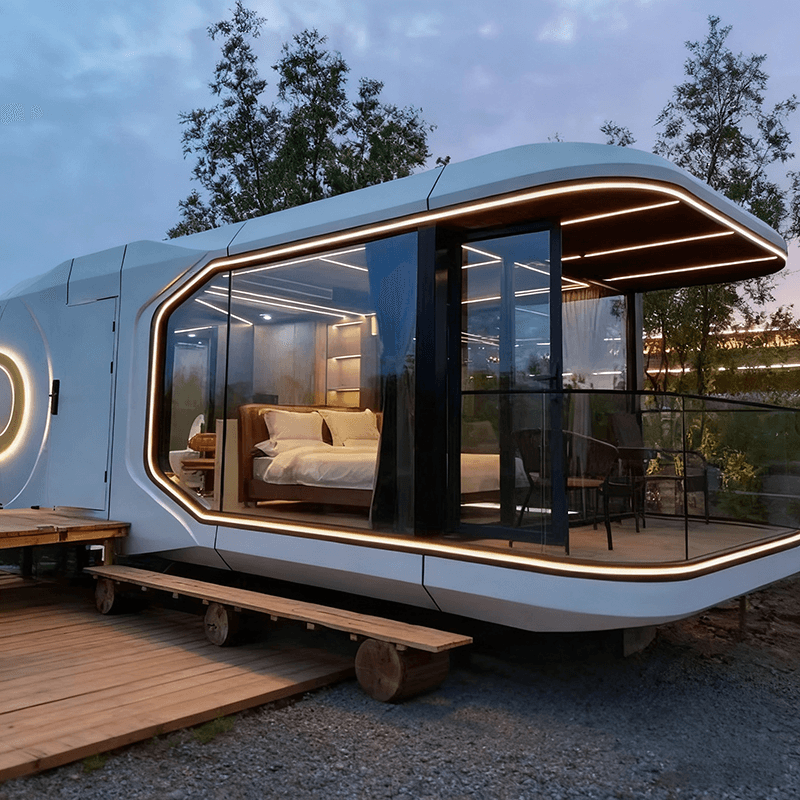
MiC technology divides buildings into independent modular units, completing the integrated prefabrication of structures, finishes, and mechanical and electrical systems in factories before transporting them to the site for assembly. Taking the Yuen Long Yau Pak Road project, the first batch of public rental housing in Hong Kong, as an example, it adopts Full MiC technology, integrating core tube areas such as stairwells, elevator shafts, and water rooms, as well as mechanical and electrical pipelines for power supply and water supply, into modular units. Over 95% of the manufacturing work is completed in factories, with only module assembly required on-site, significantly reducing the demand for wet work, cross-operations, and material storage in traditional construction, and markedly lowering the complexity and time costs of on-site construction.
The Yau Ma Tei Temple Street all-MiC private residential project further demonstrates the precision advantages of prefabricated modules. The project is disassembled into 143 independent modules, which are prefabricated for structure, finishes, and mechanical and electrical systems in a smart factory in the Greater Bay Area before being transported to the site for assembly. Through the "corrugated steel pipe vertical reinforcement connection" process, the installation error between modules is strictly controlled within 4 millimeters, ensuring the stability of the overall building structure. Meanwhile, the modular construction method enables the project to achieve a construction speed of "one floor every three days", several times more efficient than traditional construction.
The application of prefabricated modules also reflects innovation in housing supply models. As transitional housing, public rental housing in Hong Kong is sited on short-term idle land and rapidly constructed using prefabricated modules. Its living conditions are superior to those of poor-quality subdivided flats, with rent approximately 60% of that of public housing, effectively alleviating housing pressure for low-income groups. The flexibility of modular construction allows such housing to be quickly adjusted in scale according to demand and disassembled and relocated after the end of its service life, achieving efficient utilization of land resources.
From a technological perspective, the core value of prefabricated building blocks for housing in Hong Kong lies in the combination of industrialized production and on-site assembly. The factory prefabrication process controls quality through standardized procedures, reducing human errors; the on-site assembly process ensures structural safety through high-precision connection technologies while shortening the construction period. This model is not only applicable to public housing but can also be extended to commercial buildings, residential developments, and other fields, providing a feasible solution for building industrialization in Hong Kong's high-density urban environment.