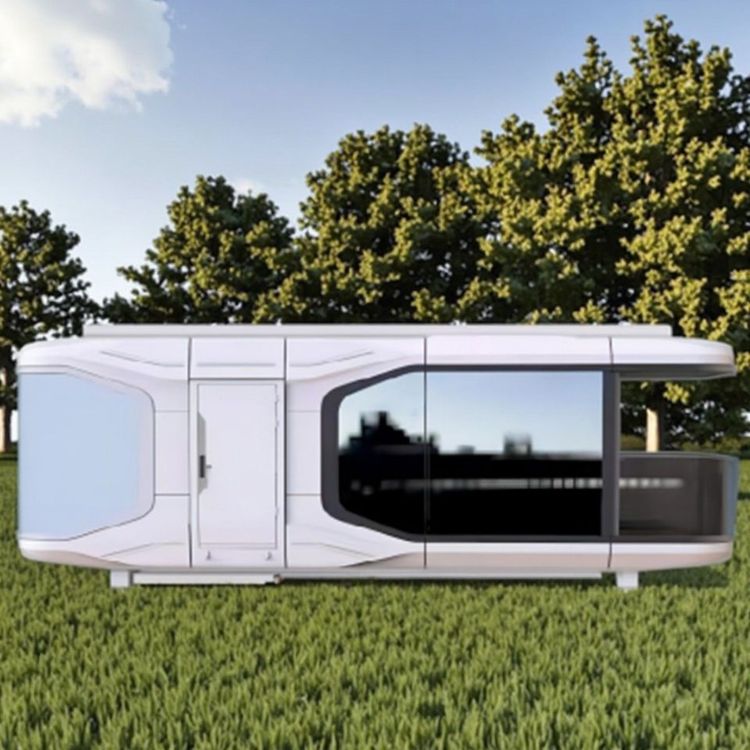
High-Definition Images of Prefabricated House Roofs
Currently, high-definition images of prefabricated house roofs cannot be provided directly. However, a popular science introduction to prefabricated house roofs can be made from the following aspects:

Definition and Types of Prefabricated Roofs
A prefabricated roof is a roof structure form that is pre-fabricated in a factory and then transported to the construction site for installation. Common types of prefabricated roofs include prefabricated concrete roofs, prefabricated steel roofs, and prefabricated composite material roofs. Prefabricated concrete roofs have characteristics such as high strength and good durability, making them suitable for buildings with high structural strength requirements. Prefabricated steel roofs have advantages such as light weight and fast construction speed, and are often used in industrial plants, large warehouses, and other buildings. Prefabricated composite material roofs combine the advantages of multiple materials, such as good thermal insulation and waterproofing performance, and are widely used in residential buildings.
Manufacturing Process of Prefabricated Roofs
The manufacturing of prefabricated roofs is usually carried out in professional factories. Taking prefabricated concrete roofs as an example, molds are first made according to design requirements, and then concrete is poured into the molds, followed by vibration and curing processes to ensure that the concrete reaches the design strength. During the manufacturing process, installation holes and embedded parts are also reserved for subsequent connection with the main building structure. The manufacturing of prefabricated steel roofs mainly involves processes such as steel cutting, welding, and anti-corrosion treatment. Through precise processing and assembly, the dimensional accuracy and structural stability of the roof are ensured.
Installation Points of Prefabricated Roofs
The installation of prefabricated roofs requires professional construction teams and equipment. Before installation, the construction site should be cleaned and leveled to ensure a solid foundation. During the installation process, operations should be carried out strictly in accordance with design drawings and construction specifications to ensure accurate installation positions and firm connections of the roof. For large prefabricated roofs, lifting equipment such as cranes may be required for hoisting. During the hoisting process, attention should be paid to safety to avoid collisions and tilting. After installation is completed, quality inspections and acceptances should be carried out to ensure that the waterproofing, thermal insulation, and other performance of the roof meet the requirements.
You may also like

Portable Toilet Movable for Construction Sites: What to Consider
Read More
House Bulk Orders: What Buyers Should Know
Read More
Portable Toilet Eco-Friendly Specifications Size & Area Guide: Finding the Right Fit
Read More