
Height of Partition in Mobile Toilets
The height of partitions in mobile toilets should generally not be less than 0.9 meters. The specific regulatory requirements and background are as follows:
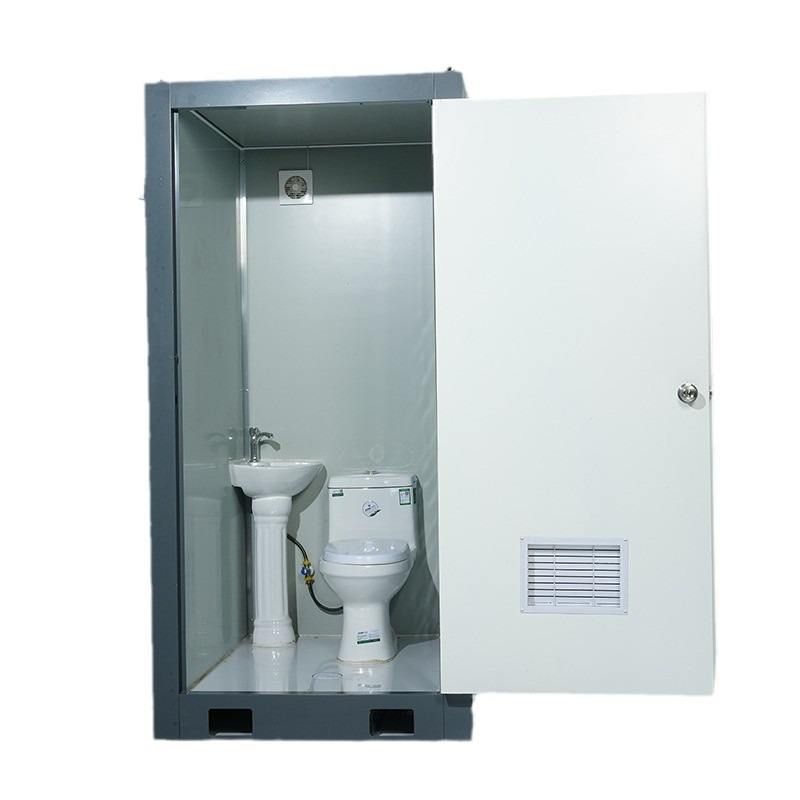
Height Regulations for Partitions in Mobile Toilets on Construction Sites
According to relevant building and sanitation regulations, water-flush or mobile toilets set up on construction sites must have doors and partitions for each toilet cubicle, with partition heights not less than 0.9 meters. This standard is primarily based on the following considerations:
- Privacy Protection: A height of 0.9 meters effectively blocks the lower half of the human body, preventing privacy exposure during toilet use and meeting basic needs.
- Space Adaptability: Mobile toilets are usually small in size. Excessively high partitions may compress the internal space, affecting comfort during use. A height of 0.9 meters strikes a balance between privacy and space utilization.
- Cost and Maintenance: Lower partitions reduce material consumption, lower manufacturing costs, and facilitate cleaning and maintenance, extending the service life of the facilities.
Comparison with Partition Heights in Public Toilets
It should be noted that the partition height requirements for toilet cubicles in public toilets (such as those in shopping malls and scenic spots) are higher. According to regulations, the height of partitions on both sides of toilet cubicles and toilet doors in public toilets should not be less than 2.0 meters. This difference stems from the different usage scenarios:
- Usage Frequency and Population: Public toilets have a high volume of traffic, with significant height differences among users. A height of 2.0 meters ensures the privacy safety of the vast majority of people.
- Environmental Enclosure: Fixed toilets have relatively independent spaces. An increase in partition height does not significantly affect the overall layout and can enhance the user experience.
- Regulatory Focus: Public toilet regulations focus more on long-term, high-frequency usage scenarios, while mobile toilet regulations are more concerned with temporary and flexible needs.
Adjustment Recommendations for Special Scenarios
If mobile toilets are used in special scenarios (such as large-scale events or areas with high population density), the partition height can be appropriately increased by referring to public toilet standards, but a balance between space and cost must be considered. For example, at music festivals, the partition height can be increased to 1.2-1.5 meters, enhancing privacy without excessively occupying space.
Summary: A partition height of 0.9 meters is the basic standard for mobile toilets, suitable for most construction sites and temporary scenarios. Public toilets, on the other hand, must meet a height requirement of 2.0 meters. In actual design, comprehensive considerations should be given to the usage scenario, population characteristics, and cost budget.
You may also like

Portable Toilet for Energy Efficiency Solutions: A Buying Guide
Read More
Container House Custom Explained: How to Choose the Right One
Read More
Portable Toilet Design Custom & OEM: Design & Bulk Production Guide
Read More