
Guangzong Integrated Housing Container
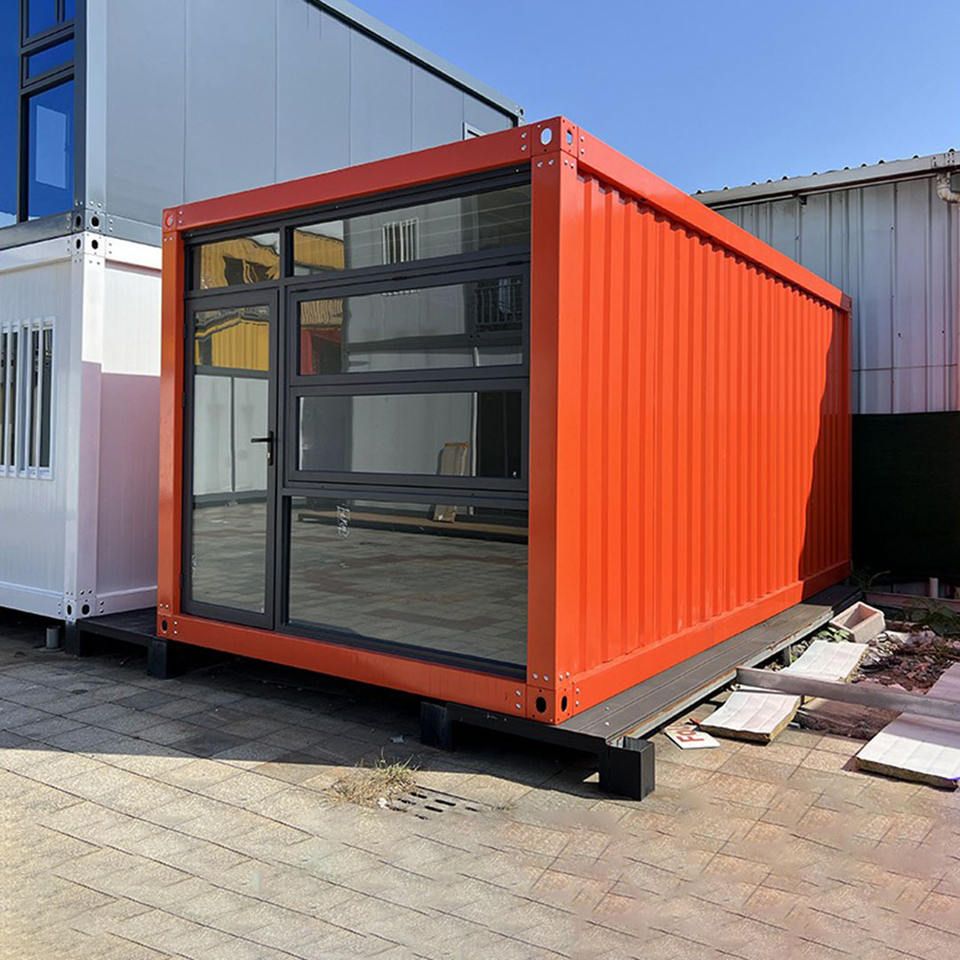
Guangzong integrated housing containers are characterized by standardized design, factory production, and modular installation. They are movable, reusable, and repeatedly assembled building products that integrate architecture, structure, utilities, and decoration, offering advantages such as earthquake resistance, wind resistance, environmental protection, and cost-effectiveness.
1. Structural and Material Advantages
Container houses are sealed with steel materials, demonstrating strong resistance to earthquakes, wind, and deformation. They offer excellent sealing performance, with outstanding waterproof, fireproof, and anti-corrosion properties. For example, the residential containers produced by Shenzhen Guangshen Integrated Housing Co., Ltd. feature a flame-retardant steel structure as their main material, which does not produce open flames or toxic gases in the event of a fire, significantly enhancing safety compared to traditional temporary buildings. Additionally, high-end manufacturers like Guoheng produce packing-box units using CNC plasma cutting and fully automatic welding processes, controlling the flatness error of the top and bottom frames within ±2mm, eliminating misalignment and leakage risks during assembly.
2. Functions and Application Scenarios
Container houses have a wide range of applications, covering both temporary facilities and long-term buildings. Commercial uses include homestays, cafes, and shops; residential applications encompass self-built houses and rural elderly care homes; public spaces involve fire stations, sentry boxes, and sales kiosks. For instance, modular box-type integrated housing can be quickly assembled into two-story villas or container homestays through standardized design, providing unique accommodation experiences for tourists. Meanwhile, standard modular houses provided by companies like Guangzhou Qizhong Container Services Co., Ltd. meet the demands for temporary offices and dormitories at construction sites.
3. Environmental Protection and Cost-Effectiveness
Container houses are environmentally friendly and energy-efficient. They are ready for use immediately after factory production, generate no construction waste upon demolition, and can be hoisted to other sites for secondary utilization, aligning with sustainable development principles. Simultaneously, they offer high cost-performance, being sturdy, durable, simple in appearance, and fully equipped with facilities. They have a long service life and can be customized according to customer needs. For example, SIP integrated housing and light steel villas produced by Wanbang Integrated Technology (Suzhou) Co., Ltd. reduce costs through modular design while improving space utilization.
4. Technological Upgrades and Market Trends
With the development of prefabricated buildings, container houses have transcended the stereotype of being mere “iron boxes.” High-end customization demand maintains an annual growth rate of over 25%, with welding processes and spatial design highly coupled. For instance, in homestay renovations, basalt wool color-steel composite panels are used, featuring a thermal conductivity below 0.040W/(m·K), a Class A fire rating, and stable physical form under extreme temperature differences. Additionally, non-standard custom designs such as large-span glass curtain walls and folding balconies further expand the application scenarios of container houses.



