
Back to blog
Article
Fuquan Mobile Toilet Installation
Admin September 24, 2026
The installation process of mobile toilets in Fuquan is simple and quick, with the following specific steps:
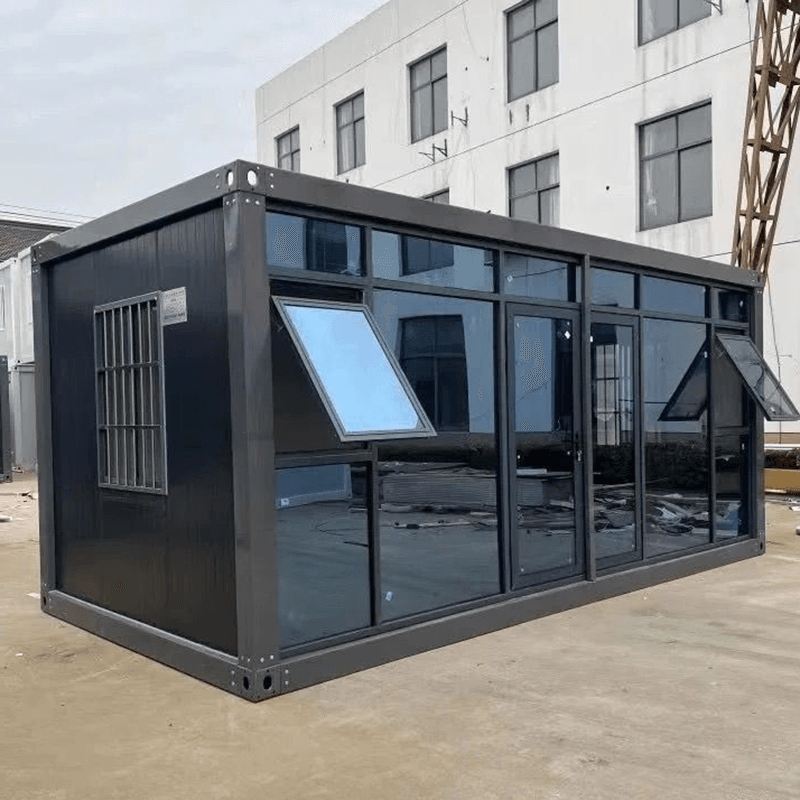
I. Foundation Preparation and Positioning
- Site Planning: Determine the installation location based on usage requirements, prioritizing areas with flat ground and smooth drainage. If the site has a slope or soft soil, hardening treatment (such as pouring concrete) or laying steel plates should be carried out in advance to ensure a stable foundation.
- Positioning Marking: Use measuring tools to determine the center point of the chassis and mark the installation boundaries to avoid deviations in subsequent steps.
II. Chassis and Frame Installation
- Chassis Placement: Use a forklift or crane to place the prefabricated steel structure chassis steadily in the predetermined position. Adjust the chassis to a horizontal state using a level to prevent structural instability or inconvenience due to tilting.
- Frame Fixing: If it is a split-type mobile toilet, the frame and chassis should be fixed with bolts or welding to ensure overall structural strength. For integrated box-type toilets, this step is not required, and proceed directly to the lifting stage.
III. Wall and Roof Panel Installation
- Wall Assembly: Insert the sandwich panel wallboards into the chassis slots one by one and fix them with bolts or clips. Pay attention to the perpendicularity of the wallboard installation to avoid excessive gaps affecting sealing.
- Roof Panel Sealing: After installing the roof panels, perform waterproof treatment on the seams (such as applying sealant or laying waterproof membranes) to prevent rainwater leakage. The roof panels of integrated toilets are usually sealed in the factory, and only simple fixing is required on-site.
IV. Internal Facility Connection
- Equipment Installation: Install partitions, toilets, flushing systems, sinks (optional), and other facilities in sequence to ensure their positions meet the design requirements.
- Water and Electricity Connection: Use modular quick connectors to connect water pipes and electrical circuits, reducing on-site operation time. This step should be carried out by professionals to avoid water leakage or short circuits due to loose connections.
V. Functional Debugging and Acceptance
- Flush Test: Check the pressure and drainage speed of the flushing system to ensure there is no blockage or backflow.
- Circuit Inspection: Test whether the lighting, ventilation equipment, and sockets are working properly and check for electrical leakage hazards.
- Sealing Inspection: Conduct a water spray test on the doors, windows, and wallboard seams to confirm there is no leakage before completing the installation.
Simplified Process for Integrated Mobile Toilets: If a box-type toilet is selected, the internal decoration and equipment integration have been completed in the factory. On-site, only lifting into place, connecting water and electricity, and sewage pipes are required, and the overall installation time can be shortened to 2-4 hours.
Tip: Professional mobile toilet rental services are available in Fuquan (contact number: 4000365770), including one-stop solutions for installation, maintenance, and removal, suitable for temporary events or emergency scenarios.
Related
You may also like

25Oct
Container House Installation Guide: A Complete Walkthrough
Read More
25Oct
Portable Toilet Eco-Friendly Custom & OEM: Design & Bulk Production Guide
Read More
25Oct
How to Assemble & Install Container House Step by Step
Read More
25Oct