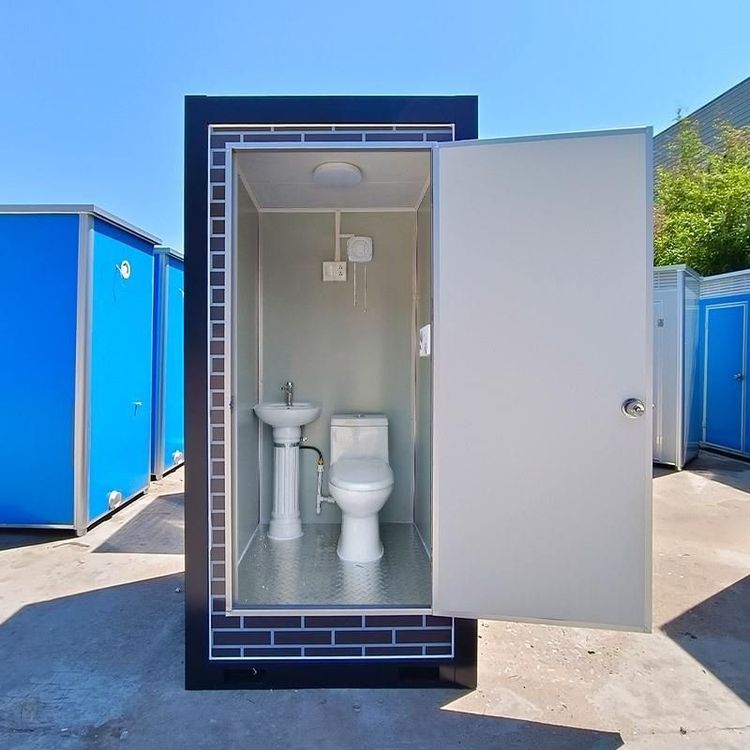
Is Floor Renovation Mobile Toilet Good?
Whether a floor renovation mobile toilet is 'good' depends on the specific scenario. It has significant advantages at construction sites or temporary events, but caution is needed for interior residential renovations.

Design and Structural Advantages
Floor mobile toilets employ a modular, tiered design that maximizes space efficiency by vertically stacking toilet compartments, making them particularly suitable for multi-story construction sites or high-density event venues (such as large music festivals or sports events). Their compact structure reduces the footprint while minimizing odor dispersion and energy dependence through vertical ventilation ducts or solar power systems, offering superior environmental performance compared to traditional mobile toilets. For example, some models are equipped with vacuum collection technology, enabling more efficient centralized waste treatment and significantly reducing the risk of pathogen proliferation.
Adaptability to Usage Scenarios
At construction sites or during long-term events, floor mobile toilets can be vertically relocated in line with construction progress, preventing workers from frequently traveling to and from the ground level and enhancing efficiency. The multi-story design also provides more toilet compartments within a limited area, reducing waiting times. In contrast, ordinary mobile toilets, constrained by their single-story layout, struggle to meet the demands of high-density populations.
Hygiene and Maintenance Costs
Floor mobile toilets often utilize flush or vacuum collection technologies, ensuring more standardized centralized waste treatment processes. Their long-term maintenance costs may be lower than those of ordinary mobile toilets. With steel frame structures lasting over five years, although their initial investment is 2-3 times that of ordinary mobile toilets, the comprehensive cost becomes more advantageous when amortized over the long-term usage cycle.
Limitations
- Transportation and Installation Constraints: The tiered structure is bulky, requiring specialized vehicles for transportation and professional teams for installation, making them unsuitable for small-scale events or temporary venues.
- Environmental Adaptability: Additional insulation measures are needed in extremely cold environments to ensure normal equipment operation.
- Residential Renovation Risks: Interior residential renovations involving toilet relocation (such as moving the toilet position) may damage floor structures, cause leaks, and even violate regulations like the 'Residential Design Code,' leading to legal disputes.
Conclusion and Recommendations
- Recommended Scenarios: For construction sites, temporary large-scale events, and other scenarios requiring efficient space utilization and high population density, floor mobile toilets are an environmentally friendly and cost-effective preferred solution.
- Scenarios Requiring Caution: Interior residential renovations necessitate a rigorous assessment of structural safety and legal risks. Unauthorized toilet relocation may cause leaks, noise issues, and other problems. It is advisable to consult property management or professional agencies in advance.