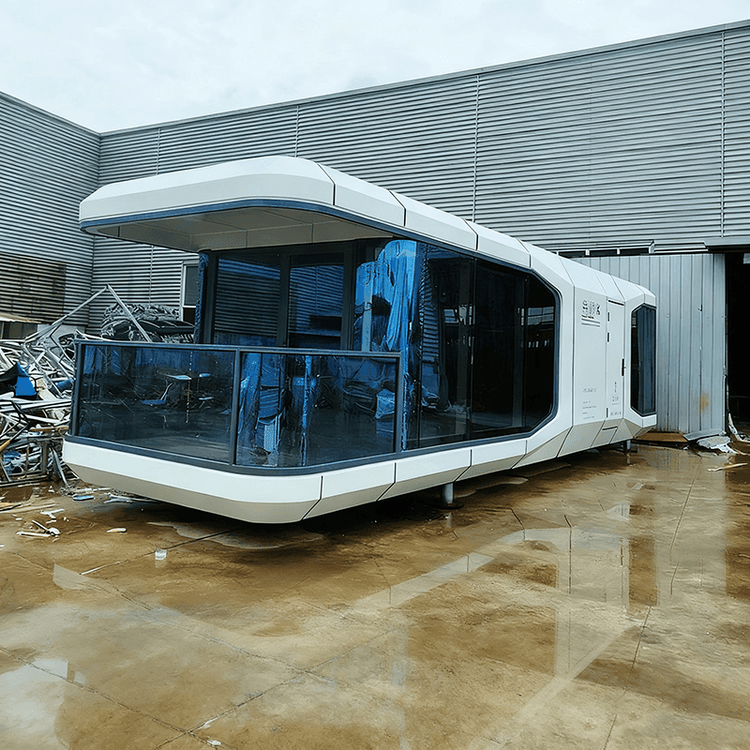
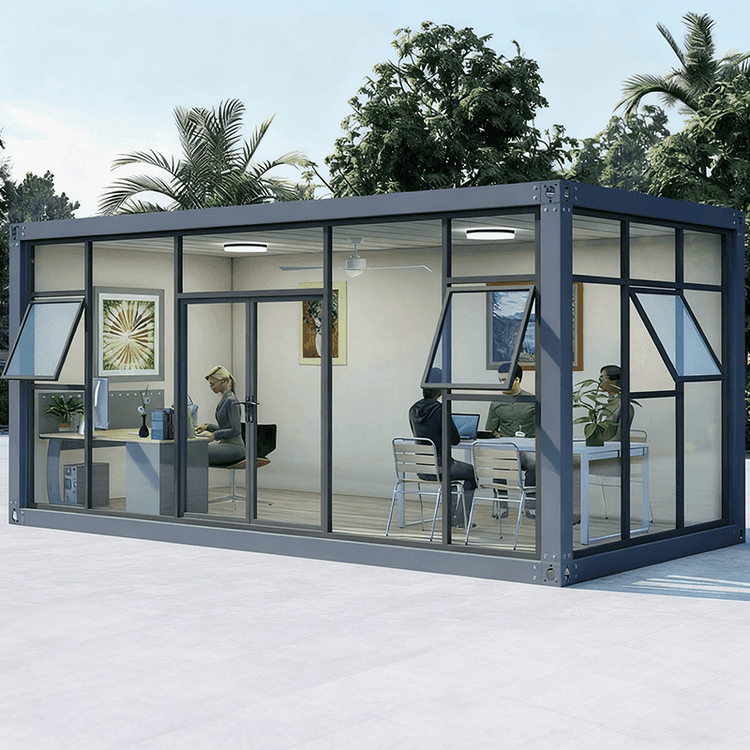
Ezhou Construction Site Mobile Toilet
The mobile toilet at the Ezhou construction site is a portable sanitation solution designed to accommodate the characteristics of short project durations and high personnel mobility, featuring rapid deployment, easy transfer, and strong environmental adaptability.

Design and Structural Features
The mobile toilet adopts a modular design, with a frame primarily made of lightweight steel, balancing stability and ease of transportation. The interior space is rationally planned, dividing necessary functional areas and equipped with sanitary fixtures, water supply tanks, sewage storage units, and ventilation systems. These components are prefabricated in the factory and then quickly assembled on-site, minimizing the impact on long-term planning of the construction site.
Internal Operation and Maintenance
Its operation relies on an independent water supply and drainage circulation system: clean water is supplied from a top tank, and sewage is collected in a sealed bottom storage tank to prevent leakage. Maintenance management requires regular sewage removal (transported by professional vehicles to treatment facilities) and cleaning and disinfection (including inspection of interior surfaces, ventilation systems, and hardware). The maintenance cycle should be dynamically adjusted based on the number of workers and usage intensity to ensure sanitary conditions meet standards.
Environmental Adaptability
For different climatic conditions, the mobile toilet can be customized and optimized: in cold regions, insulation layers or anti-freezing measures are added to prevent pipe bursts; in rainy and humid environments, rust prevention treatments and anti-slip floor designs are enhanced. The location should avoid construction routes and material storage areas, balancing user convenience with site safety to avoid affecting construction machinery operations.
Rental Considerations
- Matching Scene Requirements: Choose equipment types based on site conditions. For outdoor soft ground (such as mud or grass), select wheeled models to prevent sinking; for construction sites near water sources, opt for flush-type toilets, while in waterless environments, prioritize packaged toilets; for mountainous projects, consider equipment volume, as narrow mountain roads may require disassemblable structures.
- Considering Additional Services: Rental costs should factor in cleaning frequency and maintenance response speed. A plan with a low base rent but long cleaning intervals may offer a poor experience; it is advisable to prioritize daily cleaning or fast-response services. Before renting, confirm whether delivery, installation, waste disposal, and emergency fault mechanisms are included.
- Balancing Cost and Experience: Avoid solely pursuing low prices; a comprehensive assessment should be made based on equipment type, service content, and actual needs to ensure sanitary conditions and usage efficiency.