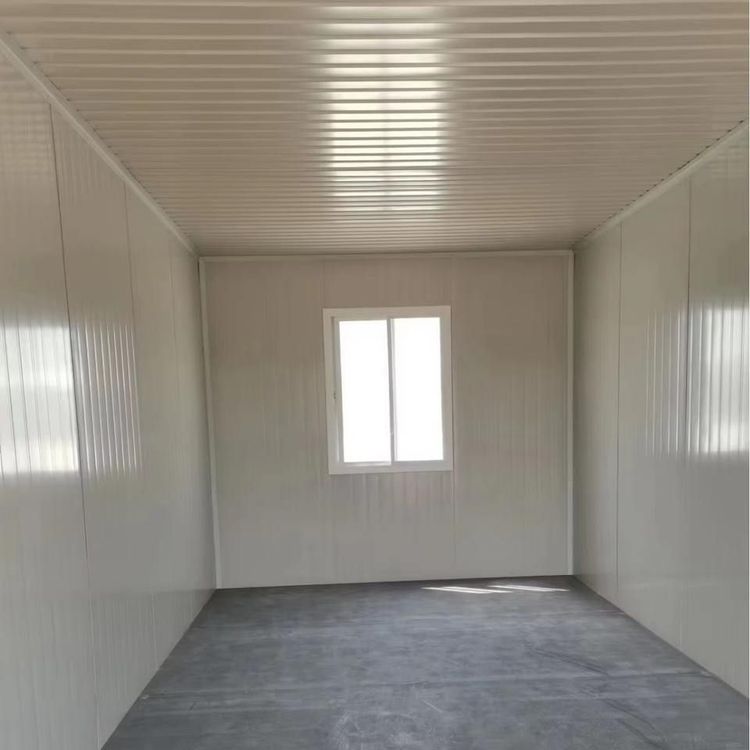
Epidemic Prevention Container Mobile House
The epidemic prevention container mobile house is a temporary modular building transformed from a container, specifically designed for epidemic prevention scenarios. It features rapid deployment, structural safety, complete functionality, and reusability. The following is an introduction from three dimensions: core characteristics, application scenarios, and technical standards.

Core Characteristics
Epidemic prevention container mobile houses typically adopt standardized container frames, with main structures made of galvanized steel skeletons or all-steel structures. The exterior walls are covered with fire-resistant and anti-corrosive panels to ensure durability and safety. Their core advantages include:
- Rapid Deployment: Factory-prefabricated modules are assembled on-site through bolt connections or integral lifting, eliminating the need for complex civil engineering. For example, the folding portable panel houses from Hunan Yaheng Tengfei can achieve rapid construction of 800 square meters with the efforts of three people pulling and pushing, while the packaged container houses from Nanjing Changyou Zhizao support rapid assembly within 48 hours.
- Complete Functionality: The interiors are pre-installed with electrical circuits, bathrooms, air conditioners, and other facilities, ready for use upon power connection. Some products are also equipped with specialized functional modules such as isolation bathrooms and emergency command rooms.
- Mobility: They support integral transportation or flattened folding transportation, reducing logistics costs and adapting to cross-regional emergency needs. For example, the packaged containers from Shandong Weichang New Building Materials can be transported in a flattened manner, allowing for the托运 (this Chinese word means 'consignment for transport', here it's kept as is for context but should be translated as 'transport' in a full English sentence, e.g., 'allowing for the transport of 20 units per trip') of 20 units per trip.
- Environmental Protection and Economy: The material recycling rate exceeds 85%, with a designed service life of 15-20 years. They can be disassembled, relocated, and reused multiple times, exhibiting high recycling rates.
Application Scenarios
Epidemic prevention container mobile houses are widely used in public health emergency responses, temporary medical facility construction, and other fields:
- Isolation Point Construction: Used as makeshift hospitals and temporary isolation wards to quickly reduce the risk of disease transmission. For example, the makeshift hospital projects in Shanghai and Ningde, Fujian, adopted residential containers from Nanjing Changyou Zhizao for rapid deployment.
- Medical Support Facilities: Transformed into temporary clinics, nucleic acid testing sites, vaccine接种 (this Chinese word means 'vaccination', translated as 'vaccination' here) stations, etc., to support large-scale medical operations.
- Logistical Support: Provide rest areas, office areas, or material storage spaces for medical staff and volunteers.
Technical Standards and Compliance
Epidemic prevention container mobile houses must comply with multiple national and international standards:
- Structural Safety: The wind resistance level must reach 10-12, with seismic design conforming to the GB50011-2010 code. The fire resistance level is A, and the applicable temperature range is -10℃ to 50℃.
- Hygiene and Environmental Protection: Interior materials must meet environmental protection requirements, and ventilation and sewage systems must comply with medical facility norms.
- Compliance Certification: Priority should be given to manufacturers that have passed ISO9001 quality management system certification and third-party authoritative test reports (such as VoC compliance certificates). Exported products must hold EU qualifications such as CE and EN 1090-1.