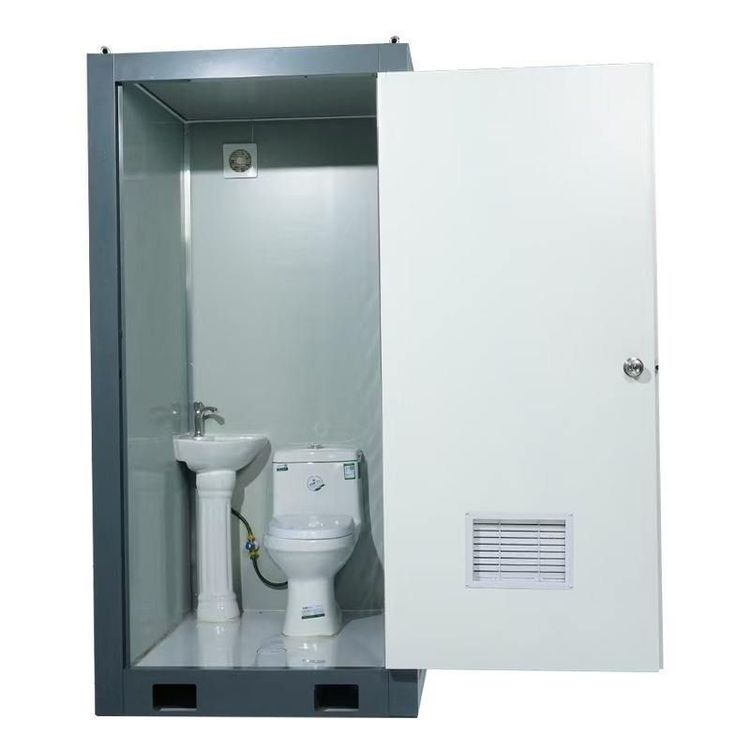
Energy-Saving Container Mobile Toilet
An energy-saving container mobile toilet is a mobile sanitation facility transformed from a standard container, featuring environmental protection and energy-saving characteristics.

Remarkable environmental protection and energy-saving features:
This facility reduces resource waste through water-saving and energy-saving designs, such as adopting low-flow flushing systems or waterless flushing technologies. Its sterilization and deodorization functions lower the risk of infectious disease transmission, improve the usage environment, and simultaneously reduce odor and noise pollution. Some models are equipped with wet microbial treatment technologies that can purify sewage to the standard for reclaimed water reuse, achieving water resource recycling. In terms of building materials, the frame is made of welded steel structures with anti-corrosion treatment, and the wall panels use thermal insulation sandwich panels, which not only extend the service life but also enhance thermal insulation performance. Moreover, all materials are recyclable and degradable, aligning with the concept of sustainable development.
Wide range of application scenarios:
It mainly serves places such as oil fields, tourist attractions, and urban public spaces. In remote areas like oil fields, its mobility solves the problems of high construction costs and difficult maintenance associated with traditional toilets. In tourist attractions, the modular design can quickly respond to changes in tourist flow, avoiding resource idleness. In urban public spaces, its simple and stylish or retro and artistic design can blend into different environments, enhancing the city's image.
Structural and functional advantages:
The container frame is reinforced with welding processes, and its surface anti-corrosion treatment enables it to withstand harsh outdoor environments. The thermal insulation sandwich panel wall panels effectively block heat transfer, reducing energy consumption for air conditioning or heating. The modular design supports rapid assembly and disassembly. A single toilet can be assembled within a few hours and can be combined into a multi-stall complex according to needs. Additionally, most manufacturers in the market offer customization services, allowing adjustments to size, internal configurations (such as barrier-free facilities and baby changing stations), and exterior styles to meet diverse needs.
Technological upgrade directions:
With increasing environmental protection requirements, some high-end models have integrated solar power supply systems, intelligent sensor flushing devices, and IoT monitoring modules to further reduce energy consumption and improve management efficiency. For example, sensors are used to monitor usage frequency and sewage volume in real-time, automatically triggering cleaning or sewage discharge procedures and reducing manual intervention. These innovations make it a typical case of 'green transformation' in the field of public facilities.