
Ecological Carbon Steel Prefabricated House
The ecological carbon steel prefabricated house offers multiple advantages in terms of structural mechanics, durability, workability, energy efficiency, construction speed, environmental protection, strength-to-weight ratio, fire resistance, sound insulation, and more, with relatively low costs and wide applications.
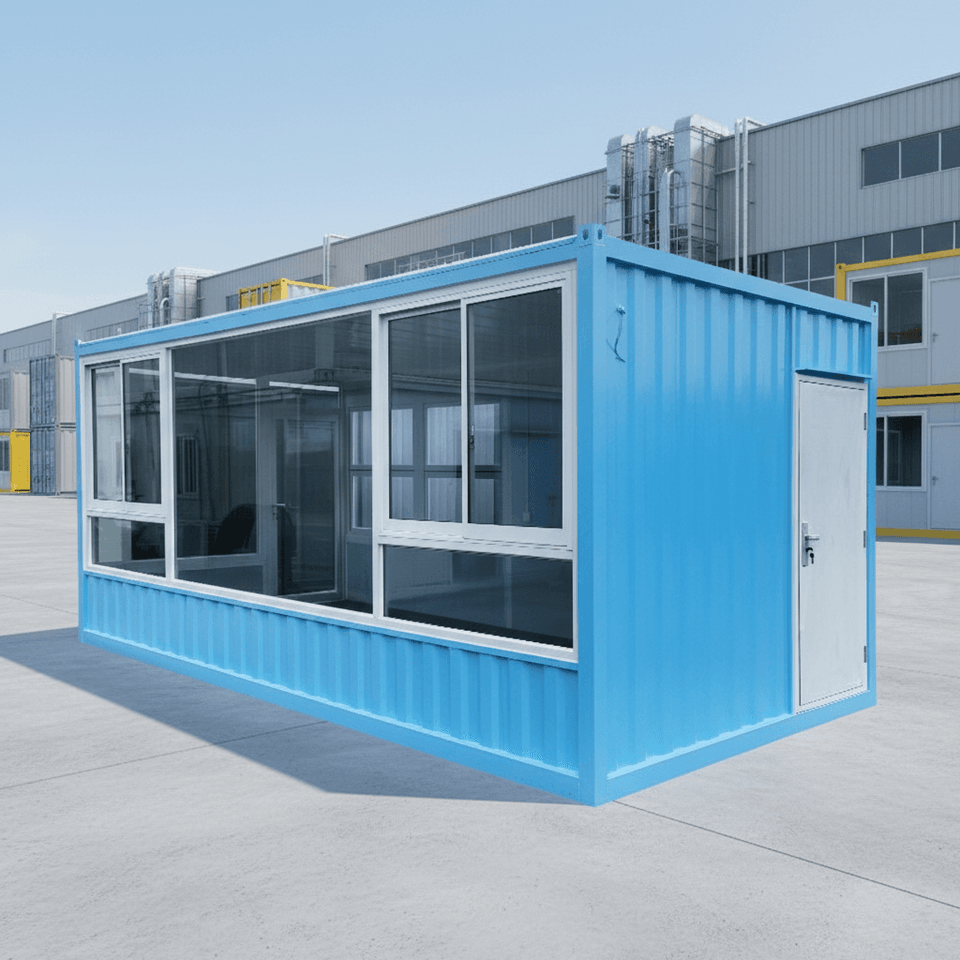
From the perspective of structural mechanics, the yield strength of ecological carbon steel typically reaches 300MPa - 500MPa, far exceeding that of ordinary building materials. The house can withstand greater loads and effectively resist seismic forces in earthquake-prone areas, reducing the risk of collapse. Moreover, it exhibits good ductility and can maintain structural integrity in areas with a seismic fortification intensity of 8 degrees.
In terms of durability, through special anti-corrosion treatments such as hot-dip galvanizing, the zinc layer thickness can reach 80μm - 120μm, significantly enhancing the steel's corrosion resistance in various environments. Compared to traditional building materials, it can extend the service life of the house by at least 20 - 30 years.
It has excellent workability. Using advanced CNC cutting equipment, it can be precisely cut into various complex shapes with a deviation controlled within ±0.5mm, providing architects with a broad creative space to achieve diverse architectural designs.
For building energy efficiency, it is filled with high-efficiency insulation materials such as polyurethane foam, with a thermal conductivity as low as 0.02W/(m·K) - 0.03W/(m·K), effectively preventing heat transfer and reducing the house's energy consumption.
The construction speed advantage is significant. For houses of the same scale, using ecological carbon steel can shorten the construction period by about 30% - 40% compared to traditional brick-and-mortar structures because its components can be prefabricated in the factory and quickly assembled on-site.
From an environmental perspective, the recyclability rate of ecological carbon steel is as high as over 90%, aligning with the concept of sustainable development. After the house is demolished, most of the steel can be remelted and processed, reducing construction waste and environmental pressure.
The strength-to-weight ratio of ecological carbon steel is very high, approximately 400 - 600N/mm²/kg. Under the condition of ensuring the same strength, the self-weight of an ecological carbon steel house is 30% - 50% lighter than that of a traditional house, reducing the load on the foundation and lowering foundation construction costs.
Regarding fire resistance, by applying fire-resistant coatings, the fire endurance can be increased to 1.5 - 3 hours, meeting the requirements of different building fire ratings and ensuring the safety of occupants in the event of a fire. In terms of sound insulation, double-layer walls filled with sound-absorbing materials such as glass wool can effectively reduce the transmission of external noise, keeping the indoor noise level within 40dB(A) - 50dB(A) and creating a quiet living environment. Additionally, its costs are lower than those of traditional building materials, and the construction period is relatively short. It has been applied in projects such as the Tongzhou Campus of Renmin University of China in Beijing and the exterior decoration project of Shanghai Disneyland and has been exported to multiple countries.



