
Earthquake Relief Container House
Earthquake relief container houses are typically constructed using high-strength steel, offering excellent wind and earthquake resistance. They can withstand earthquakes of magnitude 8 and winds of up to force 12, and are easy to install and fully functional, providing safe and comfortable temporary living spaces for disaster victims.
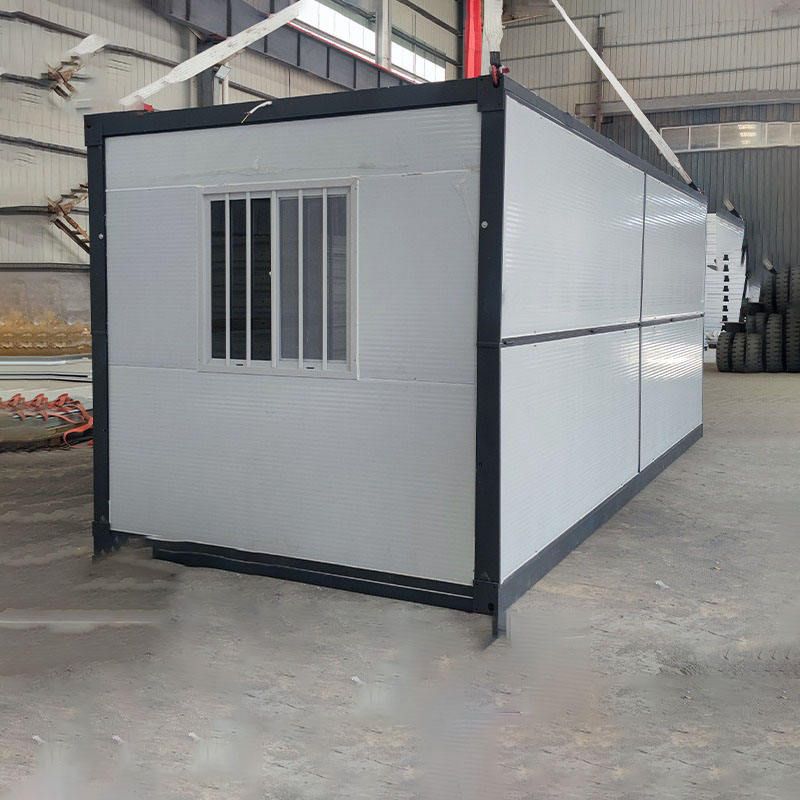
Structural Safety and Performance
Earthquake relief container houses feature high-strength steel as their core framework. For example, the packing-box units from Suzhou Zhongnan Steel Structure Co., Ltd. utilize a fully steel structural framework, achieving a wind resistance rating of force 12 and an earthquake resistance rating of magnitude 8, with a framework deformation rate of only 0.18%, well below the industry's acceptable threshold of 0.3%. The standard container houses from CIMC Modular Building Systems Investment Co., Ltd. offer wind resistance of force 11 and earthquake resistance of magnitude 7, while the quick-assembly units from Yazzi Integrated Housing Co., Ltd. provide wind resistance of force 10 and earthquake resistance of magnitude 7, all meeting the structural stability requirements under extreme conditions. Additionally, the inner layers of these container houses typically contain insulation materials, offering good thermal insulation performance and adapting to temperature ranges from -10℃ to 50℃, meeting mandatory requirements for Class A fire resistance, sound insulation, and waterproofing.
Installation Efficiency and Flexibility
Container houses adopt a factory-prefabricated + on-site quick-assembly model, with the installation time for a single unit shortened to 2-4 hours, eliminating the need for on-site welding or complex civil engineering. For instance, Zhongnan's packing-box units come pre-installed with interiors and facilities before leaving the factory, allowing for immediate use upon on-site hoisting. Within three months, 1,000 accommodation modules can be delivered, reducing the industry average construction period by 40%. This efficient deployment capability makes them the preferred solution for post-disaster emergency resettlement.
Functional Configuration and Adaptability
Container houses can be internally equipped with bunk beds, electric heaters, electric blankets, bedding, and other living facilities, with pre-embedded water and electricity pipelines supporting plug-and-play functionality. For example, the container houses activated in the earthquake-stricken area of Linxia, Gansu, measure 6 meters in length, 3 meters in width, and 2.6 meters in height, featuring multiple power outlets, fluorescent lights, curtains, and sanitary facilities, allowing residents to move in with furniture and start using them immediately. Furthermore, these container houses support non-destructive disassembly and repeated relocation, enabling quick transformation into disaster relief resettlement sites, temporary medical stations, or emergency command centers, adapting to complex terrains and changing needs.



