
Custom Industrial Mobile Toilet
Customizing industrial mobile toilets requires comprehensive consideration of multiple factors, including design, type, material, craftsmanship, and structure.
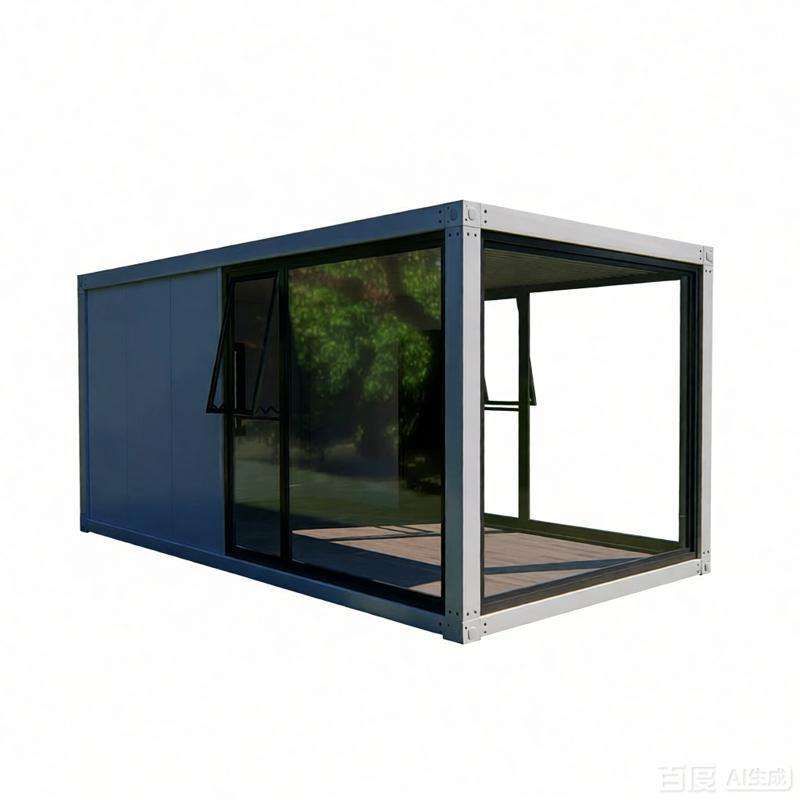
In terms of design, industrial mobile toilets can be flexibly adjusted according to specific needs. For example, for factory areas, an European-style design can be adopted, featuring ivory-white metal carved panels, equipped with two male and two female toilet stalls, and a marble sink in the middle, balancing aesthetics and practicality. If the gender ratio in a factory is significantly skewed, the number of toilet stalls can be adjusted according to actual needs, such as providing one squat toilet for females and seven for males, with the construction period shortened to four days.
Regarding type selection, industrial mobile toilets encompass various types, including mobile toilets, eco-friendly toilets, outdoor toilets, container toilets, and vehicle-mounted toilets. Different types are suitable for different scenarios: container toilets are ideal for temporary construction sites, vehicle-mounted toilets facilitate mobile deployment, and eco-friendly toilets emphasize sewage treatment and resource recycling.
In terms of materials and craftsmanship, material selection directly affects the durability and cost of the toilets. Common materials include stainless steel, color-coated steel, steel structures, fiberglass-reinforced plastic, and galvanized sheets. For instance, stainless steel is highly corrosion-resistant and suitable for humid environments, while color-coated steel is cost-effective and suitable for short-term use. In terms of craftsmanship, techniques such as welding, steel structures, integrated welding and assembly, prefabrication, and molding each have their advantages: welding ensures structural stability, prefabrication facilitates rapid assembly, and molding is suitable for mass production.
Regarding structure and function, mobile toilets typically consist of fecal sewage storage tanks (or disposal units), floor slabs, sanitary ware, walls, washing facilities, water tanks, roofs, and mobile devices. They can be classified by structural form into single-unit structures (independent units) and composite structures (multi-unit combinations); by mobility into hoisting-type, handling-type, powered-type, and towing-type; and by sewage treatment method into water-flushing, non-water-flushing suction, circulating water-flushing, and dry-packing types. For example, water-flushing toilets require supporting water sources and sewage pipelines and are suitable for fixed locations; dry-packing toilets do not require a water source and are suitable for water-scarce or temporary use scenarios.
When customizing, it is essential to consider factors such as site characteristics, usage frequency, and budget, comprehensively evaluating the compatibility of design, type, material, and craftsmanship to ensure a balance between functionality and cost-effectiveness.
You may also like

Portable Toilet for Energy Efficiency Solutions: A Buying Guide
Read More
Container House Custom Explained: How to Choose the Right One
Read More
Portable Toilet Design Custom & OEM: Design & Bulk Production Guide
Read More